

Maddy summaryThis bill establishes a program to insure second mortgages (loans taken out after the primary mortgage) for financing accessory dwelling units (ADUs) on single-family properties. The Secretary of Housing and Urban Development must create the program within two years, setting loan limits (up to 30% of a standard mortgage amount or 100% of the property's after-construction value, with potential increases based on 50% of projected rental income) and requiring borrowers to own the property and apply for insurance. It also allows Fannie Mae and Freddie Mac to purchase and securitize these insured loans, unless the Federal Housing Finance Agency determines market risks require a prohibition. The program requires the Secretary to submit annual reports to Congress on its implementation starting one year after enactment.
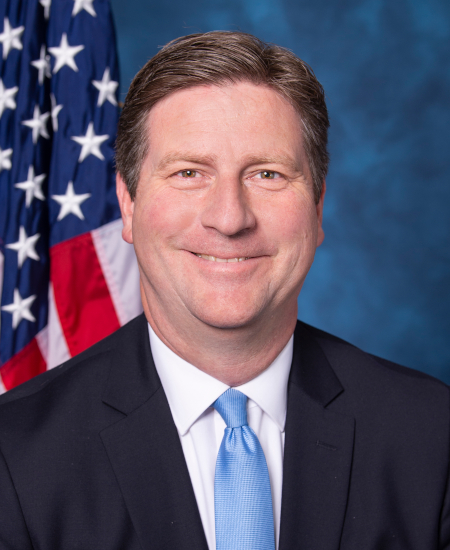
Rep. Greg Stanton
Sponsored bills
Maddy summaryThis bill authorizes a single Congressional Gold Medal for seven individuals: Chad Robichaux, Sarah Verardo, Tim Kennedy, Kevin Roarke, Sean Gabler, Dave Johnson, and Dennis Price. It recognizes their leadership in a 2021 rescue mission that evacuated over 17,000 people from Afghanistan during the U.S. withdrawal. The medal, struck by the Treasury Department, will be presented by congressional leaders and permanently displayed at the Smithsonian Institution. The bill does not create new laws or policies but formally honors these veterans' actions through a commemorative medal.
Maddy summaryThe SMART Act requires the Federal Emergency Management Agency (FEMA) to study how its hazard mitigation programs - like flood barriers or building retrofits - save money by reducing disaster damage. It mandates an analysis of cost savings, community preparedness, insurance impacts, and infrastructure protection, using data from federal, state, and academic sources. FEMA must submit an initial report within 18 months and annual updates, making findings publicly available online in clear, accessible formats. This directly affects FEMA's program oversight and transparency, with no new funding or regulations created by the bill.
Maddy summaryThe CHARGE Investments Act expands federal loan and guarantee eligibility for transit-oriented development near rail stations. It allows financing for projects within 1/4 mile of rail transit stations (or within 2 miles of a downtown core if connected by public transit) that incorporate at least 20% private investment. Projects must avoid areas within 2 miles of unserved downtown cores and prioritize mixed-use commercial/residential development. This policy change directly affects developers and local governments planning transit-connected projects seeking federal financing.
Maddy summaryThe Cool Corridors Act of 2025 expands the existing Healthy Streets program to fund tree planting, shade structures, and green infrastructure along transportation corridors - like bus stops, transit hubs, and school zones - to reduce heat exposure. It directly affects communities facing extreme heat and limited tree canopy (especially low-income or historically underserved areas), as well as state/local transit agencies, schools, and environmental groups. Key provisions include requiring projects to prioritize heat-vulnerable regions, mandate annual reporting on temperature reduction and equity outcomes, and ensure tree planting doesn’t obstruct traffic safety. The bill also extends program funding through 2030 and mandates coordination with agencies like the EPA and Forest Service.
Maddy summaryHR 4419, the AV Accessibility Act, requires states to ensure self-driving ride-hail services (like driverless Uber/Lyft vehicles) do not discriminate against people with disabilities when issuing licenses for fully autonomous operation. It mandates a federal study to identify infrastructure changes - such as improved curb access, non-visual navigation aids, and dedicated pickup zones - that would help people with disabilities safely use these vehicles. The study, funded with $5 million, will examine modifications to sidewalks, road design, and technology to improve accessibility during boarding and exiting. This bill directly affects disabled riders and autonomous vehicle service providers operating in the U.S.
Maddy summaryThe Child Care for Working Families Act creates a federal program to provide affordable, high-quality child care for working families with children under age 6. It would provide direct child care assistance through certificates or grants to parents, with no copayment required for families at or below 85% of state median income. The program requires states to implement quality standards for child care providers, including a tiered quality system and minimum wage requirements for staff (at least a living wage equivalent to elementary educators). The bill appropriates $20 billion for the program over five years, with additional funding for quality improvement initiatives and universal preschool services.
Maddy summaryThis bill directs the Health and Human Services Secretary to fund research on early detection and intervention for uterine fibroids, aiming to develop evidence-based approaches for healthcare settings. It authorizes grants to states to support screening (including advanced imaging), patient navigation services, and public education campaigns focused on early detection, with priority given to areas with socially vulnerable populations at higher risk. The bill also funds research into disparities in pain management during fibroid surgery and conditions like Asherman’s Syndrome. These provisions directly affect women with uterine fibroids, particularly in underserved communities, by expanding access to early detection services and targeted research.
Maddy summaryThis non-binding House resolution (HRES 577) demands that the current administration immediately release all unclassified federal documents related to Jeffrey Epstein, including flight logs, correspondence, and evidence. It specifically requires the release of materials involving Epstein, Ghislaine Maxwell, and known associates, with redactions only to protect minor victims' identities and ongoing prosecutions. The resolution also calls for the Department of Justice and FBI to submit a report on any delays or evidence suppression related to the case. As a resolution, it does not create new law but serves as a formal congressional demand for transparency regarding Epstein-related investigations.
Maddy summaryHRES 575 is a symbolic resolution designating July 10th as "Journeyman Lineworkers Recognition Day." It honors lineworkers who face significant risks daily - working at heights near live wires and responding to disasters like hurricanes and wildfires. The resolution specifically references Henry Miller, an early leader of the International Brotherhood of Electrical Workers, who died on July 10, 1896, while troubleshooting an outage. It encourages the public to recognize these workers' contributions but does not create new laws or allocate funding.