Maddy summaryHR 1388 authorizes the minting of commemorative coins to honor the 1865 Sultana steamboat disaster, the deadliest maritime tragedy in U.S. history. It specifies three coin types ($5 gold, $1 silver, and half-dollar) with defined weights and compositions, to be sold at face value plus surcharges ($35, $10, and $5 per coin, respectively). All surcharges collected will fund the Sultana Historical Preservation Society for museum development, including exhibits, artifact preservation, and facility construction. The coins are legal tender but intended for collectors, with sales limited to a one-year period starting January 2023.
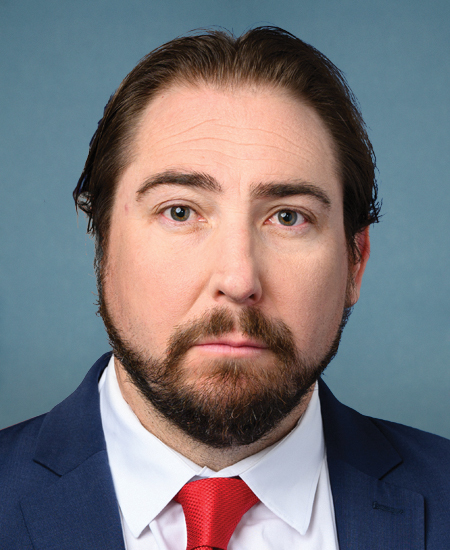
Rep. Elijah Crane
Sponsored bills
No Retaining Every Gun In a System That Restricts Your Rights Act This bill modifies the retention requirements for firearm transaction records of federal firearms licensees (FFLs) that go out of business. Current law generally requires FFLs that go out of business to deliver their firearm transaction records to the Bureau of Alcohol, Tobacco, Firearms and Explosives (ATF). This bill removes the requirement for FFLs that go out of business to deliver their firearm transaction records to the ATF. Further, the bill requires the ATF to destroy all out-of-business records it has collected from FFLs.
Maddy summaryThis bill prohibits the Department of Defense from using funds to pay for or reimburse abortion services, except when the pregnancy endangers the mother's life, results from rape, or results from incest. It directly affects military personnel, civilian DOD employees, and contractors receiving medical care at military facilities by restricting funding for abortion-related expenses. Key provisions include amending federal law to ban reimbursement for travel or licensing costs related to abortion services and repealing a 2022 DOD memo that expanded access to such care. The bill explicitly blocks all funding for abortion services beyond the existing exceptions, with no new exceptions added. It does not change abortion access for civilians outside the military healthcare system.
Maddy summaryHR 1228 prohibits the U.S. military and Department of Defense-operated academic institutions from promoting specific anti-American or racist theories in training. It bans military programs that teach ideas such as "the U.S. is fundamentally racist," "the Constitution is fundamentally racist," or that "an individual’s worth is determined by race." The bill explicitly states it does not restrict protected speech, research access, or educational contexts that clearly disavow military endorsement of such theories. This directly affects military training curricula, workshops, and educational materials within the armed forces.
Criminal Alien Deportation Enforcement Act of 2023 This bill prohibits U.S. foreign assistance from being dispersed to a country that refuses or unreasonably delays the acceptance of a non-U.S. national ( alien under federal law) who (1) is a citizen or resident of that country, and (2) has received a final order of removal from the United States. Additionally, the bill prohibits visas from being issued to residents of such a country. The bill provides standing for a victim or immediate family member of a victim of a crime committed by a non-U.S. national who has received a final order of removal to enforce these sanctions in federal court.
Maddy summaryHR 1200, the National Right-to-Work Act, prohibits requiring workers to join a union or pay dues as a condition of employment in both private-sector workplaces (covered by the National Labor Relations Act) and railroad industries (covered by the Railway Labor Act). The bill amends key sections of these laws to eliminate provisions that allowed union security agreements, meaning workers in unionized settings would no longer be forced to pay dues to retain their jobs. This directly affects employees in unionized workplaces across the U.S., particularly those in industries with existing union contracts that included mandatory dues. The law changes the legal framework to ensure union membership and dues payment remain voluntary for all workers.
Second Chance at Life Act of 2023 This bill requires abortion providers to disclose information about the possibility of reversing a medication abortion. This is a procedure that uses a medication regimen to terminate a pregnancy, typically with a two-drug protocol. Providers must inform patients that it may be possible to reverse the effects of a medication abortion after taking the first drug. They must also let patients know that more information and assistance is available on the Department of Health and Human Services (HHS) website. At least 24 hours before the procedure, the provider must share this information with the patient in person or by telephone. The provider must also include the information in written discharge instructions after the first drug is dispensed. The bill sets out an exception to these notification requirements when an abortion is necessary to resolve a physical injury or condition that threatens the life of the woman. The provider must document the circumstances giving rise to the exception in the patient's medical file. Furthermore, providers must post signs with this information in their offices or facilities, and HHS must maintain information about reversing medication abortions on its website.
Maddy summaryHR 997, the English Language Unity Act of 2023, would establish English as the official language of the United States government. It requires all federal government functions, including laws, regulations, and public communications, to be conducted in English, with exceptions for national security, disability education, census activities, and public health. The bill also sets uniform English language standards for naturalization, requiring applicants to read and understand the Declaration of Independence, Constitution, and U.S. laws, with naturalization ceremonies conducted solely in English. This legislation directly affects federal agencies, government communications, and individuals seeking U.S. citizenship.
Maddy summaryThis bill authorizes a single Congressional Gold Medal to honor all U.S. Army Dustoff crews who served during the Vietnam War (1962-1973). It recognizes their critical role in evacuating nearly 900,000 wounded personnel, including U.S., South Vietnamese, and allied forces, under extreme combat conditions. The medal, designed with input from the Secretary of Defense, will be presented to the U.S. Army Medical Department Museum for permanent display. Duplicate bronze medals may be sold to cover costs, but the primary action is the commemorative recognition of these crews' service.
Maddy summaryThis bill requires the Office of Management and Budget to audit unspent funds from major pandemic relief packages - including the CARES Act, American Rescue Plan, and related bills - within 30 days of enactment. It mandates a report listing all unobligated funds remaining under these laws. The unspent amounts would then be automatically returned to the Treasury’s general fund for deficit reduction, with no further congressional action needed. The bill directly affects how the federal government handles leftover pandemic relief funds, focusing on accounting and fiscal responsibility rather than new program benefits.