Maddy summaryHR 2338 sets a $30 million spending cap for U.S. foreign economic aid programs (specifically "Bilateral Economic Assistance, Transition Initiatives") in fiscal year 2024. It limits the total funds available for these programs to no more than $30 million, preventing higher appropriations. This bill directly affects the funding level for these international economic assistance programs, not specific countries or recipients. It is a procedural funding restriction without new policy changes.
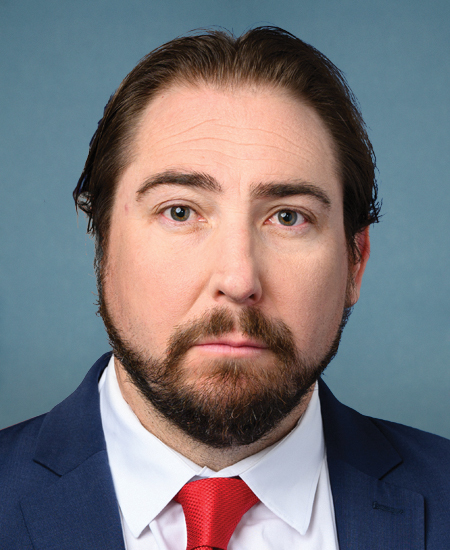
Rep. Elijah Crane
Sponsored bills
Maddy summaryHR 2337 sets a spending limit of $3,801,034,000 for bilateral economic aid and international disaster assistance programs in fiscal year 2024. This bill directly affects U.S. agencies like USAID and the State Department that administer these foreign assistance programs. The key provision is a strict cap on available funds, preventing any spending above this amount regardless of other funding authorizations. It does not change eligibility rules or program structure, only restricting the total funding level for these specific aid categories.
Maddy summaryHR 2336 sets a $3 billion cap on funding for U.S. bilateral economic and development assistance programs during fiscal year 2024. This bill directly limits the amount of foreign aid that can be allocated to specific international development and economic support programs. The provision applies to all such programs authorized for FY2024, restricting available funds to no more than $3,000,000,000. It is a procedural funding limit with no additional mechanisms or exceptions described in the text.
Maddy summaryHR 1818, the Aviation Workforce Development Act, expands tax-advantaged savings plans (529 plans) to cover costs for specific aviation training programs. It allows funds from these plans to pay for tuition, fees, and required materials at FAA-certified aviation maintenance technician schools (Part 147) or commercial pilot training programs (Part 61 or 141). This directly affects students pursuing careers as aircraft maintenance technicians or commercial pilots by making these training costs more affordable through existing tax-advantaged savings. The bill amends the tax code to include these programs under "qualified higher education expenses" for 529 plan distributions.
Let Experienced Pilots Fly Act of 2023 This bill raises the mandatory retirement age for pilots engaged in commercial aviation operations from 65 to 67 years of age, unless the operation takes place in (1) the territorial airspace of a foreign county where such operations are prohibited by the foreign country, or (2) international airspace where such operations are not in compliance with the Annexes to the Convention on International Civil Aviation. The Federal Aviation Administration must also submit a report to Congress on further increasing the age limitation for pilots engaged in commercial aviation operations.
Maddy summaryHR 1725, the "End Zuckerbucks Act," amends the Internal Revenue Code to prohibit 501(c)(3) organizations (like charities and nonprofits) from providing direct or indirect funding - including subsidies, scholarships, or below-cost services - to official election organizations, including state or local government election entities. This restriction applies to all funding provided in taxable years beginning after December 31, 2023. The bill directly affects tax-exempt nonprofits that previously could support election-related activities through financial assistance. It does not change existing rules for other types of organizations or public funding.
Bipartisan Ban on Congressional Stock Ownership Act of 2023 This bill prohibits Members of Congress and their spouses from owning or trading stocks, bonds, commodities, futures, or any other form of security. Each current Member must divest within 180 days after the bill is enacted and each new Member must divest within 180 days after becoming a Member. However, Members and their spouses have 5 years to divest from specified complex investment vehicles. The bill does not apply to certain investments, such as investments in widely held investment funds that are diversified and do not present a conflict of interest and investments held in government employee retirement plans. A Member or spouse who violates the bill may be subject to a fine of up to $50,000 for each violation. The bill permits a Member or spouse who is required to divest property under the bill to avoid recognizing gain for income tax purposes from the sale of that property to the extent that the Member or spouse purchases permitted bonds or diversified investment funds within 60 days of the divestiture.
Protecting American Sovereignty Act This bill prohibits the federal government from implementing any obligations upon the United States that may be contained in a draft report by a World Health Organization (WHO) working group on strengthening the WHO's preparedness and response to health emergencies. This prohibition shall also apply to any related or successor reports and recommendations regarding pandemics.
Maddy summaryThis resolution amends House rules to prohibit members, officers, and employees from serving on the board of directors of any organization connected to the Chinese Communist Party (CCP) or designated foreign adversaries. It specifically bans board service on entities receiving funding from or affiliated with the CCP’s United Front Work Department, other CCP elements, or entities labeled "foreign adversaries" by the State Department under a specific 2023 regulation. The rule change applies to all House staff and members in their official capacities, targeting potential conflicts of interest with foreign entities. It does not affect private board roles outside of official House duties.
This joint resolution proposes a constitutional amendment that prohibits an individual who is not a U.S. citizen from voting in federal, state, or local elections for public office or voting on any ballot initiative or referendum held in the United States.