Maddy summaryHRES 1365 is a non-binding House resolution calling for the immediate termination of Kimberly Cheatle as U.S. Secret Service Director. It directly addresses the Secret Service Director and the executive branch, though it has no legal force to remove her from office. The resolution’s sole provision is a formal request for her termination, reflecting the sponsors' position on her leadership. As a symbolic gesture, it does not change her employment status or require any action from the President or Secret Service.
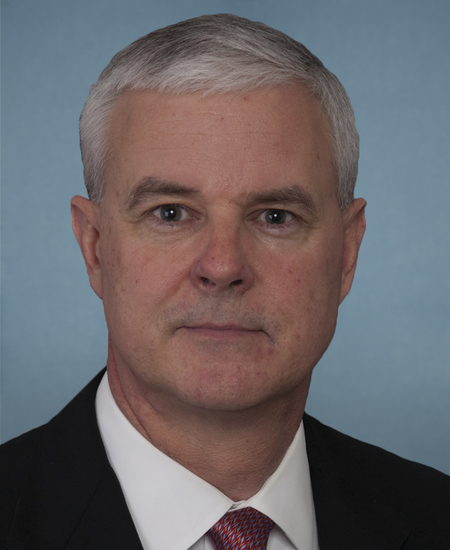
Rep. Steve Womack
Sponsored bills
Maddy summaryThis is a commemorative resolution (HRES 1369) honoring Corey Comperatore, a volunteer firefighter, U.S. Army Reserves veteran, and community leader from Sarver, Pennsylvania, who died on July 13, 2024. The resolution formally mourns his passing and celebrates his life, noting he left behind his wife, Helen, and two daughters, Allyson and Kaylee. It recognizes his service to the Buffalo Township Volunteer Fire Department, his military service, and his role as a devoted member of Cabot Methodist Church. As a ceremonial resolution, it has no policy impact or direct effect on legislation or constituents beyond this formal acknowledgment.
Maddy summary# Summary of the Transportation, Housing and Urban Development, and Related Agencies Appropriations Act, 2025 This comprehensive federal appropriations bill allocates funding for the Department of Housing and Urban Development (HUD) and several related agencies for fiscal year 2025. The bill appropriates funds for HUD's various programs, including: - **$384.7 million** for the Information Technology Fund - **$160 million** for the Office of Inspector General - Significant funding for housing assistance programs, public housing, and homeless assistance grants The bill contains numerous restrictions and prohibitions on the use of funds, including: 1. **Prohibitions on certain types of training**: No funds may be used for education, training, or professional development that utilizes, promotes, or teaches Critical Race Theory or related concepts (Section 421). 2. **Restrictions on equity initiatives**: Funds may not be used to implement, administer, apply, enforce, or carry out equity action plans or diversity, equity, and inclusion initiatives, including specific executive orders (Section 423). 3. **Environmental policy restrictions**: Funds cannot be used to implement or enforce certain environmental policies or consider the social cost of carbon in analyses (Section 424 and 430). 4. **Housing program restrictions**: - Prohibits Section 8 assistance for certain individuals (Section 210) - Limits salary increases for public housing agency executives (Section 220) - Restricts use of funds for certain types of projects (e.g., no funds for air travel by Secretary of Transportation except economy class) 5. **Other restrictions**: - Prohibits use of funds for certain types of conference attendance (Section 412) - Restricts flag display on federal facilities (Section 426) - Prohibits tolls on certain Pennsylvania highways (Section 429) The bill also includes specific provisions regarding: - Transfer of project-based assistance between housing properties (Section 209) - Management of multifamily properties (Section 212) - Adjustments for formula grant allocation errors (Section 231) This bill is titled "Transportation, Housing and Urban Development, and Related Agencies Appropriations Act, 2025" and also funds related agencies including the Access Board, Federal Maritime Commission, National Railroad Passenger Corporation (Amtrak), National Transportation Safety Board, Neighborhood Reinvestment Corporation, and Surface Transportation Board.
Maddy summaryHR 5403, the CBDC Anti-Surveillance State Act, prohibits the Federal Reserve from issuing or facilitating central bank digital currency (CBDC) directly or indirectly to individuals through financial institutions. It specifically bans Federal Reserve banks from offering digital products to individuals, maintaining individual accounts, or using CBDC for monetary policy implementation. The bill also clarifies that its restrictions do not apply to existing physical cash or private, permissionless digital payment systems. This bill directly affects the Federal Reserve's ability to develop or deploy a government-run digital dollar. The law aims to prevent the Federal Reserve from creating a digital currency that could enable transaction tracking or government oversight of personal financial activity.
Maddy summaryHR 895, the Combating Organized Retail Crime Act of 2023, expands federal law to better prosecute organized retail theft by amending sections 2314 and 2315 of Title 18. It clarifies that crimes involving stolen goods valued at $5,000 or more over 12 months - including retail theft - can be prosecuted under existing federal statutes, and broadens definitions to include goods taken via "any facility of interstate or foreign commerce." The bill also creates a new Organized Retail Crime Coordination Center within Homeland Security, requiring it to coordinate federal, state, and local law enforcement efforts, share threat information with retailers, and produce annual public reports on trends. This directly affects law enforcement agencies, retailers, and criminal justice systems by standardizing prosecution thresholds and enhancing interagency collaboration.
Maddy summaryThis bill requires the U.S. Department of Defense and State Department to immediately deliver all previously approved military equipment and services to Israel within 15 days, reversing any pauses on arms transfers. It prohibits using federal funds to withhold, halt, or cancel defense article deliveries to Israel and mandates that unobligated security assistance funds for Israel must be spent by the end of 30 days. The bill also requires monthly reports to Congress detailing all security assistance provided to Israel since October 7, 2023, including specific items delivered and funding sources. The law directly affects U.S. agencies responsible for military aid and Israel as the recipient of the security assistance.
Maddy summaryThis bill strengthens oversight of administrative spending actions by requiring the Director to submit detailed waiver explanations and budgetary impact estimates to congressional Budget Committees for any executive branch action exempting spending from budget neutrality rules. It modifies the threshold for such exemptions to apply only to actions increasing direct spending by $1 billion over 10 years or $100 million in any single year. The bill also clarifies that the purpose of the administrative PAYGO rules is to maintain budget neutrality for discretionary spending decisions. These changes apply directly to federal agencies making administrative spending decisions that exceed the new thresholds. The bill repeals a sunset provision and adds new reporting requirements for budget submissions.
Maddy summaryThis bill amends a 2021 law to specify the location for the National Medal of Honor Monument on federal land in Washington, D.C. It requires the monument to be placed within the National Mall's "Reserve" area and attached to, or no more than 1,000 feet from, the Lincoln Memorial. The change directly affects the National Medal of Honor Museum Foundation, which is authorized to build the monument under existing law. This policy adjustment finalizes the physical placement of the monument to honor Medal of Honor recipients, aligning it with the Lincoln Memorial's historical significance.
Maddy summaryHJRES 98 is a congressional resolution seeking to block a National Labor Relations Board (NLRB) rule that defined how businesses are considered "joint employers" for labor law purposes. The bill targets the NLRB's October 2023 rule (88 Fed. Reg. 73946), which would have changed how companies like franchisors or staffing agencies are held responsible for workers' rights. If passed, this resolution would cancel the rule, directly affecting businesses managing multiple employer relationships and labor organizations enforcing workplace standards. The measure uses a standard process under federal law to disapprove an agency rule, not creating new policy but reversing an existing regulation.
Maddy summaryHR 8231, the James Earl Jones Congressional Gold Medal Act, authorizes a Congressional Gold Medal to be awarded to actor James Earl Jones in recognition of his distinguished career in theater and film, and his role in advancing inclusion and equal opportunities for people of all backgrounds in the entertainment industry. The Treasury will strike the medal with an image and inscription of Jones, and may produce and sell bronze duplicates to cover costs, with proceeds deposited into the U.S. Mint's public enterprise fund. This bill serves as a ceremonial honor with no new legal requirements or policy changes.