Maddy summaryThe FAIR PREP Act of 2025 prohibits the IRS from preparing individual tax returns or refund claims, except for the existing IRS Free File Program and certain qualified return preparation services. It clarifies that the IRS may still provide fillable tax forms with automated calculations and correct mathematical or clerical errors without violating the prohibition. The bill also bans the IRS from developing or operating new electronic tax preparation services after enactment without explicit new congressional authorization. This directly affects how the IRS delivers tax filing assistance, preserving current free options while restricting new government-run tools.
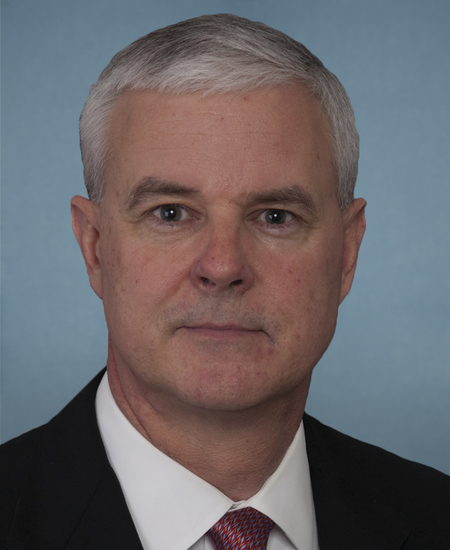
Rep. Steve Womack
Sponsored bills
Maddy summaryThis bill blocks federal funding for Planned Parenthood Federation of America and its clinics for one year unless they certify they won't perform abortions. Exceptions apply for pregnancies resulting from rape or incest, or when a woman's life is in danger due to a medical condition. The bill redirects the redirected funds to community health centers and other providers serving women's health needs, authorizing $235 million for this purpose. It explicitly states this will not reduce overall federal funding for women's health services. The policy change directly affects Planned Parenthood clinics receiving federal funds, requiring them to certify abortion restrictions or lose funding.
Maddy summaryThe Sustainable Budget Act of 2025 would establish a 18-member National Commission on Fiscal Responsibility and Reform to develop budget recommendations. The Commission would include members appointed by the President and congressional leadership, with specific requirements for approval of its reports (requiring 12 members, including 4 from each major party). The Commission would need to propose policies to balance the budget within 10 years (excluding interest payments) and address entitlement spending and revenue gaps. After submitting reports to Congress, the President would transmit a proposed joint resolution implementing the recommendations, which would then undergo expedited consideration in both houses with limited debate and no amendments allowed. This bill creates a process for developing budget recommendations but does not directly change current fiscal policies.
Maddy summaryThis bill (HR 7180) designates the U.S. Postal Service facility at 80 1st Street in Kingsland, Arkansas, as the "Kingsland 'Johnny Cash' Post Office" to honor the musician. It updates all official federal references (laws, maps, documents) to use this new name. The bill affects only the specific post office location and has no policy or funding changes. It is a ceremonial naming resolution, not a substantive legislative measure.
Maddy summaryThis bill requires Congress to approve major federal regulations before they take effect. It would mandate that agencies submit detailed reports including cost-benefit analyses, economic impact assessments, and other information to Congress before implementing significant regulations. Major rules - defined as those with at least $100 million annual economic impact or significant effects on costs, competition, or employment - would need a joint resolution of approval from Congress within 70 session days. Nonmajor rules would follow a less stringent disapproval process. The bill aims to increase legislative oversight of the regulatory process, requiring Congress to formally review and approve rules that significantly impact the economy or public regulations.
Maddy summaryThis bill, HR 1097 (Everett Alvarez, Jr. Congressional Gold Medal Act of 2023), authorizes the award of a Congressional Gold Medal to Everett Alvarez, Jr., in recognition of his service as a U.S. Navy pilot and Vietnam War prisoner of war. It directly honors Alvarez, who was the first U.S. pilot shot down in the Vietnam War, spent over 8.5 years in captivity, and later served in the Peace Corps and Veterans Administration. The bill’s key mechanism is directing the U.S. Mint to strike a gold medal bearing his name and image, with bronze duplicates available for sale to cover costs. It does not create new policies or affect any group beyond the honoree.
Maddy summaryThis bill approves new agreements that amend the Compact of Free Association between the United States and the Federated States of Micronesia, the Republic of the Marshall Islands, and the Republic of Palau. It incorporates related agreements including fiscal procedures and trust fund agreements that govern how U.S. funding is managed and distributed to these nations. The bill provides funding for 2024-2043 to support programs like healthcare, education, veterans' services, and economic development in the Freely Associated States. It establishes reporting requirements and oversight mechanisms for federal agencies implementing these agreements. The bill directly affects U.S. federal agencies, the Freely Associated States, and U.S. funding mechanisms for these Pacific Island nations.
Maddy summaryThe FOCA Act of 2023 requires federal agencies to stop mandating or banning contractor agreements with labor organizations (like union contracts) in construction project bids and contracts. It directly affects federal contractors, subcontractors, and agencies managing construction projects funded by the government. The bill prohibits favoring or penalizing contractors based on their labor affiliation status, aiming to promote fair competition and reduce costs. It also mandates updates to federal contracting rules within 60 days of enactment to implement these changes.
Maddy summaryHR 8599, the Oral Health Products Inclusion Act, expands tax-advantaged health account coverage by allowing expenses for specific oral care products to be treated as qualified medical expenses. The bill adds toothbrushes (manual or electric), water flossers, and FDA-approved over-the-counter anticaries or antiplaque products (like certain toothpastes or rinses) to the list of eligible expenses under Health Savings Accounts (HSAs), Archer MSAs, and health flexible spending accounts (FSAs)/health reimbursement arrangements (HRAs). This directly affects individuals who use these tax-advantaged accounts to pay for routine oral health products out-of-pocket. The policy change requires these products to be FDA-recognized as safe and effective for topical use on teeth or gums, without altering the products themselves or their medical use.
Maddy summaryThe Essential Caregivers Act of 2024 requires nursing homes and similar facilities to allow residents to designate essential caregivers who provide emotional support or assistance with daily activities. During emergencies when regular visitation is restricted, facilities must permit at least one essential caregiver access to residents daily and cannot deny access without following specific procedures. Facilities may deny access for a maximum of 7 days during emergencies (or 14 days with state approval), and must provide a written explanation and appeal process if access is denied. The bill establishes a 48-hour appeal process for residents and caregivers to challenge denials, with facilities required to prove violations during appeals. This law applies to Medicare skilled nursing facilities, Medicaid nursing facilities, intermediate care facilities, and certain inpatient rehabilitation facilities.