

This Act creates the Delaware Wrongful Conviction Compensation and Service Act. The Act provides compensation and reintegration services to individuals who have served sentences of incarceration, wrongful incarceration in a psychiatric institution, parole, probation, and sex offender registration in the State for crimes that they did not commit. An individual claiming wrongful conviction or, if deceased, that individual's heirs, may bring a petition for compensation in Delaware Superior Court. A petitioner who makes the required showing is entitled to damages based on the type and period of wrongful incarceration, probation, parole, or registration, and other amounts, such as reasonable attorney fees in obtaining relief, subject to requirements of proof. However, a petitioner is not entitled to such compensation if the Department of Justice establishes that the petitioner was an accomplice in the commission of the crime or that the petitioner intentionally and voluntarily caused the conviction at issue by committing perjury or fabricating evidence at trial in order to prevent the conviction of the true perpetrator. In addition, an individual released from incarceration as the result of the reversal, overturning, or vacation of a conviction is entitled to emergency assistance and services. Senate Substitute 3 for SB 169 differs from SS 2 for SB 169 in that it provides that a petitioner who served time in a psychiatric institution is eligible to apply for relief. Senate Substitute 3 for SB 169 also provides that in all cases, in order to be compensated, a petitioner must establish by a preponderance of the evidence that the petitioner did not commit the crime that resulted in the conviction or that there was no crime committed. This provision differs from Senate Substitute 2, which required this showing only for a petitioner who entered a Robinson plea or entered a plea of no contest. In addition, Senate Substitute 3 for SB 169 provides that persons who were pardoned are not eligible for post-release services under the Act. Finally, Senate Substitute 3 for SB 169 provides that any award under the Act must be offset by any amounts the petitioner has recovered in a civil action or settlement of a civil action for wrongful conviction or imprisonment. If, after receiving an award under the Act, a petitioner subsequently recovers in such a civil action or settlement, the petitioner must reimburse the State to the extent of the amounts awarded in the civil action or settlement of the civil action.
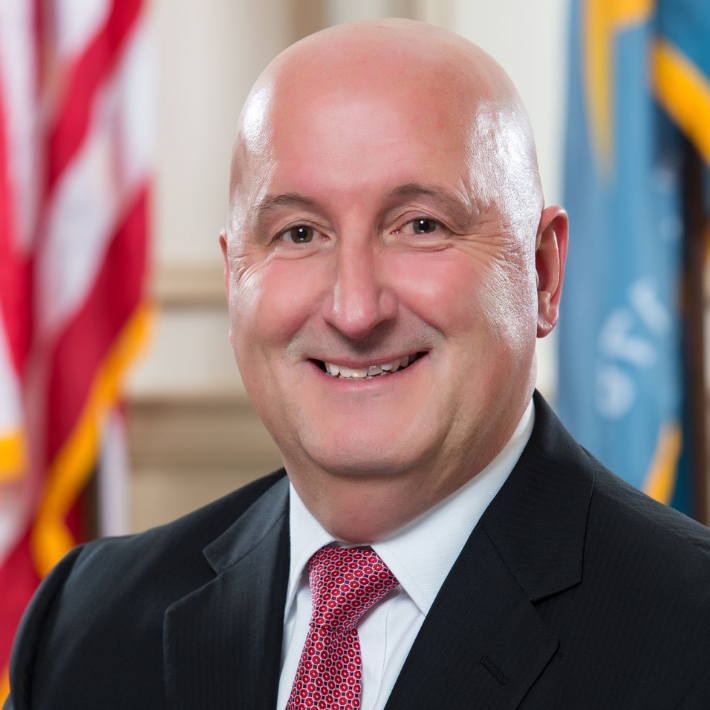
Sen. Jack Walsh
Sponsored bills
This Act is the product of the work of stakeholders who, with the encouragement of Senate Concurrent Resolution No. 50 (152nd General Assembly), met to examine how to integrate mobile-integrated healthcare and community paramedicine into existing regulatory structures in this State. Mobile-integrated healthcare and community paramedicine are innovative patient-centered models for the delivery of health care services that utilize mobile resources to deliver care and services to patients in an out-of-hospital environment in coordination with healthcare facilities or other healthcare providers. As part of mobile-integrated healthcare and community paramedicine programs, emergency medical services provider agencies across the country of all sizes and types are partnering with hospitals, primary care physicians, nurses, and mental health and social services providers on innovative programs that both navigate patients to the right level of care as well as achieve goals of improved care and lower costs. Clinical research studies comparing patients in traditional hospitals with patients who received hospital-level care at home through mobile-integrated healthcare and community paramedicine programs have found that those who received in-home care experienced fewer readmissions, lower mortality rates, reduced falls, and higher patient satisfaction rates. Based on temporary federal law enacted to relieve strain on healthcare systems caused by the COVID-19 pandemic, hospitals in this State developed relationships with emergency medical services provider agencies to implement mobile-integrated healthcare and community paramedicine programs. However, this temporary federal authorization will end on December 31, 2024. Many states have acted ahead of the expiration of this federal authorization to incorporate mobile-integrated healthcare and community paramedicine programs into existing regulatory structures. This Act integrates mobile-integrated healthcare and community paramedicine programs into existing regulatory structures in this State by authorizing the establishment of mobile-integrated healthcare and community paramedicine programs in this State through the Office of Emergency Medical Services (“Office”) in the Department of Health and Social Service’s Division of Public Health (“Division”). Specifically, this Act does the following: (1) Authorizes an organization licensed as or actively seeking licensure as an emergency medical services provider agency to apply to the Office to establish a mobile-integrated healthcare or community paramedicine program. (2) Requires the Office to review applications to establish mobile-integrated healthcare or community paramedicine programs and make recommendations to the Director of the Division, who is required to approve applications that meet the requirements established by this Act and regulations adopted by the Office. (3) The Office is required to establish standards, approved by the Board of Medical Licensure and Discipline, for the establishment and operation of mobile-integrated healthcare or community paramedicine programs This Act takes effect immediately for purposes of the Office of Emergency Medical Services preparing to implement this Act, but is not implemented until the date of publication in the Register of Regulations of a notice by the Director of the Office of Emergency Medical Services that the Office is prepared to implement this Act. The changes to the definition section, § 9802 of Title 16 of the Delaware Code, in Sections 2 and 3 of this Act are identical. These changes had to be made twice as § 9802 of Title 16 currently has 2 versions, one effective until July 17, 2028, and one effect as of July 17, 2028. This Act also makes technical corrections to conform existing law to the standards of the Delaware Legislative Drafting Manual and, in Section 5 of this Act, to correct an internal reference in § 6701B of Title 18 of the Delaware Code affected by changes in Sections 2 and 3 of this Act.
Pharmacists in Delaware provide some of the same medical services as physicians, advance practice registered nurses, and physician assistants, including immunizations. The General Assembly has recently added to the services that pharmacists may provide, including prescribing birth control, testing and treating for a variety of conditions, and prescribing pre-exposure and post-exposure HIV prophylaxis. However, health insurance plans do not currently recognize pharmacists as a provider type that may seek reimbursement for these services, despite already providing coverage for the same services if they were obtained from other providers. This could lead to many pharmacists not providing such expanded services due to the lack of insurance coverage. This Act requires health insurance providers to provide the same reimbursement to pharmacists that is already provided other providers performing the same services at the same rates as advance practice registered nurses and physician assistants. This bill also makes technical corrections to conform existing law to the standards of the Delaware Legislative Drafting Manual.
This Act updates provisions of the code covering the Delaware Institute of Medical Education Research (DIMER), which creates partnerships with out-of-state medical schools as an alternative to creating a state sponsored medical school. Specifically, this Act does the following: (1) Updates the name of the Jefferson Medical College of Thomas Jefferson University to “Sidney Kimmel Medical College of Thomas Jefferson University”; (2) Adds the Philadelphia College of Osteopathic Medicine as a DIMER medical school; (3) Alters and updates the composition of the DIMER Board and provides that all members will be appointed by the Governor; (4) Clarifies that a vacant Board position is not counted for quorum purposes; (5) Requires the Board Chair to be elected from the members of the Board, rather than appointed by the Chair of the Delaware Health Care Commission; (6) Requires the Board to select candidates for the Chair and Vice Chair from a nominating committee determined by the Board; and (7) Provides that the Board Chair and Vice Chair shall serve no more than 3 consecutive terms.
Maddy summaryThis bill updates Delaware law to allow low-speed vehicles that weigh up to 3,000 pounds, increasing the previous limit of 2,500 pounds. The legislation applies to four-wheeled motor vehicles traveling between 20 and 25 miles per hour, which must still be driven on roads with speed limits of 35 mph or lower. Owners are required to hold a valid driver's license, maintain insurance, and certify that their vehicle's safety equipment is in working order, while dealers must be licensed by the state. The change simplifies the definition of these vehicles without altering other operational rules or inspection requirements.
This bill seeks to amend sections of Chapter 66 concerning the members of Delaware Volunteer Fire Departments. This bill will hold current members to the same standards as applicants with relation to criminal activity.
This bill grants authority to the Department of Health and Social Services (DHSS) to adopt regulations related to the operation of temporary staffing agencies that staff temporary nurses and other staff positions in long-term care facilities in the State and assigns oversight within DHSS to the Division of Health Care Quality. The bill requires temporary staffing agencies to (1) register annually with the Division of Health Care Quality; (2) validate the qualifications of all provided staff provided; (3) maintain records of all provided staff’s credentials, job requirements, and required immunizations; and (4) provide all such records upon request to DHSS and to the long-term care facility where the employee is placed. The bill also requires temporary staffing agencies to report annually to DHSS regarding various factors, including its employee placements, costs charged to long-term care facilities, and wages paid to temporary staff. This bill is intended to replace HB199.
For claims for line of duty death benefits for covered persons, which include police officers, firefighters, auxiliary and volunteer ambulance and rescue company members, paramedics, and others, submitted on July 1, 2023, and thereafter, this Act increases the benefits for the beneficiary or beneficiaries from $200,000 to $375,000, payable in annual installments, with the maximum amount paid in any 1 calendar year being $50,000.
The Delaware Energy Solutions Act of 2024 authorizes processes necessary to help meet the net zero goals of the Climate Change Solutions Act of 2023. The bill facilitates a transition to carbon-free energy sources by (i) preparing for offshore wind to be a significant element of Delaware’s energy future, if cost is competitive with other potential sources, and (ii) increasing options for interconnecting renewable energy resources to the transmission grid. The bill authorizes the State Energy Office (SEO), with the approval of the Public Service Commission (PSC), to issue solicitations to procure offshore wind. A solicitation can be for a project that serves only Delaware, or in coordination with other states, and authorizes procurement of at least 800 megawatts but not more than 1,200 megawatts of power to Delaware, in a single or multiple solicitations. Solicitations proceed through the following steps: The SEO drafts a solicitation for wind energy if it believes market conditions would result in a bid of no more than 110 percent of the “Delaware Benchmark Price,” defined as the average price that Delmarva Power has paid for power and renewable energy compliance over the prior three years. The Renewable Energy Task Force, an existing public body, must be consulted on the structure and factors of the proposed solicitation. The PSC evaluates the proposed solicitation and determines in a public process, with public comment, if issuing the solicitation would be in the public interest. If so, PSC issues a Preliminary Order allowing the solicitation to proceed. Municipal utilities and rural electric cooperatives are provided an option to participate in the potential project. Third-party “Qualified Purchasers,” such as those that currently purchase electricity for Delaware industries and utilities, could also participate. After preliminary PSC approval, SEO issues the solicitation. Pricing is the key factor, and the returned bids will also include information about avoided greenhouse gas emissions as well as environmental, economic, health and electric grid benefits to Delaware. The SEO cannot proceed to negotiate a contract unless a bid comes back with a price at or below 110 percent of the Delaware Benchmark Price. If contract negotiations occur, SEO confers with PSC staff in finalizing the terms of the contract. PSC reviews the proposed purchase contract to verify that the bid meets all statutory and solicitation requirements, including the examination of the bid price to ensure it is no more than 110 percent of the Delaware Benchmark Price, and is competitive with other new renewable or carbon-free energy projects in the region. If PSC approval is granted, Delmarva Power and any public utility that elected to participate would amend their rates to pass on the costs or savings of the project to their customers. In addition to allowing offshore wind procurement, the bill enhances the PSC’s current Certificate of Public Convenience and Necessity (CPCN) process by giving the Commission authority to issue a CPCN in connection with renewable energy interconnection facilities, such as the transmission lines from an offshore wind project to a nearby substation, or the lines connecting a utility scale solar project (over 30 MW) to a nearby substation. The bill outlines the factors PSC should consider when granting a CPCN for renewable energy interconnection facilities. Additionally, the bill provides separate authority to the Delaware Department of Transportation to permit such facilities in a State-owned Right of Way under Title 17, once a CPCN is issued by the PSC.
This Act requires the Director of the Sustainable Energy Utility to administer a program to provide financial assistance to Delaware residents for the cost of purchase and installation of electric vehicle supply equipment. For a low-income applicant (meaning up to 300% of the federal poverty level for household income), financial assistance covering up to 90% of the purchase and installation costs may be covered. For all other applicants the program may offer assistance to cover up to 50% of the costs.