

This bill authorizes the use of “prize-linked” savings accounts in the State of Delaware. These accounts have been used in a number of countries and several U.S. states to promote savings, especially among persons with low-income and first-time savers. A deposit into the program makes the entrant eligible for a prize. The principal in the account remains untouched. The first large-scale program of this nature in the U.S. was launched in Michigan about 6 years ago, and the program has subsequently expanded to Nebraska, North Carolina and Washington. At the end of 2014, federal legislation was passed allowing federally charted banks and credit unions to offer this type of savings account in any state that does not prohibit it. This bill explicitly authorizes such programs in Delaware and clarifies that such programs do not constitute prohibited gambling or lottery practices.
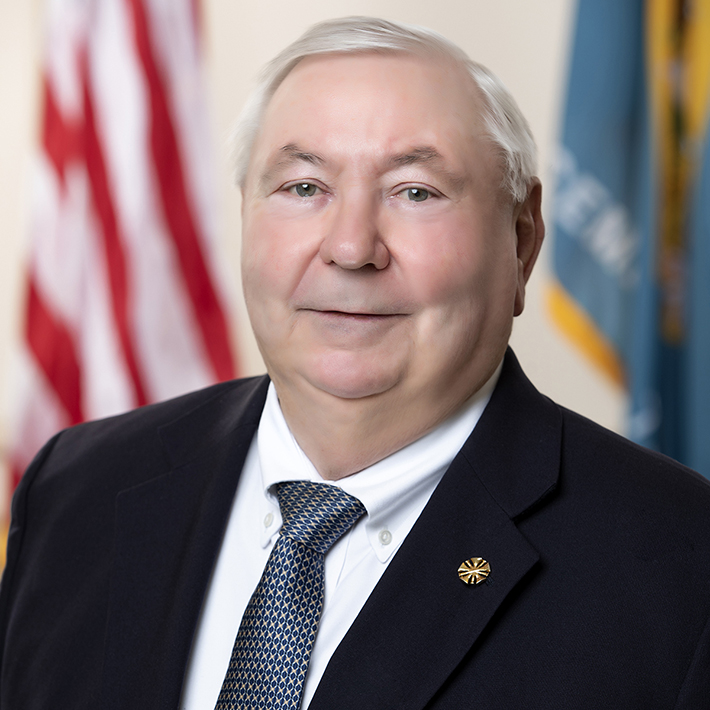
Rep. Bill Carson
Sponsored bills
This Act clarifies that the Director of the Office of Management and Budget has the authority to deposit Special Fund balances into the General Fund as a measure to control agency expenditures.
This Act authorizes the Smyrna School District to convey to the Town of Smyrna property located in Kent County, and known as the School Administration Building, to be used by the Town for public purposes, including incorporating the building and property as part of the proposed Duck Creek Regional Library and Community Center at Smyrna.
This Resolution recognizes April, 2017 as Child Abuse Prevention Month in Delaware.
This resolution designates April 6, 2017 as “National Tartan Day” and commemorates the outstanding achievements and contributions made by Scottish-Americans to the United States. When the United States was first formed and the thirteen states selected their first governors, nine were of Scottish ancestry. All the members of the first American cabinet had Scottish ancestry. Delaware’s first governor, John McKinly, was born in Northern Ireland of Scottish descent. Americans of Scottish descent have played a vibrant and influential role in the development of this country. However, not until 1997 was this influence recognized by a single-year U.S. Senate Resolution that appeared in the Congressional Record of April 7, 1997. In 1998 National Tartan Day was officially recognized on a permanent basis when the U.S. Senate passed Senate Resolution 155 recognizing April 6th as National Tartan Day. This was followed by companion bill House Resolution 41 which was passed by the U.S. House of Representatives on March 9, 2005. President George W. Bush signed a Presidential Proclamation on April 4, 2008 making April 6 National Tartan Day. In April of 2008, then Governor Minner issued a statement celebrating the accomplishments of Scots-Irish Americans in the First State as part of a Scots/Scots-Irish Heritage Month. April 6 commemorates the signing of the Declaration of Arbroath in 1320, which asserted Scotland's sovereignty over English territorial claims, and which was a significant influence on the American Declaration of Independence. Canada has been celebrating "National Tartan Day" since 1993. The idea and motivation for creating a similar American holiday was provided by the Scottish Coalition, a group of national Scottish- American cultural organizations.
This Concurrent Resolution observes April 2017 as the 2017 Month of the Military Child and April 4, 2017 as the official Day of Recognition of the Military Child in the State of Delaware.
This Joint Resolution opposes the cost allocation of the Artificial Island Transmission Project as unfair and unduly burdensome to the ratepayers of Delaware and urges PJM to join with Delaware in contesting the cost allocation in the proceedings pending before FERC.
This resolution encourages all Delaware departments and agencies to consider citizens with visual impairments when developing, maintaining, procuring, or using electronic information and technology.
Subchapter III, Chapter 68, Title 7 of the Delaware Code (“Subchapter III”) was originally enacted in 1982. In 1996, President Clinton signed the Bill Emerson Good Samaritan Food Donation Act, 42 U.S.C. § 1791 (“Bill Emerson Act”). The Bill Emerson Act preempts Subchapter III to the extent of any conflict, known as “partial preemption”. This Act makes Subchapter III consistent with the Bill Emerson Act by protecting a “gleaner” from civil or criminal liability as it relates to their donation of the gleaned food. Since the Bill Emerson Act only partially preempts state law on this subject, the State is free to provide greater protection than the Bill Emerson Act. Therefore, this Act does all of the following: 1. Extends to those who, in good faith, donate food to state agencies the same immunity from civil or criminal liability that is granted to those who, in good faith, donate food to nonprofit organizations. 2. Specifically includes within the definition of “food” both perishable food and wild game to makes it clear that food, in all of its forms, is covered by this Act. Thus, under this Act, those donating deer to the Division of Fish and Wildlife’s Sportsmen Against Hunger program would be immune from civil or criminal liability as it relates to the donation. 3. Protects a person who, in good faith, provides services to a nonprofit organization or state agency related to the processing of wild game that is donated to a nonprofit organization or a state agency. The bill also clarifies the authority of Division of Public Health and Department of Agriculture relating to donated food.
This joint resolution rejects the report of the Delaware Compensation Commission in its entirety.