

This Act is the first leg of a constitutional amendment that would create term limits for legislators and the Attorney General, Insurance Commissioner, Auditor of Accounts, and State Treasurer. Specifically, this Act provides: (1) That an individual may not be elected to be a Senator more than 5 times or a Representative more than 8 times. (2) That an individual may not be appointed or elected to serve more than 2 times each as the Attorney General, Insurance Commissioner, Auditor of Accounts, or State Treasurer. This Act takes effect on the passage of its second leg in the 154th General Assembly. Sections 3 and 4 of this Act make clear that holding an office before the implementation of this Act for that office will not be counted toward the newly instituted term limits. Amending the Delaware Constitution requires not only the passing of the changes in this Act, but also passage of the same changes after the next general election by the next General Assembly. This Act requires a greater than majority vote for passage because § 1 of Article XVI of the Delaware Constitution requires the affirmative vote of two-thirds of the members elected to each house of the General Assembly to amend the Delaware Constitution.
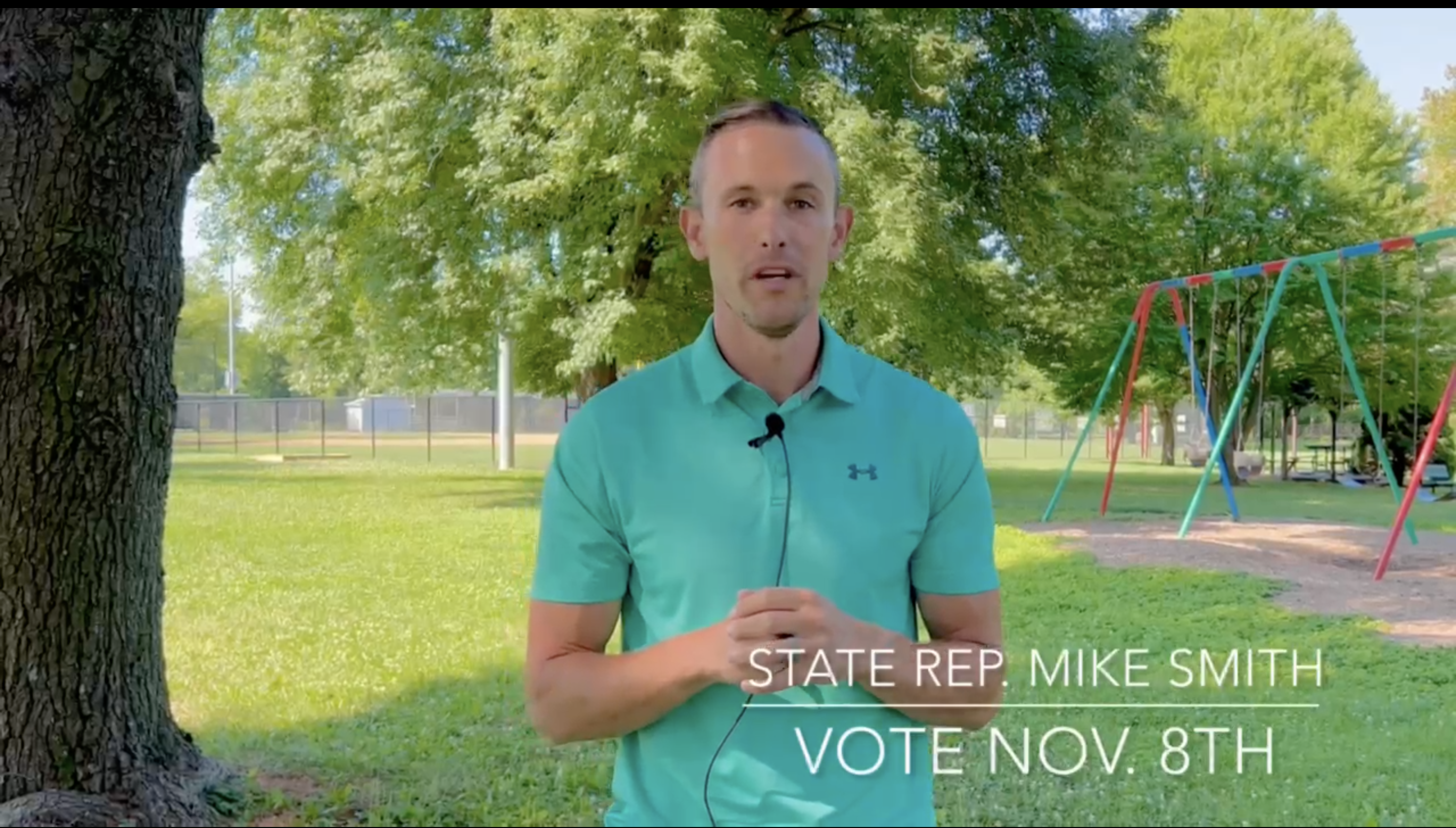
Rep. Mike Smith
Sponsored bills
With 60% of U.S. households living paycheck to paycheck, 40% of Americans having less than $300 in savings, 33% of Americans having saved nothing for retirement, 95% of Americans having not saved enough for retirement, and 87% of American teens admitting not understanding their finances, financial literacy education in Delaware high schools is needed. This Act, which may be cited as “The Equity and Inclusion in Financial Literacy for All High School Students in Delaware Act”, requires high schools to provide, at a minimum, a 1/2 credit on financial literacy. And, beginning with students entering grade 9 in the 2026 through 2027 school year, successful completion of the credit will be required to obtain a high school diploma. This Act requires the credit to include instruction which meets the financial literacy standards for high school students adopted by the Department of Education. This substitute corrects a reference from "course" to "credit" in the synopsis.
Section 1 of this Act requires that $7,000 be paid for the funeral expenses of a deceased member of a volunteer fire company, volunteer fire company ladies auxiliary, or volunteer ambulance and rescue. Consistent with a legal interpretation of the existing law by state agencies, Section 1 of this Act continues to enable the payment of funeral expenses for the funeral of a deceased member of a volunteer fire company, volunteer fire company ladies auxiliary, or volunteer ambulance and rescue company even if the member was also a state employee entitled to burial benefits under § 8331 of Title 11, § 8395 of Title 11, § 8846 of Title 11, or § 5316 of Title 29. However, Section 1 of this Act makes changes to existing law to make this legal interpretation clear and to specifically identify the state employee burial benefits to which this provision applies. Section 2 of this Act delays the effect of this Act until October 1, 2025, to provide time to implement this Act after the enactment of the fiscal year 2026 appropriations act containing the funding for this Act. This Act also makes technical corrections to conform existing law to the standards of the Delaware Legislative Drafting Manual.
This Act updates the Delaware Volunteerism Act to specify that high school students may complete their community service with local fire departments to obtain up to 1 elective credit. It also requires schools to notify students of the opportunity to earn elective credit through volunteer work at or before the time students select their classes. This Act also allows the Department of Education to promulgate regulations to implement the Delaware Volunteerism Act. This Act also makes technical corrections to conform to the standards of the Delaware Legislative Drafting Manual.
Like House Bill No. 15, this Act permits early childhood educators in the public schools to use and encourage play-based learning in their classrooms and in their curriculum. This Act permits local education agencies to provide early childhood professional development in play-based learning, which may include professional development programs developed by the Department of Education. This Act also permits the Department to promulgate regulations for purposes of implementing this Act. This House Substitute No. 1 for House Bill No. 15 incorporates the changes from House Amendment 1 to House Bill No. 15 with respect to the definitions of early childhood education and early childhood educators encompassing education from prekindergarten through second grade, adding topics that may be included in materials developed to provide ongoing early childhood professional development in play-based learning, and making technical corrections for clarity. This House Substitute also updates the definition of “play” and “play-based learning” contained in House Bill No. 15 and adds a definition for “guided play”.
This Act ensures that a public school employee may not work directly with students unsupervised without a valid permit or license issued by the DOE’s Professional Standards Boards or an approved license issued under Title 24. To that end, this Act creates a new permit requirement for any paraprofessional or student support and classroom position, including specialist interns, year-long residents, full time substitute teachers, substitute teachers seeking certification, student teachers, and classroom aides. The following employees are exempt from the permitting and licensing requirements: non-instructional administrators; nutrition staff; custodial staff; transportation staff; clerical staff; charter school heads exempt under § 507(c) of Title 14; and substitute teachers seriving for less than 12 consecutive weeks in a school. The same laws, procedures, penalties, and safeguards that apply to the issuance, suspension, and revocation of a license under Chapter 12 of Title 14, will apply to a permit. The DOE may require reimbursement of any funds disbursed to district or charter schools for an employee without a license or permit, who holds a position requiring a license or permit. The DOE may also require reimbursement for an employee that is working under an expired license or permit. Finally, this Act increases the maximum supplement amount an employee may earn for accepting additional responsibility assignments that impact student achievement. The supplement may be no more than $5,000, rather than $1,500. It also directs the Department to update the Department of Education PHRST code manual so that the position codes align to titles of positions that are currently used by educators, and outdated codes are deleted. The new system codes must be in effect by the start of the 2026-2027 school year. This Act also makes technical corrections to conform existing law to the standards of the Delaware Legislative Drafting Manual.
Maddy summaryHB 64 requires Delaware school boards to provide remote access for public participation in meetings, directly affecting school board members and community residents. The bill mandates that meetings include a functional online platform - such as live streaming or video conferencing - allowing the public to view proceedings and submit comments remotely. This change ensures that residents who cannot attend in person, including those with mobility challenges or during emergencies, can engage with school governance. The provision applies to all regular and special school board meetings under Delaware law. It focuses on practical accessibility without altering school policies or funding.
Under current law, both school board members who are elected and those who are appointed to fill vacancies until the next election are required to complete a background check. However, the statute is currently unclear as to how a background check gets done and who is responsible for reviewing the background check for an appointment. This Act makes clear that a person may not be appointed unless a background check has been completed and the Commissioner of Elections has determined the person is qualified for the seat, in the same manner the Commissioner completes that duty for candidates for school board elections.
Each year, the Department of Education (Department) publishes data regarding all Delaware public schools, currently known as School Performance Data Reports (reports). These reports are available on the Department’s website as the Delaware Report Card. This Act revises current law to correspond with and codify current Department practices regarding these reports as follows: • Changes the term “Education Profile” to “education-related data” to reflect the broad range of data that the Department publishes, in addition to the annual reports required under existing State and federal law. • Requires that there is a link to these reports on the school choice website. • Requires that these reports continue to include proficiency rates. In addition, this Act requires that the Department do all of the following: • Provide a link to these reports on the home page of the Department’s website. • Include a list of a career pathways offered at a high school in these reports. This Act also makes technical corrections to conform existing law to the standards of the Delaware Legislative Drafting Manual which includes revisions to clarify repetitive, confusing, or contradictory language.
This Act makes the following updates to the Behavioral Health Consortium: - Expands the charge of the Consortium to include all aspects of behavioral health care, in addition to substance use disorder. - Adds term limits for appointed members. - Modifies the membership to remove nonoperational organizations and include representation from the Maternal and Child Death Review Board and Delaware’s Veteran community. - Removes the Behavioral Health Commission’s approval authority over the Prescription Opioid Settlement Distribution Commission’s granting and contracting processes. Additionally, this Act makes the following updates to the Prescription Opioid Settlement Distribution Commission: - Revises the Commission’s organization to reflect one Chairperson. The Commission may elect a vice chair from among its members. - Updates authorities related to the distribution of the Prescription Opioid Settlement Fund and the Prescription Opioid Impact Fund. - Ensures any reports produced by the Commission are distributed to the Behavioral Health Consortium. This Act also makes minor technical corrections to conform existing law to the standards of the Delaware Legislative Drafting Manual. This Substitute differs from the original House Bill No. 169 in that it incorporates the conforming changes in House Amendment No. 1 to House Bill No. 169 directly into the body of the bill.