Maddy summaryThis bill directs the Federal banking agencies and the National Credit Union Administration to conduct studies on how to help banks and credit unions serving rural areas grow and remain profitable. The agencies must investigate current laws and regulations that might be hindering these institutions and report their findings to Congress within one year. The legislation does not change any existing rules but instead requires a review to identify potential barriers to establishing new rural financial institutions.
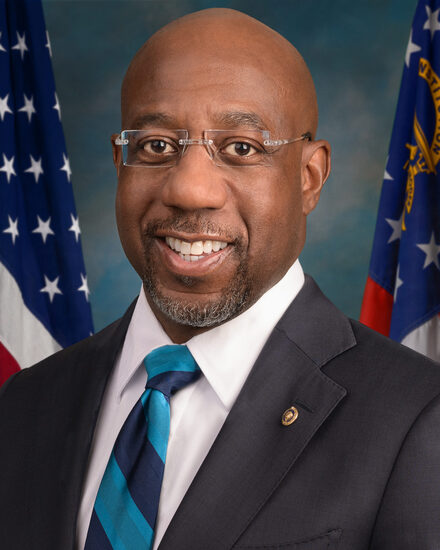
Sen. Raphael G. Warnock
Sponsored bills
Maddy summaryThis bill seeks to overturn a rule issued by the Bureau of Consumer Financial Protection that would have removed previous restrictions on how medical debt is collected. It directly affects medical debt collectors and consumers by attempting to reinstate earlier regulations that prohibited deceptive and unfair collection practices. The legislation uses a congressional disapproval process to declare the new rule invalid, meaning the previous protections for medical debt collectors would remain in place. If passed, this action would prevent the Bureau from withdrawing the existing guidelines on medical debt collection.
Maddy summaryThis joint resolution seeks to disapprove a rule submitted by the Bureau of Consumer Financial Protection that would withdraw a previous regulation on name-only matching procedures for fair credit reporting. The bill directly affects credit reporting agencies and financial institutions that use these matching procedures to verify consumer identities. If passed, the resolution would nullify the Bureau's proposed rule, keeping the existing name-only matching requirements in place. The measure requires approval by both the Senate and House of Representatives to become effective.
Maddy summaryThis bill establishes a federal advisory committee to study challenges in transmitting geolocation and dispatchable location information with 988 Suicide and Crisis Lifeline calls. The committee, formed by the FCC and HHS within 180 days, will include representatives from telecom providers, crisis centers, mental health organizations, and local governments (with specific representation for rural communities and low-population states). It will examine privacy, technical standards, and funding needs before making recommendations for legislation. The committee must submit a report to Congress within one year. This is a procedural study bill, not a direct policy change, and it requires no new funding.
Maddy summaryThis resolution honors the life and legacy of Dirk Kempthorne, a former U.S. Senator, Governor of Idaho, and Secretary of the Interior. It formally acknowledges his public service across various roles, including his work on environmental conservation, veterans' support, and economic development in Idaho. The Senate expresses its sorrow over his death and directs that a copy of the resolution be sent to his family. Additionally, the Senate stands in adjournment as a final mark of respect to his memory.
Maddy summaryS 98, the Rural Broadband Protection Act of 2025, requires the Federal Communications Commission (FCC) to establish a vetting process for applicants seeking new high-cost universal service fund funding to deploy rural broadband networks. It mandates that applicants prove they have the technical, financial, and operational capabilities, along with a sound business plan, to build and operate the proposed network as defined by the FCC. The bill also sets minimum penalties of $9,000 per violation for applicants who fail to meet pre-authorization requirements, with penalties not falling below 30% of the awarded funding. This directly affects entities applying for federal broadband deployment grants in rural areas.
Maddy summaryThis Senate resolution formally recognizes May as Asian American, Native Hawaiian, and Pacific Islander Heritage Month to honor the contributions of these communities to United States history. The document highlights the diversity of the population, cites historical milestones such as the completion of the transcontinental railroad and the passage of immigration laws, and acknowledges specific achievements of individuals like Daniel K. Inouye and Patsy Mink. It also notes the ongoing challenges faced by these groups, including a rise in hate crimes, while celebrating their growing presence in government and society. Ultimately, the bill serves as a symbolic statement of appreciation rather than establishing new legal requirements or funding.
Maddy summaryThis Senate resolution formally recognizes the week of May 3 through May 9, 2026, as National Small Business Week to honor the contributions of small business owners and entrepreneurs across the United States. The measure expresses appreciation for the economic role these businesses play and acknowledges the resilience of their owners and employees. By adopting this designation, the Senate aims to celebrate the entrepreneurial spirit within every community without imposing any new laws or regulations.
Maddy summaryThe Save America's Family Forests Act of 2026 provides tax incentives to encourage landowners to replant trees after natural disasters. It increases the standard tax deduction for general reforestation projects from $10,000 to $30,000 and adds a new, separate deduction of up to $1 million for costs incurred to replant timber damaged by federally declared disasters. These financial benefits are designed to help families and businesses recover from events like wildfires or storms by allowing them to write off replanting expenses on their tax returns. The bill also includes rules to prevent abuse, such as requiring that any property benefiting from these deductions be held for at least ten years before being sold. Additionally, the law mandates that these dollar amounts be adjusted annually for inflation to maintain their value over time.
Maddy summaryThe Veterans Outdoor Rehabilitation Act establishes a grant program administered by the Department of Veterans Affairs to help state veterans agencies expand access to structured outdoor recreation programs. These grants, with a minimum of $200,000 per state, can be used to develop outdoor activities, partner with local providers, reduce costs for veterans, and coordinate with federal land management agencies. States must submit applications outlining their plans and report annually on participation numbers, veteran demographics, and observed well-being outcomes. The legislation authorizes $10 million annually in funding to support these initiatives aimed at improving physical and mental health through nature-based activities.