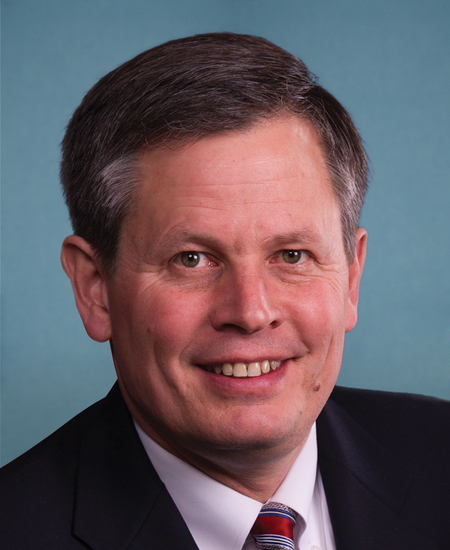
S 3199 United States Senate · 119th Congress

988 Lifeline Location Improvement Act of 2026

This bill establishes a federal advisory committee to study challenges in transmitting geolocation and dispatchable location information with 988 Suicide and Crisis Lifeline calls. The committee, formed by the FCC and HHS within 180 days, will include representatives from telecom providers, crisis centers, mental health organizations, and local governments (with specific representation for rural communities and low-population states). It will examine privacy, technical standards, and funding needs before making recommendations for legislation. The committee must submit a report to Congress within one year. This is a procedural study bill, not a direct policy change, and it requires no new funding.
Bill status passed 3 of 5 stages cleared
Introduction
Nov 2025
Committee Review
Apr 2026
Senate Passage
May 2026
House Passage
President
Introduced Nov 19, 2025 Last action May 12, 2026
Maddy AI version diff · 1 comparison

What changed between versions

Introduced in Senate Engrossed in Senate · 6 edits · May 11, 2026
MODERATE
The engrossed version replaces the original plan of establishing a new 15-member advisory committee with two existing government mechanisms: an FCC notice of inquiry and a GAO study. This is a significant structural simplification that avoids creating a new body with its own staff, meetings, and termination provisions, instead relying on agencies already equipped to conduct such work. The overall goal remains the same - addressing how to transmit geolocation information with 988 Suicide and Crisis Lifeline calls - but the path to getting there is now faster and less resource-intensive.
Scope change
The bill's scope in terms of subject matter (geolocation for 988 calls) is unchanged, but the mechanism shifted from creating a new standing advisory committee to using existing FCC rulemaking authority and GAO study capacity. This makes the process faster and avoids the overhead of a new interagency body.
SCOPE

The entire advisory committee structure (old Sections 3-7) was removed, including the 15-member committee composition, appointment process by FCC and HHS, meeting requirements, chairperson selection, personnel provisions, and termination clause.

REQUIREMENT

New Section 3 requires the FCC to initiate a notice of inquiry within 270 days after enactment, with specific evaluation considerations including legal authority, consumer privacy, technical feasibility, cost recovery options, ASL/video relay challenges, and available technologies for dispatchable location.

New Section 4 requires the GAO (Comptroller General) to conduct a study and submit a report within 180 days after enactment on opportunities and challenges for implementing geolocation for 988, with mandatory consultation with telecommunications providers, handset manufacturers, emergency communications centers, 911 providers, state and local governments, crisis lines, SAMHSA, mental health organizations, community mental health centers, and deaf/hard of hearing service providers.

DEFINITION

Removed definitions for committee, community based mental health organization, handset manufacturer, local crisis center, local government, low population State, mental health services organization, public safety answering point, small and rural communities, and State. Added a new definition for 'emergency communications center' covering both 911 facilities and public safety answering points.

FISCAL

Old Section 8 (funding provision stating the Act would be carried out with otherwise appropriated amounts) was removed along with the committee structure it supported.

TIMELINE

The original timeline had the committee established within 180 days, members appointed within 30 days, first meeting within 30 days of appointments, and a report due 1 year after enactment. The new version has the GAO report due within 180 days and the FCC notice of inquiry initiated within 270 days.

Floor votes

How they voted

This bill passed the Senate by voice vote (no roll call recorded).
Full legislative history

Actions timeline

Total actions
10
Key actions
4
Committee
3
May 11, 2026
Upper · Passed
Passed Senate with an amendment and an amendment to the Title by Unanimous Consent. (consideration: CR S2204-2205; text: CR S2204-2205)
upper
May 11, 2026
Upper · Passed
Passed/agreed to in Senate: Passed Senate with an amendment and an amendment to the Title by Unanimous Consent.
upper
Apr 22, 2026
Upper · Passed
Committee on Commerce, Science, and Transportation. Reported by Senator Cruz with an amendment in the nature of a substitute and an amendment to the title. With written report No. 119-119.
upper
Feb 12, 2026
Upper · Passed
Committee on Commerce, Science, and Transportation. Ordered to be reported with an amendment in the nature of a substitute favorably.
upper
Nov 19, 2025
Committee
Read twice and referred to the Committee on Commerce, Science, and Transportation. (text: CR S8241-8242)
upper
Nov 19, 2025
Introduced
Introduced in Senate
upper
1 primary · 12 co-sponsors

Sponsors