Maddy summaryHB 6016 would standardize early voting procedures to match the existing absentee voting process. It requires state law to align early voting rules (like registration, ballot handling, and location procedures) with the familiar absentee voting system already in place. This change directly affects voters who use early voting locations by making the process more consistent and predictable. The bill focuses on procedural alignment, not policy changes to voting access or eligibility.
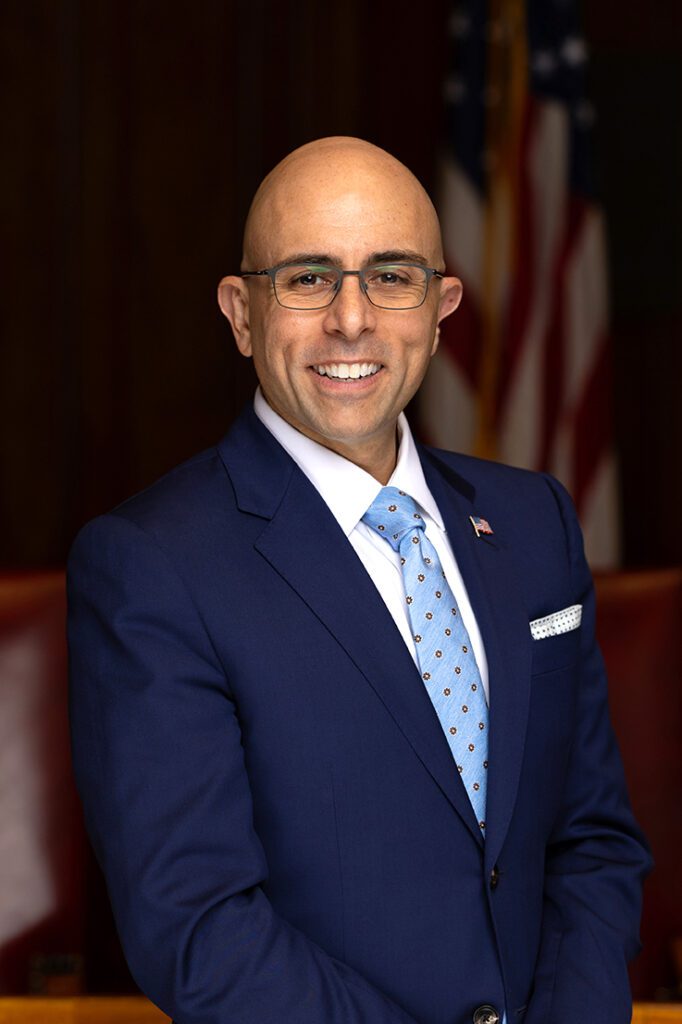
Sen. Jason Perillo
Sponsored bills
Maddy summaryHB 6068 reduces by half the number of post-election audits the State Elections Enforcement Commission conducts on candidate committees. This directly affects political candidates and their campaign committees by cutting the frequency of financial reviews they undergo after elections or primaries. The bill amends Section 9-7b of the general statutes to implement this reduction. Its stated purpose is to decrease the administrative burden on campaign committees through fewer audits.
Maddy summaryHB 6012 reduces early voting periods to lower costs for local governments. It changes general election early voting from 14 days to 7 days and primary early voting from 7 days to 3 days. This directly affects municipalities, which would save taxpayer money by shortening the duration of early voting operations. The bill focuses solely on adjusting voting schedule length without altering voting methods or eligibility.
Maddy summaryHB 6018 requires voters to present a current photo ID displaying their name and address at polling places to cast a ballot. It directly affects voters without photo ID, including low-income individuals and some seniors who may not have standard identification. The bill establishes a program to waive fees for obtaining a government-issued photo ID (like a driver's license or state ID) specifically for voting purposes. This creates a concrete policy change by mandating ID presentation while removing cost barriers to obtaining compliant ID.
Maddy summaryHB 6145 requires health insurance companies to annually certify compliance with state and federal laws ensuring mental health and substance use disorder benefits are covered equally to physical health care. It repeals rules that previously kept insurer names confidential in compliance filings, increasing transparency. The bill creates a new state fund (the "parity advancement account") to support enforcement and public education about parity rights, and authorizes the Insurance Commissioner to impose civil penalties on companies violating these laws. This directly affects insurance providers and their customers seeking mental health or substance use treatment.
Maddy summaryHB 5496 requires the state budget document to break down Medicaid funding into separate, detailed line items, showing each specific allocation instead of grouping all funds under one general category. This bill directly affects how the state government prepares and publishes its budget, increasing transparency for the public and lawmakers regarding Medicaid spending. The key provision amends state law to mandate this detailed reporting for the Medicaid line item, which represents a multibillion-dollar portion of the state budget. The change aims to make budget allocations clearer without altering actual Medicaid funding or program rules.
Maddy summaryHB 5495 would withhold state discretionary and noneducational funding from any municipality that adopts a policy restricting police from notifying federal authorities about arrests of undocumented immigrants. The bill directly affects local governments that implement such policies, which prevent officers from sharing arrest details with immigration officials. Key provisions require municipalities to maintain standard notification practices to retain state funding, with the law explicitly targeting policies that limit this information sharing. The measure aims to influence local law enforcement practices through financial incentives rather than direct legal mandates.
Maddy summaryHB 5497 requires the Board of Regents for Higher Education to provide two annual reports to legislative committees: an independent financial and compliance audit, and a detailed line-item budget. These reports must be submitted as a condition for the Connecticut State University System to receive state block grant funds. The bill directly affects the university system by mandating greater transparency in how state funding is spent. Its purpose is to ensure accountability for public funds through regular, detailed oversight by lawmakers.
Maddy summaryHB 5492 would cap annual state employee pension payments at $100,000 for all future retirees. This bill directly affects current and future state employees who receive retirement benefits, limiting their annual pension payments regardless of years of service or salary history. The key provision amends state law to establish this $100,000 annual maximum for all state employee pensions under the retirement system. The stated purpose is to improve the financial stability and long-term solvency of the state employees' retirement system.
Maddy summaryHB 5494 eliminates automatic cost-of-living adjustments (COLAs) for state legislators' salaries, meaning their pay will no longer increase annually based on inflation. The bill directly affects all state legislators by removing this automatic pay adjustment mechanism. Key provision: It amends statute 2-9c to delete the automatic compensation adjustment, requiring future pay changes to be approved through separate legislative action. This change aims to reduce ongoing state spending on legislator salaries without altering base pay amounts.