Maddy summaryHR 7016, the "No Funds for NATO Invasion Act," blocks federal funding for any U.S. military invasion of a North Atlantic Treaty Organization (NATO) member country or territory covered by NATO's Article 5 mutual defense clause. The bill prohibits using any federal funds for such invasions and bans U.S. officials from executing these actions. It directly affects U.S. military operations and funding decisions involving NATO members. The law applies to all federal spending, preventing the use of existing budgets for this specific purpose.
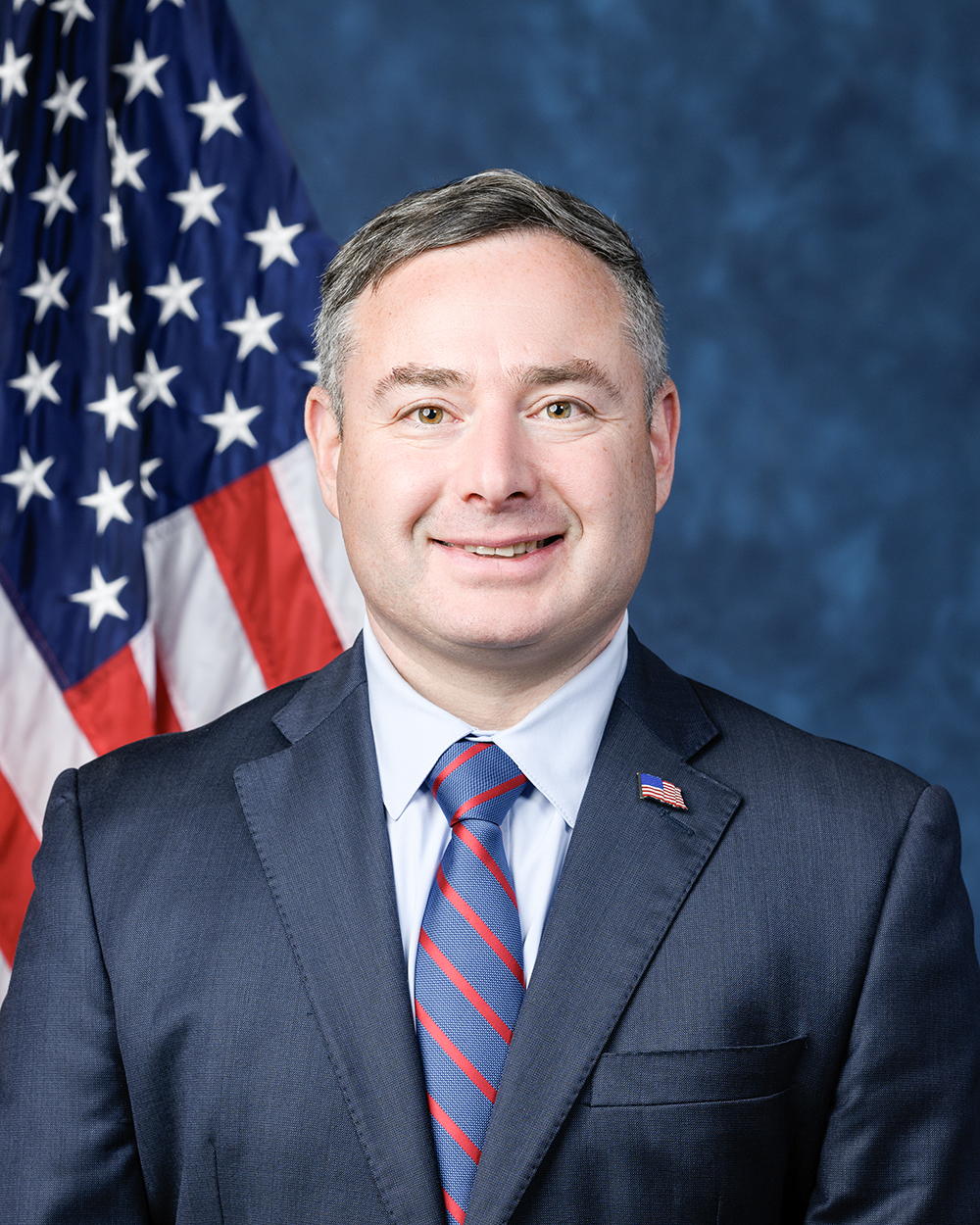
Rep. Eugene Simon Vindman
Sponsored bills
Maddy summaryHR 7004 prohibits federal elected officials, congressional staff, political appointees, and executive branch employees from trading prediction market contracts using material nonpublic information about government policy, actions, or political outcomes. It bans any purchase, sale, or exchange of these contracts when the individual possesses or could reasonably obtain such nonpublic information - defined as important investment details not available to the public. The bill directly affects government insiders who might otherwise trade on inside knowledge of upcoming decisions or election results through prediction markets. Key provisions clarify that covered transactions include any financial instrument tied to future government events, listed on platforms operating across state lines. This creates a specific insider trading rule for prediction markets, distinct from general securities laws.
Maddy summary# Summary of Reserve Component Duty Consolidation Legislation This legislation is a comprehensive revision of military reserve component terminology and definitions throughout the U.S. Code. The primary purpose is to replace the outdated term "inactive duty training" with the more accurate and consistent term "reserve component duty" across all relevant sections of federal law. ## Key Provisions: 1. **Terminology Change**: - Replaces "inactive duty training" with "reserve component duty" in over 50 sections of the U.S. Code (primarily Titles 10, 32, and 37) - Also replaces related terms like "inactive duty" and "inactive duty for training" with "reserve component duty" 2. **Repeals**: - Repeals Chapter 13 of Title 10 - Repeals Sections 10147, 10148, 12406, 12503, 12552 of Title 10 - Repeals Sections 114, 115, and 328 of Title 32 3. **Definition Updates**: - Creates new definitions for "reserve component duty" and "remote assignment" in Title 10 - Defines "Active Guard and Reserve functions" more precisely - Clarifies that reserve component duty includes: * Training as described in sections 552(a) and 553(a) of Title 32 * Support activities authorized for members of the reserve components * Duty prescribed under sections 543 of Title 32 4. **Transition Provisions**: - Establishes a 10-year transition period from the date of enactment - Allows for earlier implementation if all relevant departments (Defense, Homeland Security, Veterans Affairs) certify readiness - Provides for early TRICARE eligibility for members ordered to active duty or full-time National Guard duty 5. **Conforming Amendments**: - Makes numerous technical changes to ensure consistent terminology throughout the U.S. Code - Updates references to training requirements, pay, and benefits to reflect the new terminology This legislation represents a significant effort to modernize military reserve component terminology, eliminate confusing and outdated references, and create a more consistent framework for understanding and managing reserve component service obligations and benefits.
Maddy summaryThis concurrent resolution (HCONRES 69) commemorates the 15th anniversary of the January 8, 2011, Tucson shooting that killed six people and injured 13, including former Congresswoman Gabby Giffords. It honors the victims, survivors, and Giffords - now a prominent advocate for gun violence prevention - and recognizes her leadership in promoting civility and reducing gun violence. The resolution also commends Tucson residents and first responders for their resilience and reaffirms Congress’s commitment to respectful dialogue and opposing political violence. As a ceremonial resolution, it does not create new laws or policies.
Maddy summaryHR 2405, the White Oak Resilience Act, establishes a voluntary coalition to coordinate federal, state, tribal, and private efforts for restoring white oak forests across the U.S. It creates pilot projects on public lands (including national forests and Department of the Interior sites), a non-regulatory grant program for landowners, and a strategy to address tree nursery shortages. The bill directly affects private landowners, tribes, state agencies, and federal land managers by providing technical assistance, funding for restoration, and research on white oak resilience. The program includes a 7-year sunset clause and emphasizes science-based restoration without mandating new regulations.
Maddy summaryThis bill creates a FEMA program providing income-based discounts to make flood insurance more affordable for qualifying policyholders. It caps annual premiums at 1% of a household's area median income for primary residences, small businesses (under 100 employees), and non-profits meeting hardship criteria. The program is funded by $250 million annually (with 95% required spending), and requires FEMA to implement monthly premium payments within 180 days. It directly affects millions of flood insurance policyholders in high-risk areas who struggle with current costs.
Maddy summaryThis bill prohibits the use of federal funds for any military action against Venezuela from its enactment date through December 31, 2026, unless Congress either declares war or passes new specific authorization meeting War Powers Resolution standards. It directly affects all federal agencies and military operations that would require funding for actions targeting Venezuela. The key mechanism blocks funding for military force unless Congress explicitly authorizes it through one of two specific pathways. A narrow exception allows actions already compliant with existing War Powers Resolution rules. This is a funding restriction, not a ban on military action itself.
Maddy summaryThis bill authorizes U.S. Customs and Border Protection to purchase up to 50 non-intrusive imaging systems and deploy them along the southern border for inspecting vehicles and people traveling from the U.S. to Mexico. It also requires hiring 100+ Homeland Security Investigations agents to focus on smuggling investigations involving currency, firearms, drugs, and human trafficking. The bill mandates that by March 2027, at least 10% of southbound vehicles must be inspected, with reports tracking seizure data on currency and firearms every 90 days. These provisions directly affect border enforcement operations, CBP equipment deployment, and HSI staffing at the U.S.-Mexico border.
Maddy summaryHR 4663, the Saving Vet Halls Act of 2025, authorizes the Department of Veterans Affairs to provide grants to eligible veterans service organizations for repairing existing facilities or upgrading technology at their locations. Organizations must submit detailed improvement plans, and grants are limited to $75,000 per year per organization, with recipients ineligible for another grant for five years. The bill explicitly prohibits using funds for new construction or facility acquisition and requires the VA to prioritize organizations based on need, plan quality, and capacity. This program, funded by $10 million annually, directly supports chartered veterans service organizations under 36 U.S.C. § 3621.
Maddy summaryHR 4611 (EACH Act of 2025) requires all federally funded health programs - including Medicaid, Medicare, military health plans, and the Indian Health Service - to cover abortion services without restrictions, repealing the Hyde Amendment's long-standing ban on federal funding for most abortions. This directly affects millions of people enrolled in these programs, particularly low-income women, women of color (including 25% of Black women and 22% of Hispanic women on Medicaid), and young people. The bill mandates coverage in all federally administered health plans and prohibits state or private insurers from restricting abortion coverage in health insurance. It aims to eliminate current federal and state barriers that deny abortion access to people who rely on government health programs.