Issue · Transportation

Transportation (Freight)

Every transportation bill, vote, and legislator stance in Colorado, automatically classified by Maddy, our AI policy reader.

Total bills
5
2026 Regular Session
Top supporter
Chris Richardson
75% support rate
Top opponent
Byron Pelton
0% support rate
Ranked legislators
8
5 support · 3 oppose
Key legislators

Who's moving freight in Colorado

Legislators moving freight in Colorado
Legislator Party Stance Support rate Votes
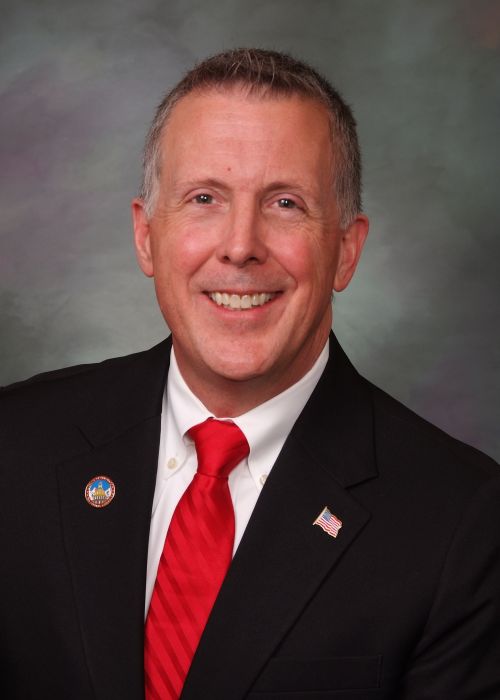
Chris Richardson
Chris Richardson House · District 56
R
Support
75% 4
Amy Paschal
Amy Paschal House · District 18
D
Mixed
50% 4
Andy Boesenecker
Andy Boesenecker House · District 53
D
Mixed
50% 4
Jacque Phillips
Jacque Phillips House · District 31
D
Mixed
50% 4
Kenny Nguyen
Kenny Nguyen House · District 33
D
Mixed
50% 4
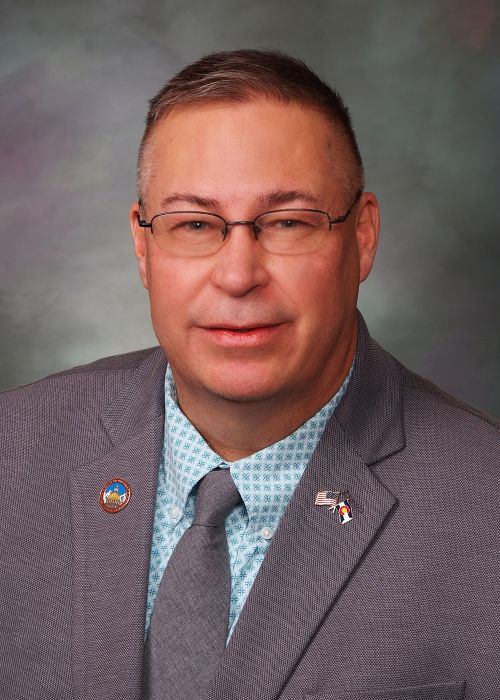
Byron Pelton
Byron Pelton Senate · District 1
R
Strong −
0% 3
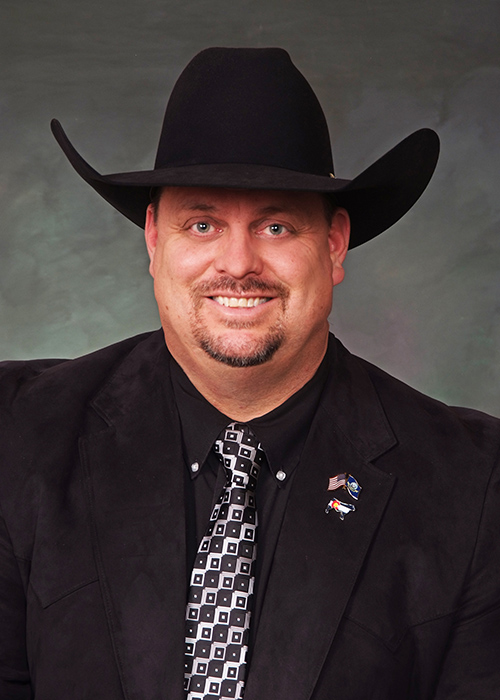
Max Brooks
Max Brooks House · District 45
R
Oppose
25% 4
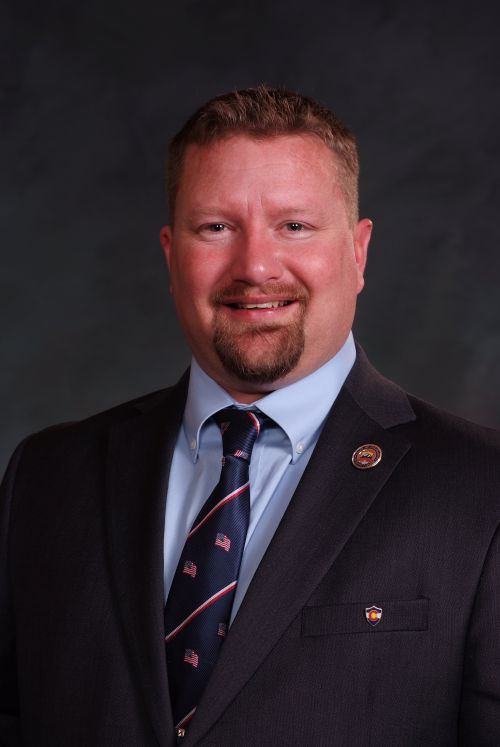
Ron Weinberg
Ron Weinberg House · District 51
R
Oppose
25% 4
Showing 5 of 5 bills

All transportation bills

signed · Colorado · House May 5, 2026

HB 1237: Transportation Safety Modifications

The act makes the following changes to transportation- and traffic-related statutes:Clarifies tire, chain, and alternate traction device requirements for use on a state highway by removing references to four-wheel and all-wheel drive; Prohibits an individual from stopping, standing, or parking a vehicle in the portion of a roadway designated as a bike lane, except when necessary to avoid conflict with other traffic or in compliance with the directions of a police officer or an official traffic control device;Clarifies that specified officers and authorized employees may move an attended or unattended motor vehicle, vehicle, cargo, or debris that is on a highway right-of-way and that obstructs or impedes traffic or highway maintenance or operations; andUpdates statutory references relating to vehicle or traffic collisions or collisions involving other transportation devices to use the term 'crash' or 'incident' in addition to or in place of the term 'accident' and defines 'crash' to include events involving motor vehicles, vulnerable road users, or other transportation devices.(Note: This summary applies to this bill as enacted.)
vetoed · Colorado · House May 28, 2026

HB 1286: Automated Driving System Commercial Vehicles

The act prohibits using an automated driving system to drive a commercial motor vehicle unless an individual who holds a commercial driver's license is in the vehicle, monitors the vehicle's driving, and intervenes, if necessary, to avoid illegal or unsafe driving. The individual must be in the driver's seat if hazardous materials are being transported. The penalty is $1,000 for a first offense, is $2,000 for a second offense, and doubles for each subsequent offense.     The act does not apply to a light-duty vehicle or a truck-mounted attenuator.     The prohibition is repealed September 1, 2031. The chief of the Colorado state patrol will analyze the act's effects on commercial vehicle safety on highways. By November 1, 2030, the chief of the Colorado state patrol will issue a report to the relevant committees of the house of representatives and senate. The report must make recommendations as whether to continue the prohibition and, if continued, any recommended legislation to improve the prohibition.     For the 2026-27 state fiscal year, $14,357 is appropriated to the department of revenue from the Colorado DRIVES vehicle services account in the highway users tax fund to implement the act.(Note: This summary applies to this bill as enacted.)
in committee · Colorado · House Mar 17, 2026

HB 1248: Oversize Overweight Permitting

Beginning on July 1, 2026, the bill directs state-level permit fees and supplemental surcharges for oversize and overweight vehicles and longer vehicle combinations to the freight cash fund (fund), which is newly created in the office of freight mobility and safety (office) in the transportation development division of the department of transportation (department). The fund is appropriated for use by the office for the following main purposes:For funding freight-related projects; andTo support the office in functions related to freight projects, movement, and infrastructure, including the administrative costs of the office.In funding freight-related projects from the fund, the office is required to attempt to direct money in a manner that is proportional to the amount of freight routes and the impact of freight traffic in the affected community or region of the state.The office may also use money in the fund to create and maintain a centralized online permitting system for oversize permits, overweight permits, and other types of freight or transport permits issued by the department, the Colorado state patrol, or any local government. The centralized permitting system must allow a person to apply for and be issued all necessary state and local permits for a route in a single transaction and pay for all associated permit fees and surcharges for that route in a single transaction. By September 1, 2027, the office is required to conduct a feasibility study relating to the centralized permitting system and must report to the transportation legislation review committee during the 2027 legislative interim on the completed feasibility study and any progress toward implementing the centralized permitting system. The office is required to implement the centralized permitting system by July 1, 2029, either by creating a new online permitting system or by modifying an existing online permitting system.(Note: This summary applies to this bill as introduced.)
signed · Colorado · Senate Apr 20, 2026

SB 21: Clean Fleet Enterprise Replace Aging Diesel Trucks

The act authorizes the clean fleet enterprise (enterprise) to incentivize, support, and accelerate the replacement of a truck that is part of a fleet and that is powered by a diesel-fueled internal combustion engine, is a model year of 2009 or earlier, and is registered, operable, and capable of independent roadway operation (aging diesel truck) with a diesel truck that is a model year of 2018 or later (new diesel truck) until December 31, 2031. The act also allows the enterprise to provide funding or financing through grant programs, rebate programs, revolving loan funds, or other strategies to help owners and operators of aging diesel truck fleets finance the replacement of aging diesel trucks with new diesel trucks to reduce the up-front costs of acquiring new diesel trucks until December 31, 2031.     The enterprise may use the clean fleet enterprise fund to provide money to support the replacement of aging diesel trucks with new diesel trucks, but the enterprise is required to ensure that it does not expend more than 20% of the fund's income during a state fiscal year for the support.     To qualify for any money provided by the enterprise for the replacement of aging diesel trucks with new diesel trucks, the act requires a purchaser of the new diesel truck to surrender an aging diesel truck to the seller of the new truck. The seller of the new diesel truck must decommission the aging diesel truck by drilling a hole in the engine's block and cutting the chassis rails in half. The seller must be an authorized dealer of new diesel trucks who must certify that the new diesel truck meets all state and federal emissions and safety standards for its model year.     The enterprise must prioritize applications to replace aging diesel trucks from businesses that are privately owned, independently owned, or have limited access to capital. The enterprise is not allowed to accept an application from the owner or operator of a motor vehicle fleet that owns, leases, or operates more than 50 heavy-duty motor vehicles or from a business entity with annual gross revenue exceeding $100 million. The enterprise is required to prioritize the replacement of an aging diesel truck that has a model year of no later than 2006.     The act expands the business purpose of the enterprise to include providing incentives and support for refrigerated transport units powered by zero emission technology. The act allows the enterprise to exercise its rights and powers without regard to the state 'Procurement Code'.     The act requires the enterprise to annually prepare a report that includes the estimated pollution reduction benefits of the enterprise. The enterprise must seek to ensure that all projects funded by the enterprise achieve measurable results and outcomes.(Note: This summary applies to this bill as enacted.)
signed · Colorado · Senate Apr 20, 2026

SB 26: Weight for Vehicles with Child Restraint System

The act increases the gross vehicle weight rating limit from less than 10,000 pounds to less than 16,000 pounds for a passenger vehicle for which the use of a child restraint system is required.(Note: This summary applies to this bill as enacted.)