Issue · Budget & Taxes

Budget & Taxes (Appropriations)

Every budget & taxes bill, vote, and legislator stance in Colorado, automatically classified by Maddy, our AI policy reader.

Total bills
35
2026 Regular Session
Top supporter
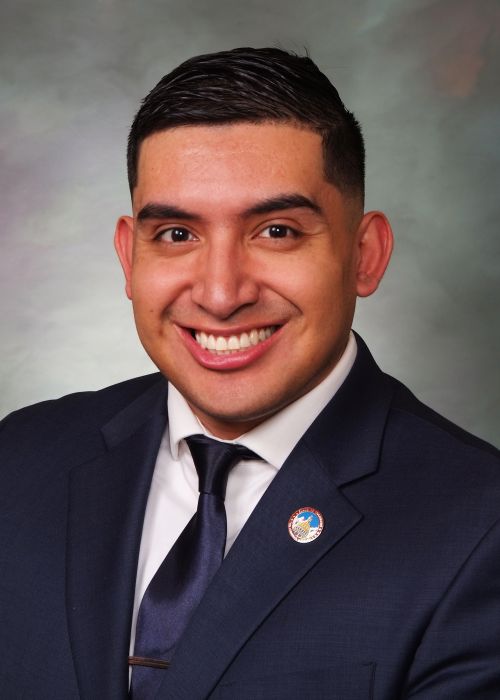
Ryan Gonzalez
100% support rate
Top opponent
Byron Pelton
11% support rate
Ranked legislators
10
5 support · 5 oppose
Key legislators

Who's moving appropriations in Colorado

Legislators moving appropriations in Colorado
Legislator Party Stance Support rate Votes
Ryan Gonzalez
Ryan Gonzalez House · District 50
R
Strong +
100% 7
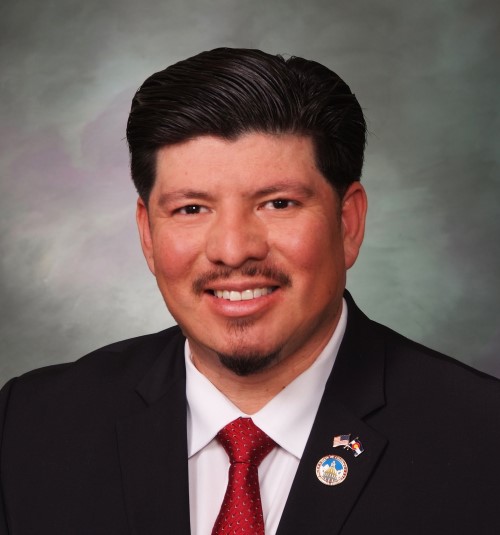
Carlos Barron
Carlos Barron House · District 48
R
Strong +
100% 6
Chris Kolker
Chris Kolker Senate · District 16
D
Strong +
90% 10
Judy Amabile
Judy Amabile Senate · District 18
D
Strong +
89% 9
Julie Gonzales
Julie Gonzales Senate · District 34
D
Strong +
89% 9
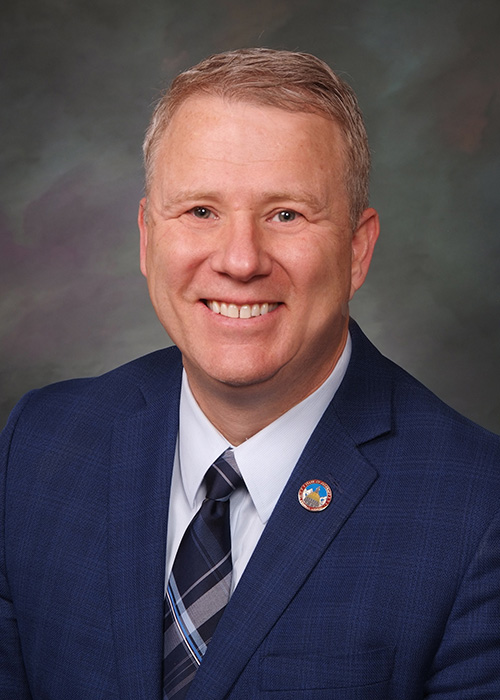
Byron Pelton
Byron Pelton Senate · District 1
R
Strong −
11% 9
Bob Marshall
Bob Marshall House · District 43
D
Strong −
14% 7
Max Brooks
Max Brooks House · District 45
R
Strong −
14% 7
Scott Bottoms
Scott Bottoms House · District 15
R
Strong −
17% 18
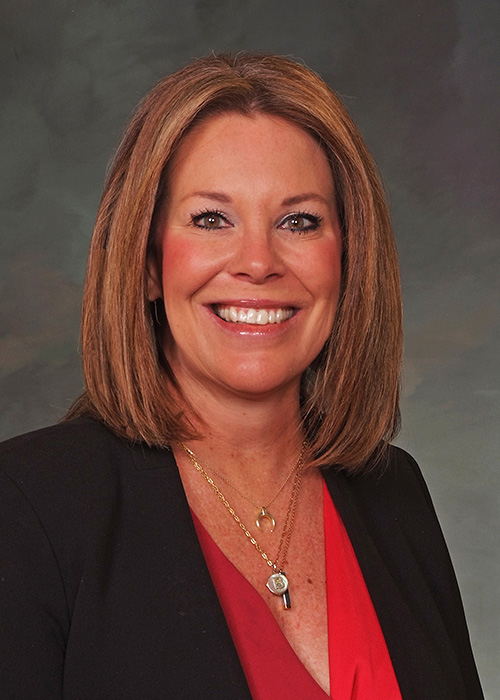
Brandi Bradley
Brandi Bradley House · District 39
R
Strong −
17% 6
Showing 31–35 of 35 bills

All budget & taxes bills

signed · Colorado · House Feb 27, 2026

HB 1150: Department of Agriculture Supplemental

The 2025 general appropriations act is amended to balance and make adjustments to the total amount appropriated to the department of agriculture. The general fund portion of the appropriation is decreased and the cash funds and federal funds portions are increased.(Note: This summary applies to this bill as enacted.)
signed · Colorado · House Mar 12, 2026

HB 1164: Department of Personnel Supplemental

The 2025 general appropriations act is amended to balance and make adjustments to the total amount appropriated to the department of personnel. The general fund, cash funds, and reappropriated funds portions of the appropriation are decreased.     The 2024 general appropriations act is amended to balance and make adjustments to the total amount appropriated to the department of personnel. The reappropriated funds portion of the appropriation is increased.(Note: This summary applies to this bill as enacted.)
signed · Colorado · House Feb 27, 2026

HB 1155: Department of Health Care Policy & Financing Supplemental

The 2025 general appropriations act is amended to balance and make adjustments to the total amount appropriated to the department of healthcare policy and financing. The federal funds portion of the appropriation is increased.     A new appropriation to the department for overexpenditures of line item appropriations in the 2024 long bill is made.     Amends Senate Bill 25-290, concerning the creation of the provider stabilization fund to make provider stabilization payments to eligible safety net providers that serve low-income, uninsured populations in the state, to increase the amount appropriated to the department from the provider stabilization fund for provider stabilization payments related to other medical services.(Note: This summary applies to this bill as enacted.)
signed · Colorado · House Mar 26, 2026

HB 1171: Department of Treasury Supplemental

The 2025 general appropriations act is amended to balance and make adjustments to the total amount appropriated to the department of the treasury. The general fund portion of the appropriation is decreased and the cash funds portion is increased.     The 2024 general appropriations act is amended to balance and make adjustments to the total amount appropriated to the department of the treasury. The general fund portion of the appropriation is increased.(Note: This summary applies to this bill as enacted.)
signed · Colorado · Senate May 28, 2026

SB 23: School Finance Act

The act:Increases the statewide base per pupil funding for the 2026-27 budget year by $208.60 to account for inflation;Sets a new statewide base per pupil funding amount for the 2026-27 budget year at $8,900.40; andSets the total program funding for the 2026-27 budget year at $10,178,856,871.     Under current law, there are 2 total program formulas that are used to determine a school district's total program, commonly referred to as the old formula and the new formula.     A school district's funded pupil count is a figure that is used as a part of determining a school district's total program. Under the new formula, for the 2026-27 budget year and each budget year thereafter, a school district's funded pupil count is calculated by determining the greater of the school district's pupil enrollment for the applicable budget year or the average of the district's pupil enrollment for the applicable budget year and the immediately preceding 2 budget years.     However, the act requires that when specified conditions are met, a school district's funded pupil count is the school district's online pupil enrollment for the budget year, plus the school district's supplemental kindergarten enrollment for the budget year, plus the school district's extended high school pupil enrollment for the budget year, plus the greater of:The school district's pupil enrollment for the budget year;An amount equal to 50% of the school district's pupil enrollment for the budget year, plus an amount equal to 30% of the school district's pupil enrollment for the preceding budget year, plus an amount equal to 20% of the school district's pupil enrollment for the budget year that is 2 years preceding the budget year; orAn amount equal to 97% of the school district's pupil enrollment for the preceding budget year.     A school district's cost of living factor is a figure that is used as a part of determining a school district's total program. Under the old formula and the new formula, the act requires the cost of living factor that was used for the 2025-26 budget year to apply in the 2026-27 budget year.     Under current law, for the 2026-27 budget year, a district's total program is the greater of:The district's total program amount for the 2024-25 budget year; orThe amount calculated for the 2025-26 budget year under the old formula plus an amount equal to 30% of the difference between the amounts calculated between the old formula and the new formula.     The act clarifies that for the 2026-27 budget year, if the calculation under the new formula is less than the calculation under the old formula, then that district's total program for the 2025-26 budget year is the greater of:The district's total program amount for the 2024-25 budget year under the old formula; orThe amount calculated for the 2026-27 budget year under the old formula.     The act permits a school transformation grant recipient that is implementing a priority improvement or turnaround plan to use the grant award to plan for and implement rigorous redesign strategies.     The act changes the provisions that determine the amounts of total program that school districts and the state charter school institute distribute to their charter schools. Related to the changes of these provisions, the act repeals at-risk supplemental aid for charter schools.     The act exempts from a future repeal the general assembly's legislative declaration that using state education fund money for maintaining a website that explains major categories in the chart of accounts for local education providers is a permissible use of state education fund money.     The act repeals the scheduled repeal of, resulting in a continuation of, a statute that authorizes contingency reserve fund payments to be used for rural or small rural school districts if an unusual financial burden would be caused by the withholding of local property taxes due to a delay in filing the audit report due to extraordinary problems that could not have been reasonably foreseen or prevented by the rural or small rural school district. The act adds an assistant superintendent, a vice principal, and an assistant principal to the list of eligible school employees who may receive a salary without a reduction in public employees' retirement association (PERA) benefits if the service retiree meets specified conditions.     The act permits a local education provider to request that the department of education approve the local education provider's use of pencil and paper to complete any or every portion of a state assessment for grades 3 or 4 and requires that the local education provider be responsible for costs owed to the vendor that are associated with the administration of the assessment using pencil and paper.     The act authorizes the state board of education to adopt rules that are necessary to determine the district of residence of a child with a disability for a circumstance that is not described under law.     The act repeals the requirement that $500,000 be distributed to administrative units that enroll children with disabilities and instead requires that $1 million be distributed to fund reimbursements for administrative units that pay tuition or education expenses that ensure a free appropriate public education for a student in out-of-home placement who has an individualized education program.     The act requires the department of education to engage stakeholders concerning public placements in facility schools and on the issue of whether to make recommendations concerning such placements to the state board of education regarding rules or to the general assembly regarding statutes.     Under current law, each participating school food authority that satisfies certain requirements is eligible to receive a local food purchasing grant and an amount to increase wages or stipends for individuals employed to prepare and serve school meals. The act clarifies that a charter school that operates under a participating school food authority is eligible for the awards.     The act:Prohibits a board of cooperative services (BOCES) from acting as a statewide authorizer of programs or schools; andLimits a BOCES to operating a school or program outside the geographic boundaries of its school district members, unless specified conditions are satisfied.     The act permits a local education provider to offer one or more part-time programs for homeschool students if specified conditions are satisfied.     The act requires an authorizer contracting with an education management provider to maintain appropriate independence from, and oversight of, the education management provider. The act prohibits a school district from creating a contract school that is a full-time complete educational program offered exclusively by a private entity pursuant to a contract with the public entity.     The act appropriates:$3,755,558 to the department of education from the state education fund for the state share of districts' total program;$313,395 to the department of education from the state education fund for management and administration for information technology services and for use by school district operations for administration related to public school finance; and$3,385,203 to the department of education from the state education fund for school district operations for costs associated with holding charter schools harmless for changes in the distribution of total program funding.     The act adjusts the 2026-27 long bill by decreasing:$8,502,195 from the appropriation from the state education fund to the department of education for the state share of districts' total program funding; and$3,504,995 from the appropriation from the state education fund to the department of education for use by school district operations for at-risk supplemental aid.(Note: This summary applies to this bill as enacted.)
Showing 31 to 35 of 35 bills
Previous 1 2 3 4