Issue · Budget & Taxes

Budget & Taxes (Appropriations)

Every budget & taxes bill, vote, and legislator stance in Colorado, automatically classified by Maddy, our AI policy reader.

Total bills
49
2026 Regular Session
Top supporter
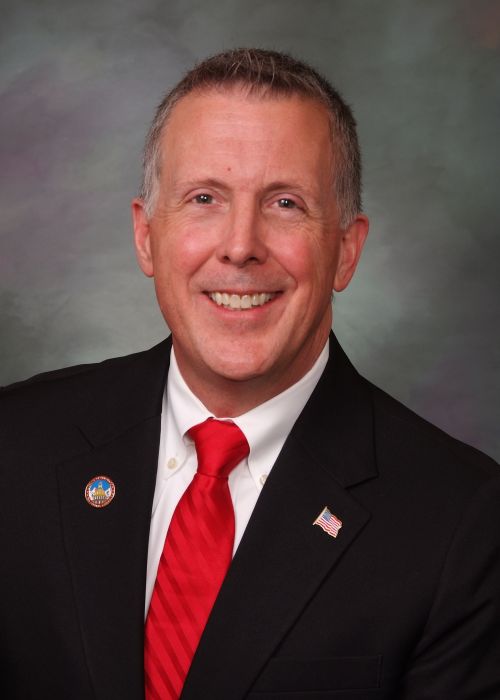
Ryan Gonzalez
100% support rate
Top opponent
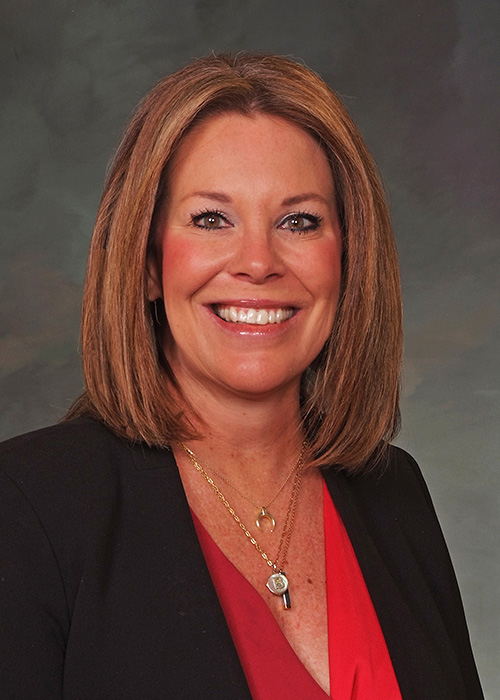
Byron Pelton
11% support rate
Ranked legislators
10
5 support · 5 oppose
Key legislators

Who's moving appropriations in Colorado

Legislators moving appropriations in Colorado
Legislator Party Stance Support rate Votes
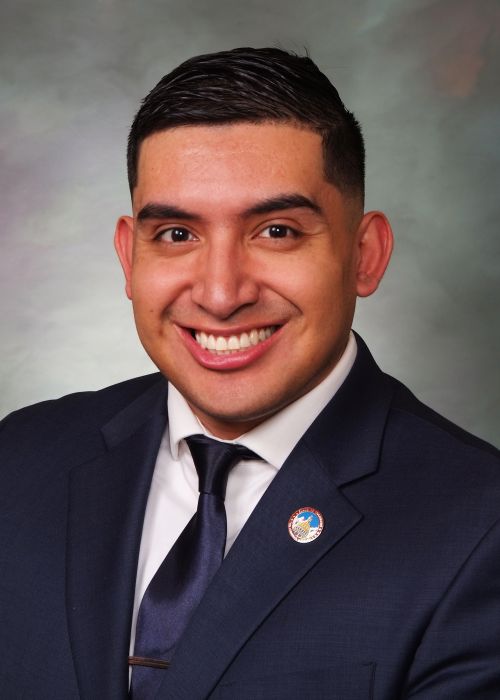
Ryan Gonzalez
Ryan Gonzalez House · District 50
R
Strong +
100% 7
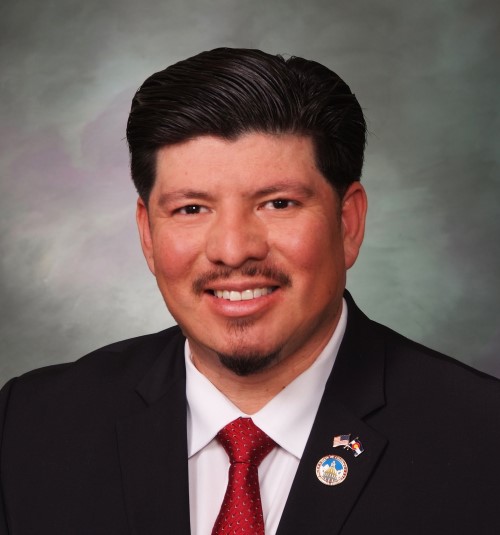
Carlos Barron
Carlos Barron House · District 48
R
Strong +
100% 6
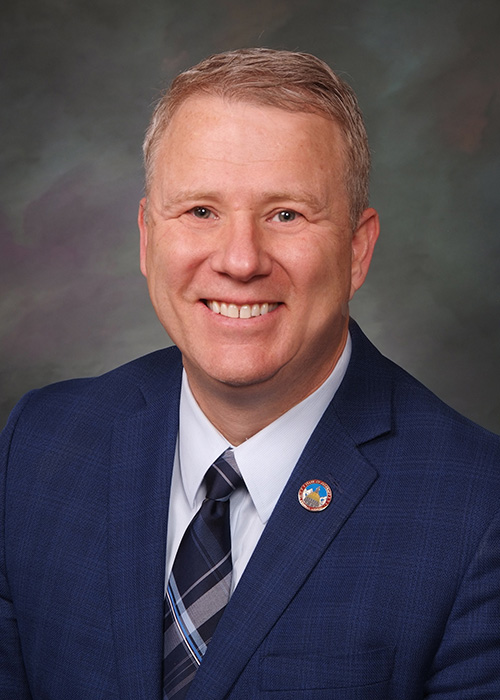
Chris Kolker
Chris Kolker Senate · District 16
D
Strong +
90% 10
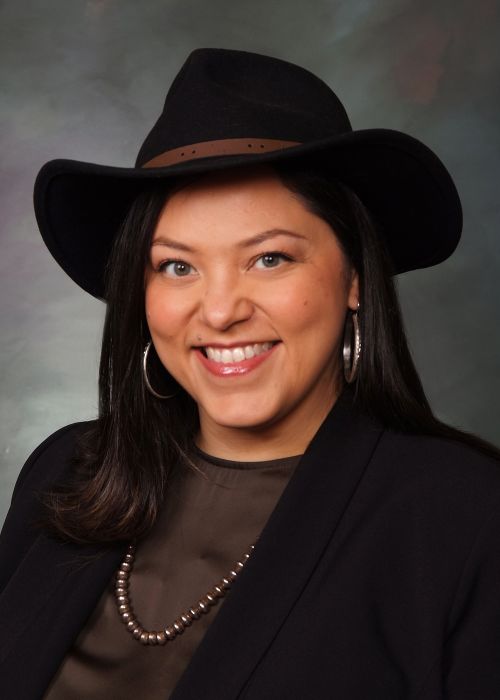
Judy Amabile
Judy Amabile Senate · District 18
D
Strong +
89% 9
Julie Gonzales
Julie Gonzales Senate · District 34
D
Strong +
89% 9
Byron Pelton
Byron Pelton Senate · District 1
R
Strong −
11% 9
Bob Marshall
Bob Marshall House · District 43
D
Strong −
14% 7
Max Brooks
Max Brooks House · District 45
R
Strong −
14% 7
Scott Bottoms
Scott Bottoms House · District 15
R
Strong −
17% 18
Brandi Bradley
Brandi Bradley House · District 39
R
Strong −
17% 6
Showing 11–20 of 49 bills

All budget & taxes bills

signed · Colorado · House May 27, 2026

HB 1373: Subsidy Limits in Assistance Programs for Children

The act specifies monthly subsidy payment reimbursement limits for the adoption assistance program and the relative guardianship assistance program that apply to contracts that take effect July 1, 2026, or later, and prohibits reimbursement for services other than nonreoccuring adoption expenses. The act requires the state department of human services to create a standardized notice for families that describes the reimbursement change. The act requires the county departments of human or social services to provide the notice by June 15, 2026, to families currently receiving services.     The act reduces the state fiscal year 2025-26 appropriation to the department of human services for adoption and relative guardianship assistance made in the long bill as follows:From the general fund, by $2,199,750; andFrom cash funds, by $407,295.(Note: This summary applies to this bill as enacted.)
signed · Colorado · House Jun 1, 2026

HB 1358: Reduce Academic Accelerator Grant Program Appropriation

The act reduces by $5.2 million the appropriation for the Colorado academic accelerator grant program for the 2023-24 state fiscal year, which is available for expenditure through the 2026-27 state fiscal year.(Note: This summary applies to this bill as enacted.)
signed · Colorado · House Jun 2, 2026

HB 1397: Multiple Employer Health Trust Funding

Current law requires the general assembly to appropriate $650,000 from the general fund to the department of local affairs (department) on July 1, 2026, and $1 million from the general fund to the department on July 1, 2027, to reduce participating employer contributions to a multiple employer health trust for volunteer firefighters and part-time firefighters. The act repeals the appropriation otherwise required on July 1, 2026.     Current law requires the general assembly to appropriate money from the general fund to the division of criminal justice in the department of public safety for the purpose of reimbursing a multiple employer health trust for the direct costs of providing cardiac and other health screenings for peace officers as follows:$350,000 for the state fiscal year beginning July 1, 2026; $500,000 for the state fiscal year beginning July 1, 2027; $1 million for the state fiscal year beginning July 1, 2028; andOn each July 1 thereafter, sufficient funds.The act repeals the appropriation otherwise required on July 1, 2026.     For the 2026-27 state fiscal year, the general fund appropriation and the reappropriated funds appropriation from the firefighter benefits cash fund to the department of local affairs for firefighter heart and circulatory malfunction benefits are each decreased by $150,000.     For the 2026-27 state fiscal year, the general fund appropriation to the department of public safety for use by the division of criminal justice for first responder employer health benefit trusts is decreased by $100,000.(Note: This summary applies to this bill as enacted.)
signed · Colorado · House Jun 1, 2026

HB 1408: Processes to Determine State Budget Requests

The act requires a state agency, defined as any department, commission, council, board, bureau, committee, institution of higher education, agency, or other governmental unit of the executive, legislative, or judicial branch of state government that receives an appropriation or is otherwise included in the annual general appropriation act, to submit a base budget for the upcoming state fiscal year to the joint budget committee and the office of state planning and budgeting (office) on or before September 1 of each year, beginning in 2026. The act excludes specific independent agencies within the judicial department from this requirement. For these excluded agencies, the office of administrative services for independent agencies must submit a single, consolidated base budget on their behalf. A base budget is defined as the total amount appropriated in the annual general appropriation act and other legislation enacted in the prior state fiscal year plus:Out-year costs or savings from legislation adopted in prior years that were not included in the appropriations for the preceding state fiscal year; and Budget adjustments from prior years that were not included in the appropriations for the preceding state fiscal year.A state agency is required to submit its base budget using a format agreed upon by state agencies and the office, in coordination with joint budget committee staff.     The act also requires the director of the office, in collaboration with the executive director of the department of personnel, to provide information related to the office's calculations for common policies, as annually submitted in the governor's November 1 budget request, to the departments, institutions, and agencies of the executive, judicial, and legislative branches of state government as soon as practicable prior to the submission of the November 1 budget request.(Note: This summary applies to this bill as enacted.)
signed · Colorado · House May 8, 2026

HB 1410: 2026-27 Long Appropriations Bill

Provides for the payment of expenses of the executive, legislative, and judicial departments of the state of Colorado, and of its agencies and institutions, for and during the fiscal year beginning July 1, 2026, except as otherwise noted.(Note: This summary applies to this bill as enacted.)
signed · Colorado · House Jun 4, 2026

HB 1412: Department of Health Care Policy & Financing Statistical Sampling & Extrapolation

If an audit of a medicaid provider who provides nonemergency medical transportation services or pediatric behavioral therapy is initiated after July 1, 2026, for services provided from January 1, 2022, through December 31, 2023, the act authorizes the department of health care policy and financing (HCPF) to determine and recover overpayments to a provider using statistical sampling and extrapolation. If an audit identifies a statistically significant pattern of alleged overpayments to a provider, the act authorizes the state auditor to use the same statistical sampling and extrapolation methods to audit services provided by the provider from January 1, 2024, through December 31, 2025.     If the audit identifies an alleged overpayment, HCPF is required to issue a notice of the alleged overpayment within 60 days after the alleged overpayment is identified. The notice of alleged overpayment must include the basis of the alleged overpayment, the rationale for the alleged overpayment, the methodology used to calculate the alleged overpayment, and information on how HCPF identified the alleged overpayment.     If HCPF enters into a contract for the purpose of conducting an audit, the contract must not be a contingency-based contract based on a percentage of the amount of recovery collected from the provider.     After HCPF completes an audit of a provider, the state auditor's office is required to conduct an examination to determine that proper statistical sampling and extrapolation methods were used by HCPF when determining whether overpayments were made to a provider. The state auditor shall annually present a report of the findings to the legislative audit committee and the joint budget committee.     The act reduces the general fund appropriation to HCPF for medical and long-term care services for Medicaid-eligible individuals by $6,861,775 and increases the cash fund appropriation to HCPF for medical and long-term care services for Medicaid-eligible individuals by $13,723,550.(Note: This summary applies to this bill as enacted.)
vetoed · Colorado · House May 28, 2026

HB 1355: Reduce Appropriation Out-of-School Time Grant Program

The act repeals the requirement for the general assembly to appropriate money in the 2026-27 state fiscal year for the out-of-school time program grant program (grant program).     The act reduces the appropriation for the 2026-27 state fiscal year to the department of education for use by the grant program by $1,750,000.(Note: This summary applies to this bill as enacted.)
signed · Colorado · House Jun 4, 2026

HB 1411: Changes to Cover All Coloradans Program

The act limits the benefits pregnant women and children with a certain family household income and citizen or immigration status are eligible for under the state medical assistance program and the medical assistance program.     Eligible pregnant women and children are subject to the following limitations on benefits:Beginning July 1, 2026, there is an annual cap on dental services in the amount of $1,100;Beginning January 1, 2027, behavioral health services offered must be provided on a fee-for-service basis only;Beginning January 1, 2027, services offered through the accountable care collaborative are no longer covered; andBeginning January 1, 2027, managed care services through the medical assistance program are no longer covered.     Beginning January 1, 2027, children under 19 years old whose family household income does not exceed 260% of the federal poverty line, adjusted for family size, and who are not eligible for the medical assistance program due to their immigration status, are not eligible for home- and community-based services, community first choice, long-term home health, private duty nursing, hospice care, and nursing home care unless those children already receive those services on or before December 31, 2026.     Beginning January 1, 2027, the act caps enrollment of children in the state medical assistance program at 25,000 children if either enrollment exceeds 25,000 or the expenditures for a fiscal quarter exceeds one-quarter of the appropriation for state medical assistance plus 5% to account for seasonality fluctuations. If one of the conditions is met, the enrollment cap begins on the first day of the month following 60 days after the department of health care policy and financing (state department) determines that the condition was met.     The act repeals provisions requiring the state department to develop an outreach and enrollment strategy for enrolling eligible groups into new coverage options and repeals the state children's basic health plan.     The act appropriates $3,378,166 from the general fund to the state department to implement the act and reduces appropriations to the state department by $14,202,723 if certain conditions are met.(Note: This summary applies to this bill as enacted.)
signed · Colorado · House May 27, 2026

HB 1389: Comprehensive Human Sexuality Education Grant Appropriation

The act eliminates the requirement that the general assembly annually appropriate money to the department of public health and environment for the comprehensive human sexuality education grant program.(Note: This summary applies to this bill as enacted.)
signed · Colorado · House May 27, 2026

HB 1354: Repeal Science Teacher Professional Development Program

The act repeals a professional development program for science teachers (program) on July 1, 2027. For the 2024-25 state fiscal year, the general assembly appropriated $3 million from the state education fund for the program, which money is available for expenditure through the 2026-27 state fiscal year. The act reduces the appropriation to $1.5 million.(Note: This summary applies to this bill as enacted.)
Showing 11 to 20 of 49 bills
Previous 1 2 3 5 Next