Maddy summaryThis bill extends the deadline for the National Emergency Medical Services Memorial Foundation to establish a commemorative memorial in Washington D.C. and its surrounding areas to November 3, 2032. It directly affects the foundation by modifying the expiration date previously set to end a 7-year period. The change ensures the foundation has sufficient time to complete its memorial work within the updated timeframe.
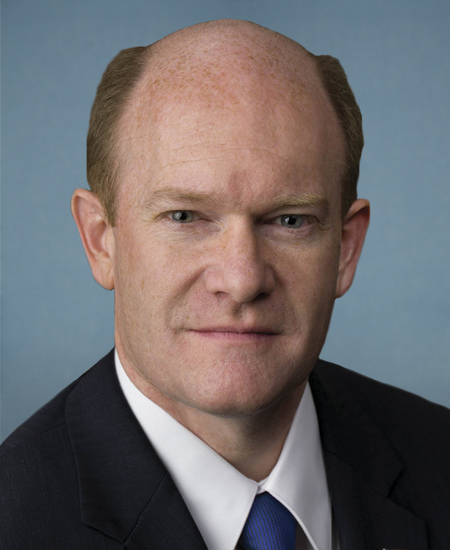
Sen. Christopher A. Coons
Sponsored bills
Maddy summaryThe FIRST Act establishes a new program within the Department of State to promote the international deployment of American small modular reactor technology. Managed by the Under Secretary for Arms Control and International Security, the program will advocate for U.S. nuclear exports, ensure high safety and security standards, and provide support for project development and workforce training abroad. The legislation requires the program to submit detailed reports and briefings to Congress every 120 days regarding its activities and funding, and it is set to expire in 2034.
Maddy summaryThis concurrent resolution formally recognizes the significant wage gap between Black women and white, non-Hispanic men in the United States. The document cites data showing that Black women earn roughly 65 cents for every dollar earned by white men and highlights how this disparity impacts their ability to support families and accumulate wealth. By referencing existing laws like the Equal Pay Act and the Civil Rights Act, the bill reaffirms Congress's support for equal pay for equal work without proposing new legislation or policy changes. Ultimately, the measure serves as a symbolic acknowledgment of the economic challenges faced by Black women due to dual discrimination based on race and gender.
Maddy summaryThis resolution directs the Senate Legal Counsel to file a lawsuit on behalf of the Senate to enforce the Foreign Emoluments Clause of the U.S. Constitution, which prohibits the President from accepting gifts or payments from foreign governments without Congressional approval. The bill specifically targets alleged violations by President Donald J. Trump, citing instances such as accepting a refurbished aircraft from Qatar, cryptocurrency investments from foreign-linked entities, and real estate deals in various countries that generated income for the President and his family. By seeking a court injunction, the measure aims to stop the President from accepting these specific benefits unless Congress provides its consent.
Maddy summaryS 3456, the Law Enforcement Officer and Firefighter Recreation Pass Act, creates a free annual pass for eligible law enforcement officers and firefighters to use at national parks and federal recreational lands. The bill directly affects active officers and firefighters employed by federal, state, local, or tribal governments who perform duties related to crime prevention/detection or fire suppression. It amends existing law to require the Secretary to provide these passes at no cost, after verifying eligibility through proof of employment. The key mechanism is expanding the current pass program to specifically include these public safety professionals under defined roles.
Maddy summaryThe National Coordination on Resilience for Security Act of 2026 creates a new Chief Resilience Officer within the National Security Council to lead federal efforts in preparing for natural hazards and enhancing national security. This official will establish interagency working groups and a Partners Council on Resilience that includes representatives from state, local, tribal, and private sector entities to coordinate strategies and identify funding gaps. The bill requires the development of a National Resilience Strategy that outlines how federal agencies will collaborate with non-federal partners to improve infrastructure, reduce waste, and support vulnerable communities. Additionally, the act mandates the creation of a public clearinghouse to share resilience data and technical assistance, with all provisions set to expire after ten years or following a third independent assessment.
Maddy summaryThis resolution honors the life and legacy of the late Senator Lindsey Olin Graham from South Carolina. It formally acknowledges his extensive career in the military, state government, and Congress, noting his service as a Senator and his roles as Chairman of the Judiciary and Budget committees. The Senate expresses its sorrow over his death and requests that this tribute be shared with the House of Representatives and Graham's family.
Maddy summaryThis bill establishes a comprehensive sanctions framework targeting the Russian government and its affiliated entities in response to ongoing military actions. It authorizes the President to block assets, revoke visas, and prohibit financial transactions for Russian officials, military leaders, and foreign persons supporting Russia's defense industry or undermining Ukraine. The legislation also bans U.S. investments in Russian energy sectors, prohibits the purchase of Russian sovereign debt, and imposes high tariffs on Russian imports while restricting crude oil purchases by specific foreign nations. Additionally, the bill prevents Russian companies from listing on U.S. stock exchanges and includes mechanisms for terminating sanctions only if Russia signs a peace agreement accepted by Ukraine and ceases hostilities.
Maddy summaryThe NO BOSS Act modifies federal rules to allow individuals receiving unemployment benefits to start self-employment businesses without first exhausting their regular benefits. It requires that these self-employment activities include approved entrepreneurial training, business counseling, or a submitted business plan with a market feasibility study. The changes take effect two years after enactment, though states are permitted to adopt similar rules earlier. The Department of Labor will issue regulations and guidance to help state agencies implement these new requirements.
Maddy summaryThe PROMISE Act of 2026 establishes a mandatory process for Congress to address Social Security solvency by requiring the Social Security Advisory Board to develop and submit specific legislative recommendations by September 2026. This legislation mandates that Congress convene and consider a Social Security bill by November 2026, with strict rules limiting debate to 100 hours and prohibiting amendments that would not achieve long-term solvency or alter the program's funding. To pass the bill, the Senate requires a three-fifths majority vote while the House requires a simple majority, and the process restricts the inclusion of unrelated provisions to ensure the focus remains on the financial stability of the Social Security Trust Funds.