

Gateway Partnership Act This bill authorizes the National Park Service (NPS) to enter into a one-time agreement with the Gateway Arch Park Foundation to host private events at the Gateway Arch National Park and its buildings for a period of up to five years. The NPS manages the park, located in St. Louis, Missouri, and its buildings, such as the Arch Visitor Center and the Old Courthouse. The bill outlines the terms and conditions that must be included in the agreement. The bill also requires private events hosted at the park or its buildings to be consistent with the park's purposes and compatible with NPS programs. Such events may not (1) degrade the integrity, appearance, or purposes of the park; or (2) take place during times or in locations that prevent or disrupt public use or access to the park or its buildings. The NPS must charge a fee to cover the cost of wear and tear resulting from the private events. The NPS may recover all costs incurred as a result of the private events, including maintenance, utilities, administrative expenses, security, and personnel costs. The bill terminates the NPS's authority to enter and carry out an agreement with the foundation seven years after the enactment of this bill.
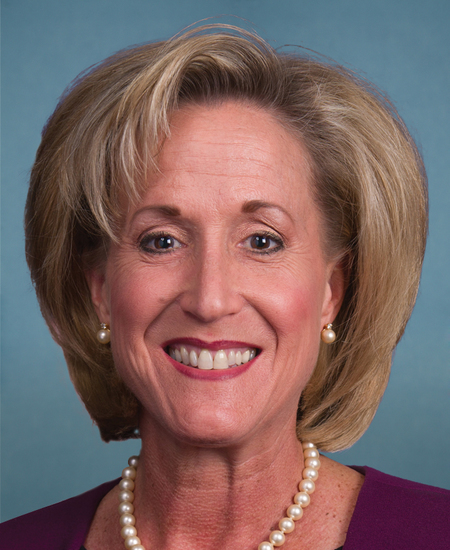
Rep. Ann Wagner
Sponsored bills
Maddy summaryThe Backlog Justice Act of 2026 aims to reduce the backlog of untested sexual assault evidence kits by requiring the Attorney General to create a public database tracking inventory levels and laboratory processing times across state and local jurisdictions. To address staffing shortages, the bill authorizes the FBI to develop training programs for forensic analysts and DNA technical leaders, allowing states and localities to hire individuals who have completed this federal training. Additionally, it funds a program for the FBI to collaborate with state and local providers on validating new DNA processing technologies and sharing related protocols. The legislation also provides increased grant funding to states that implement electronic tracking systems allowing sexual assault survivors to monitor the status of their evidence kits from collection through final disposition.
Maddy summaryThe Consumer Financial Protection Accountability and Reform Act of 2026 significantly restructures the Bureau of Consumer Financial Protection by subjecting it to the regular federal appropriations process and establishing an independent Inspector General appointed by the President. The bill restricts the Bureau's supervisory authority over banks and credit unions with assets under $30 billion, allowing these institutions to elect to remain under their existing prudential regulators instead. It also introduces a safe harbor for small-dollar loans of $3,500 or less that meet specific structural requirements, shielding compliant lenders from civil money penalties and private damages. Additionally, the legislation creates federal standards for earned wage access services, requiring providers to offer a no-cost option for early wage access and prohibiting them from treating these services as credit or debt under federal law.
Maddy summaryThe Nitrous Oxide Safety Act of 2026 would classify consumer products containing nitrous oxide as banned hazardous items under federal law, except for specific exceptions. The bill prohibits the sale of nitrous oxide products for recreational use while allowing continued sales for medical and dental treatments, food production in commercial kitchens, research and development activities, and food propellant applications. This legislation directly affects manufacturers, retailers, and consumers by restricting access to nitrous oxide in consumer products after 180 days from enactment. The law defines nitrous oxide as the gas known as laughing gas or whippits and specifies which entities and activities are exempt from the ban.
Maddy summaryHR 1653, the Civil Investigative Demand Reform Act of 2025, amends rules for the Consumer Financial Protection Bureau's (CFPB) information requests (civil investigative demands or CIDs) under the Consumer Financial Protection Act of 2010. It directly affects financial institutions and businesses under CFPB investigation by requiring CIDs to specify particular facts, extending the violation window to six years, and adding a process for attorneys to seek clarifications from the CFPB within 20 days. Key provisions include clearer legal grounds for challenging CIDs (such as undue burden or duplication) and allowing judicial review if the CFPB denies a request to modify or dismiss a CID. The bill aims to make the CID process more transparent and predictable for regulated entities.
Maddy summaryThis bill requires all new passenger vehicles manufactured for sale in the U.S. to include AM radio as standard equipment (not an optional add-on) by 2027-2028, depending on manufacturer size. It mandates that AM radio receivers must be easily accessible to drivers and allows compliance through digital AM broadcast technology. During a transition period, manufacturers must clearly label vehicles without AM radio but cannot charge extra for this feature. The bill also mandates a GAO study on AM radio's role in emergency alerts and includes a 10-year sunset provision for the rule. It preempts state laws regarding AM radio access in vehicles.
Maddy summaryThis House resolution commemorates the 30th anniversary of the State Partnership Program between Missouri and Panama, which was established in 1996 to foster military cooperation. The bill highlights how this partnership has expanded beyond security to include joint training exercises, disaster response, cybersecurity efforts, and educational exchanges between institutions in both regions. It also notes the economic ties between the two, citing significant trade flows and the strategic importance of the Panama Canal for Missouri businesses. By formally recognizing these achievements, the resolution encourages continued collaboration and reaffirms U.S. support for partnerships that promote regional stability and mutual prosperity.
Maddy summaryHR 5267, the American Franchise Act, clarifies when franchisors can be considered joint employers of franchisee employees under federal labor laws. It defines "substantial direct and immediate control" over essential employment terms like wages, benefits, hours, hiring, and discipline - requiring franchisors to actively set these terms to be deemed joint employers. The bill explicitly excludes routine brand standards, training, or minimal safety requirements from constituting such control. This directly affects franchisors and franchisees by limiting joint employer liability to cases where franchisors exert significant, ongoing influence over core employment decisions. The law applies prospectively to new cases after enactment, not past disputes.
Maddy summaryThis House resolution marks the 25th anniversary of the September 11, 2001 terrorist attacks by formally honoring the memory of the nearly 3,000 victims and recognizing the sacrifices made by first responders, military personnel, and the passengers of United Airlines Flight 93. The bill acknowledges the ongoing health challenges faced by survivors and responders, highlighting the role of the World Trade Center Health Program in providing long-term medical support. It also credits charitable organizations and community groups that have continued to assist victims' families and veterans over the past two decades. Finally, the resolution urges the American public to observe the anniversary with ceremonies and reaffirms Congress's commitment to remembering the events and lessons of that day.
Maddy summaryThis bill aims to reform the Securities and Exchange Commission by requiring the agency to analyze the costs and benefits of new regulations before issuing them and to conduct regular reviews of their impact. It mandates that the SEC Chairman testify to Congress every six months on the Commission's activities and requires an independent audit of the agency's cybersecurity and information technology systems. Additionally, the legislation transfers the Public Company Accounting Oversight Board to the SEC, establishes a minimum 60-day public comment period for new rules, and clarifies how penalties are calculated for multiple violations. The bill also directs the SEC to streamline its internal organization and consolidate regional offices to improve efficiency.