Pain-Capable Unborn Child Protection Act This bill establishes a new criminal offense for performing or attempting to perform an abortion if the probable post-fertilization age of the fetus is 20 weeks or more. A violator is subject to criminal penalties—a fine, a prison term of up to five years, or both. The bill provides exceptions for an abortion (1) that is necessary to save the life of the pregnant woman, or (2) when the pregnancy is the result of rape or incest. A physician who performs or attempts to perform an abortion under an exception must comply with specified requirements. A woman who undergoes a prohibited abortion may not be prosecuted for violating or conspiring to violate the provisions of this bill.
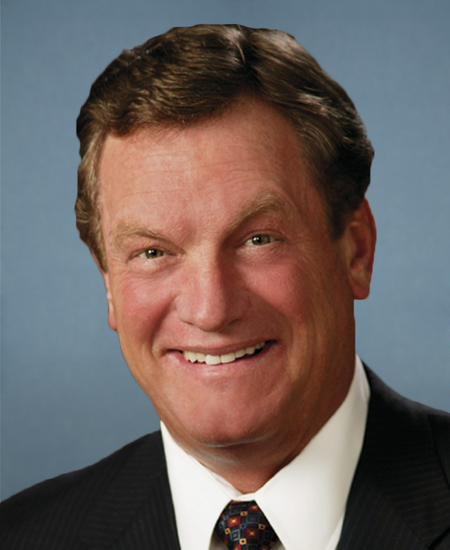
Rep. Michael K. Simpson
Sponsored bills
Defending Against Imitations and Replacements of Yogurt, milk, and cheese to Promote Regular Intake of Dairy Everyday Act or the DAIRY PRIDE Act This bill prohibits the sale of any food that uses the market name of a dairy product (such as milk , yogurt , or cream cheese ) unless the food (1) is the milk of a hooved animal, (2) is derived from such milk, or (3) contains such milk as a primary ingredient.
Life at Conception Act This bill declares that the right to life guaranteed by the Constitution is vested in each human being at all stages of life, including the moment of fertilization, cloning, or other moment at which an individual comes into being. Nothing in this bill shall be construed to authorize the prosecution of any woman for the death of her unborn child.
No Taxpayer Funding for Abortion and Abortion Insurance Full Disclosure Act of 2021 This bill modifies provisions relating to federal funding for, and health insurance coverage of, abortions. Specifically, the bill prohibits the use of federal funds for abortions or for health coverage that includes abortions. Such restrictions extend to the use of funds in the budget of the District of Columbia. Additionally, abortions may not be provided in a federal health care facility or by a federal employee. Historically, language has been included in annual appropriations bills for the Department of Health and Human Services (HHS) that prohibits the use of federal funds for abortions—such language is commonly referred to as the Hyde Amendment. Similar language is also frequently included in appropriations bills for other federal agencies and the District of Columbia. The bill makes these restrictions permanent and extends the restrictions to all federal funds (rather than specific agencies). The bill's restrictions regarding the use of federal funds do not apply in cases of rape, incest, or where a physical disorder, injury, or illness endangers a woman's life unless an abortion is performed. The Hyde Amendment provides the same exceptions. The bill also prohibits qualified health plans from including coverage for abortions. Currently, qualified health plans may cover abortion, but the portion of the premium attributable to abortion coverage is not eligible for subsidies.
Growing Climate Solutions Act of 2021 This bill authorizes the Department of Agriculture (USDA) to establish a voluntary Greenhouse Gas Technical Assistance Provider and Third-Party Verifier Certification Program to help reduce entry barriers into voluntary environmental credit markets for farmers, ranchers, and private forest landowners. A voluntary environmental credit market is a market through which agriculture and forestry credits may be bought or sold. Entities eligible to participate in the program are (1) providers of technical assistance to farmers, ranchers, or private forest landowners in carrying out sustainable land use management practices that prevent, reduce, or mitigate greenhouse gas emissions, or sequester carbon; or (2) third-party verifiers that conduct the verification of the processes described in the protocols for voluntary environmental credit markets. Among other requirements, USDA must publish (1) a list of protocols and qualifications for eligible entities; (2) information describing how entities may self-certify under the program; (3) information describing how entities may obtain the expertise to meet the protocols and qualifications; and (4) instructions and suggestions to assist farmers, ranchers, and private forest landowners in facilitating the development of agriculture or forestry credits and accessing voluntary environmental credit markets. USDA must also establish an advisory council to make recommendations regarding the list of protocols and qualifications, best practices, and voluntary environmental credit markets. The bill also rescinds certain funds provided in the American Rescue Plan Act of 2021 and makes the funds available for the certification program.
This resolution expresses the sense of the House of Representatives that (1) clean water is a national priority, and (2) the 2020 final rule titled The Navigable Waters Protection Rule: Definition of "Waters of the United States" should not be withdrawn or vacated.
This resolution expresses support for National Public Health Week and recognizes the role of public health in preventing infectious disease outbreaks such as COVID-19 (i.e., coronavirus disease 2019).
This resolution condemns Iranian state-sponsored terrorist attacks against U.S. citizens and officials and Iranian dissidents and expresses support for the people of Iran who are engaged in legitimate and peaceful protests against the Iranian regime.
Grizzly Bear State Management Act of 2021 This bill requires the Department of the Interior to remove the Greater Yellowstone ecosystem population of grizzly bears from the list of endangered and threatened wildlife.
Willie O'Ree Congressional Gold Medal Act This bill provides for the award of a Congressional Gold Medal to Willie O'Ree or, if unavailable, to a member of his family, in recognition of his contributions and commitment to hockey, inclusion, and recreational opportunity.