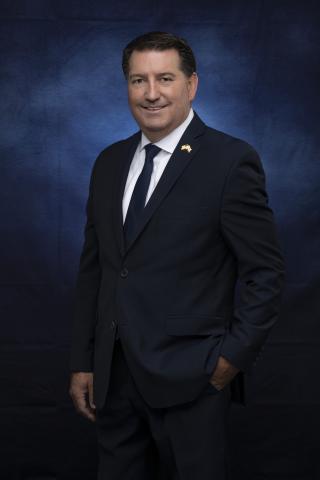
Photo of Tim Grayson
D California Senate · District 9

Sen. Tim Grayson

Compare
Total votes
25,597
all sessions
Attendance
95%
945 missed
Near the chamber average
With party
99%
of cast votes
Near the chamber average
Bipartisan score
0%
crosses aisle rarely
Near the chamber average
Sponsored
1,741
bills & resolutions
Near the chamber average
Committees
14
assignments
1,741 bills and resolutions

Sponsored bills

Total
1,741
Primary
246
Co-sponsor
1,495
This page
1,741
matching current filters
Co-sponsor ACR 147
Signed into law · California Assembly · Co-sponsor
Relative to California's First-Generation College Celebration Day.

This measure would designate November 8, 2024, as "California's First-Generation College Celebration Day." The measure would urge all higher education institutions in the state to celebrate California's First-Generation College Celebration Day, recognize the significant role of first-generation college students in developing the state's future workforce, celebrate the federal Higher Education Act of 1965, and support first-generation college students with opportunities and equity in completing their desired degree programs.

Signed into law Jul 2, 2024 1 co-sponsor
Co-sponsor ACR 193
Signed into law · California Assembly · Co-sponsor
Relative to Foster Care Awareness Month.

Maddy summaryThis bill declares May 2024 as Foster Care Awareness Month in California to highlight the needs of the state's approximately 45,000 children in the foster care system. The measure does not change laws or allocate funding but serves as a symbolic recognition of the efforts made by families, caregivers, and organizations to support vulnerable youth. By designating this specific month, the resolution aims to increase public awareness about the challenges foster youth face, such as homelessness after exiting care, and to celebrate the contributions of those working within the child welfare system.

Signed into law Jul 2, 2024 1 co-sponsor
Primary AB 2993
Passed · California Assembly · Lead sponsor
Home improvement and home solicitation: right to cancel contracts: loan financing regulation.

(1) Existing law, the Contractors State License Law, defines and regulates the activities of contractors and provides for their licensure, regulation, and discipline by the Contractors State License Board within the Department of Consumer Affairs. Existing law requires specific provisions and requirements for home improvement contracts, as defined. This bill would prohibit a contractor from requesting or accepting full payment from a lender or financier until the contractor, lender, or financier has received a written confirmation from the owner or tenant acknowledging that a home improvement project has been completed in accordance with the contract and is operational or fit for its intended use, and the lender has confirmed with the contractor that final approval has been provided by all permitting agencies. (2) Existing law provides that a contract is extinguished by its rescission and sets forth methods for the rescission of a contract. Existing law authorizes a buyer who cancels certain home solicitation contracts or offers until midnight of the 3rd business day after the day on which the buyer signs an agreement or offer to purchase that complies with specified requirements. Existing law authorizes a buyer to cancel a home solicitation contract written for certain home improvement work until midnight of the 3rd business day after the buyer receives a signed and dated copy of the contract or offer to purchase that complies with specified requirements. Existing law requires contracts for a home solicitation contract or offer to include a notice of cancellation form with specified statements as to the buyer's right to cancel. Existing law permits a buyer to provide a seller an express waiver to this right to cancel, if the contract meets other specified requirements. Existing law requires specific provisions and requirements for home improvement contracts, as defined, that are not governed by the provisions described above. Existing law requires these contracts to include a notice regarding the buyer's 3-day right to cancel. Existing law provides an alternate 5-day period of time to cancel the contracts or offers described above if the buyer or property owner is a senior citizen, as defined, for contracts entered into, or offers to purchase conveyed, on or after January 1, 2021. This bill would extend those 3-day and 5-day periods to 5-day and 7-day periods, respectively, for home solicitation contracts, as specified. The bill would also make conforming changes. The bill would apply these new extended periods to transactions on or after January 1, 2025. (3) Existing law, the California Financing Law, authorizes the office of the Commissioner of Financial Protection and Innovation to license, regulate, and discipline finance lenders and brokers making consumer loans. A willful violation of the California Financing Law is a crime, except as specified. This bill would require a finance lender, before a consumer executes a contract for a loan to pay for a home improvement and before the right-to-cancel time period expires for a home improvement contract that is being financed by a home improvement loan, to obtain a copy of the home improvement contract for the home improvement that is being financed by the loan and complete and document a call, as specified, to make oral confirmations relating to the contract, as prescribed. The bill would require a finance lender that engages in offering or providing a home improvement loan to make available to the consumer or property owner, or both, upon request, information in the control or possession of the lender concerning the home improvement loan that was provided to the consumer to finance the home improvement contract, as prescribed. The bill would prohibit a finance lender who makes a home improvement loan from releasing funds to the home improvement contractor and from seeking any payment from the property owner, except as specified, until the property owner has made prescribed oral and written certifications that the home improvements for which the payment is being made have been completed in accordance with the contract. The bill would prohibit more than 85% of the funds from being released to the home improvement contractor and prohibit the balance of funds to be paid to the contractor from being released, until the home improvements have been given final approval by all permitting agencies and are operational or fit for its intended use. The bill would not deem a solar energy system operational until after the property owner confirms the utility supplying electricity has been connected to the solar energy system, the utility supplying electricity grants permission to operate the solar energy system, and the property owner confirms the solar energy system is functioning. The bill would prohibit payment from being received from the consumer on the home improvement loan until the above-described conditions have been satisfied. Because a willful violation of these provisions would be a crime, the bill would impose a state-mandated local program. The California Constitution requires the state to reimburse local agencies and school districts for certain costs mandated by the state. Statutory provisions establish procedures for making that reimbursement. This bill would provide that no reimbursement is required by this act for a specified reason.

Passed Jul 2, 2024 0 co-sponsors
Co-sponsor ACR 195
Signed into law · California Assembly · Co-sponsor
Relative to the Vietnamese Heritage and Freedom Flag.

This measure would recognize the Vietnamese Heritage and Freedom Flag as the cultural and heritage flag of the Vietnamese American community and as a symbol of the community's continued struggle for freedom and liberty for the people of Vietnam, commemorate the anniversary of the Fall of Saigon on April 30, 1975, and acknowledge and recognize the Vietnamese American community's commitment to the principles of democracy, justice, and the protection and advancement of human rights.

Signed into law Jul 2, 2024 1 co-sponsor
Co-sponsor ACR 206
Signed into law · California Assembly · Co-sponsor
Relative to Immigrant Heritage Month.

Maddy summaryThis bill officially designates June 2024 as Immigrant Heritage Month in California to recognize the contributions of immigrants to the state's economy and society. The measure does not change laws or create new programs but serves as a symbolic proclamation to highlight the cultural and economic impact of immigrant communities. It is a non-binding resolution that affects the public by encouraging acknowledgment of immigrant heritage rather than imposing specific obligations on individuals or businesses.

Signed into law Jul 2, 2024 1 co-sponsor
Primary ACR 194
Signed into law · California Assembly · Lead sponsor
Relative to Family Justice Center Day.

Maddy summaryThis bill designates June 3, 2024, as Family Justice Center Day in California to recognize the work of organizations supporting survivors of domestic and sexual violence. It directly affects the California Family Justice Network and its 27 affiliated centers, which provide coordinated services such as legal aid, mental health support, and police assistance under one roof. The measure highlights the importance of these centers by noting they serve over 70,000 trauma victims annually, including more than 20 percent who are children. By officially acknowledging this date, the legislation aims to raise awareness about the critical role these centers play in helping survivors access necessary resources.

Signed into law Jul 2, 2024 0 co-sponsors
Co-sponsor ACR 152
Signed into law · California Assembly · Co-sponsor
Relative to California Mountain Biking Month.

Maddy summaryThis bill designates June 2024 as California Mountain Biking Month to recognize the sport's history, economic impact, and health benefits within the state. The measure directly affects mountain biking enthusiasts, trail users, and related organizations by officially acknowledging the activity's role in recreation and tourism. The resolution highlights how the industry contributes billions to the economy and supports over 17,000 jobs while promoting outdoor fitness and community building. By proclaiming this specific month, the legislation aims to encourage public participation in off-road cycling and celebrate California's status as a global hub for the sport.

Signed into law Jul 2, 2024 1 co-sponsor
Co-sponsor SB 92
Signed into law · California Senate · Co-sponsor
Labor Code Private Attorneys General Act of 2004.

Existing law, the Labor Code Private Attorneys General Act of 2004 (PAGA) , authorizes an aggrieved employee, as defined, to bring a civil action, on behalf of that employee and other current or former employees, to enforce a violation of any provision of the Labor Code that provides for a civil penalty to be assessed and collected by the Labor and Workforce Development Agency or any of its departments, divisions, commissions, boards, agencies, or employees pursuant to certain notice and cure provisions, as prescribed. This bill would, among other things, authorize, on or after October 1, 2024, an employer that employed fewer than 100 employees in total during the period covered by the required notice to, within 33 days of receipt of the notice submit to the agency a confidential proposal to cure one or more of the alleged violations and, upon completing the cure, provide a sworn notification to the employee and agency that the cure is completed, as prescribed. By expanding the scope of the crime of perjury, this bill would impose a state-mandated local program. The bill would require the agency to verify whether the cure is complete within 20 days of receiving the employer's notification, as specified. This bill would also authorize an employer who employed at least 100 employees in total during the period covered by the required notice to, upon being served with a summons and complaint asserting a claim under PAGA, file a request and participate in, as prescribed, an early evaluation conference in the proceedings of the claim and a request for a stay of court proceedings before, or simultaneous with, that defendant's responsive pleading or other initial appearance in the action that includes the claim. This bill would apply its provisions to a civil action brought on or after June 19, 2024, except as specified. Existing constitutional provisions require that a statute that limits the right of access to the meetings of public bodies or the writings of public officials and agencies be adopted with findings demonstrating the interest protected by the limitation and the need for protecting that interest. This bill would make legislative findings to that effect. The California Constitution requires the state to reimburse local agencies and school districts for certain costs mandated by the state. Statutory provisions establish procedures for making that reimbursement. This bill would provide that no reimbursement is required by this act for a specified reason. This bill would become operative only if AB 2288 of the 2023–24 Regular Session is enacted and takes effect on or before January 1, 2025. This bill would declare that it is to take effect immediately as an urgency statute.

Signed into law Jul 1, 2024 1 co-sponsor
Co-sponsor AB 2288
Signed into law · California Assembly · Co-sponsor
Labor Code Private Attorneys General Act of 2004.

Existing law, the Labor Code Private Attorneys General Act of 2004 (PAGA) , authorizes an aggrieved employee, as defined, to bring a civil action, on behalf of that employee and other current or former employees, to enforce a violation of any provision of the Labor Code that provides for a civil penalty to be assessed and collected by the Labor and Workforce Development Agency or any of its departments, divisions, commissions, boards, agencies, or employees pursuant to certain notice and cure provisions, as prescribed. This bill would, among other things, instead authorize an aggrieved employee to bring a civil action as described above on behalf of the employee and other current or former employees against whom a violation of the same provision was committed. With respect to a violation by a person of a provision that does not provide for a civil penalty, PAGA makes that person liable for a civil penalty of $500 if, at the time of the alleged violation, the person does not employ one or more employees. If, at the time of the alleged violation, the person employed one or more employees, PAGA makes that person liable for a civil penalty of $100 for each aggrieved employee per pay period for the initial violation and $200 for each aggrieved employee per pay period for each subsequent violation. PAGA requires 75% of civil penalties recovered by aggrieved employees to be distributed to the Labor and Workforce Development Agency for enforcement of labor laws, including the administration of PAGA, and for education of employers and employees about their rights and responsibilities under the Labor Code, as specified, and requires 25% of civil penalties recovered by aggrieved employees to be distributed to the aggrieved employees, except as prescribed. This bill would instead, if, at the time of the alleged violation, the person employed one or more employees, make that person liable for a civil penalty of $100 for each aggrieved employee per pay period, except if certain mitigating factors apply, including that the alleged violation resulted from an isolated, nonrecurring event that did not extend beyond the lesser of 30 consecutive days or 4 consecutive pay periods, in which case the bill would make the civil penalty $25 or $50, except as provided. The bill would, subject to an exception, also reduce the civil penalties prescribed by PAGA by 15% or 30%, as specified, if a person accused of a violation has taken all reasonable steps to comply with the provisions alleged to have been violated in the required notice provided by the aggrieved employee, as prescribed. This bill would apply its provisions to a civil action brought on or after June 19, 2024, except as specified. This bill would become operative only if SB 92 of the 2023–24 Regular Session is enacted and takes effect on or before January 1, 2025. This bill would declare that it is to take effect immediately as an urgency statute.
Signed into law Jul 1, 2024 1 co-sponsor
Showing 241 to 250 of 1,741 bills
Previous 1 24 25 26 175 Next