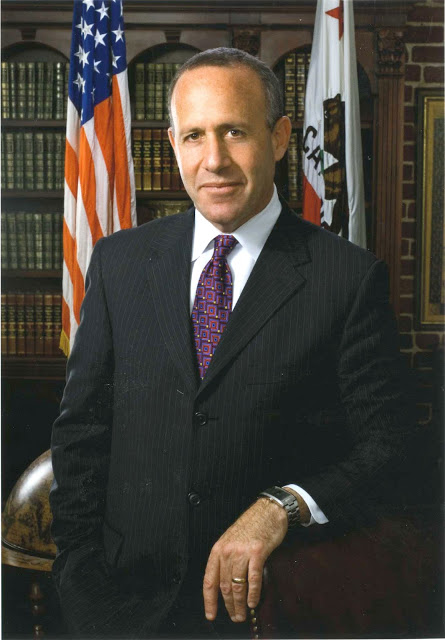
Photo of Darrell Steinberg
D California Senate · District 6

Sen. Darrell Steinberg

Compare
Total votes
41,589
all sessions
Attendance
98%
701 missed
Near the chamber average
With party
99%
of cast votes
Near the chamber average
Bipartisan score
0%
crosses aisle rarely
Near the chamber average
Sponsored
1,496
bills & resolutions
Higher than 97% of chamber peers
Committees
0
assignments
1,496 bills and resolutions

Sponsored bills

Total
1,496
Primary
401
Co-sponsor
1,095
This page
1,496
matching current filters
Co-sponsor SCR 111
Failed · California Senate · Co-sponsor
Relative to Black April Memorial Week.

This measure would proclaim the week of April 23 to April 30, 2014, inclusive, as Black April Memorial Week, a special time for Californians to remember the countless lives lost during the Vietnam War era, and to hope for more justice and liberty for the people of Vietnam.

Failed Nov 30, 2014 1 co-sponsor
Primary SB 1128
Failed · California Senate · Lead sponsor
Investment in Mental Health Wellness Act of 2013.

The Investment in Mental Health Wellness Act of 2013 states the intent of the Legislature to authorize the California Health Facilities Financing Authority and the Mental Health Services Oversight and Accountability Commission to administer competitive selection processes for capital capacity and program expansion to increase capacity for mobile crisis support, crisis intervention, crisis stabilization services, crisis residential treatment, and specified personnel resources. The act provides that funds appropriated by the Legislature to the authority for the purposes of the act be made available to selected counties or counties acting jointly, except as otherwise provided, and used to increase capacity for client assistance and services in crisis intervention, crisis stabilization, crisis residential treatment, rehabilitative mental health services, and mobile crisis support teams. This bill would make a technical, nonsubstantive change to these provisions.

Failed Nov 30, 2014 0 co-sponsors
Primary SB 731
Failed · California Senate · Lead sponsor
Environment: California Environmental Quality Act.

(1) The California Environmental Quality Act, or CEQA, requires a lead agency, as defined, to prepare, or cause to be prepared, and certify the completion of, an environmental impact report, or EIR, on a project that it proposes to carry out or approve that may have a significant effect on the environment or to adopt a negative declaration if it finds that the project will not have that effect. CEQA also requires a lead agency to prepare a mitigated negative declaration for a project that may have a significant effect on the environment if revisions in the project would avoid or mitigate that effect and there is no substantial evidence that the project, as revised, would have a significant effect on the environment. CEQA requires the Office of Planning and Research to develop and prepare, and the Secretary of the Natural Resources Agency to certify and adopt, guidelines for the implementation of CEQA by public agencies. CEQA establishes a procedure for the preparation and certification of the record of proceedings upon the filing of an action or proceeding challenging a lead agency's action on the grounds of noncompliance with CEQA. CEQA establishes time periods within which a person is required to bring a judicial action or proceeding to challenge a public agency's action taken pursuant to CEQA. This bill would provide that aesthetic and parking impacts of a residential, mixed-use residential, or employment center project, as defined, on an infill site, as defined, within a transit priority area, as defined, shall not be considered significant impacts on the environment. The bill would require the office to prepare and submit to the Secretary of the Natural Resources Agency, and the secretary to certify and adopt, revisions to the guidelines for the implementation of CEQA establishing thresholds of significance for noise and transportation impacts of projects within transit priority areas. The bill would require the office, on or before July 1, 2015, to prepare, develop, and transmit to the secretary recommended proposed changes or amendments to the guidelines establishing criteria for a lead agency to assess the need for translating specified notices into non-English languages and requirements for the posting of those notices in non-English languages. Because the bill would require the development of guidelines that would require a lead agency to translate notices into non-English languages and to post those translated notices, this bill would impose a state-mandated local program. The bill would require the office to produce a report on economic displacement and would require the office to publicly circulate a draft of the report. The bill would require the lead agency, in making specified findings, to make those findings available to the public at least 10 days prior to the adoption of the findings and to provide specified notice of the availability of the findings for public review. Because the bill would require the lead agency to make the draft finding available for public review and to provide specified notices to the public, this bill would impose a state-mandated local program. The bill would require the lead agency, at the request of a project applicant for specified projects, to, among other things, prepare a record of proceedings concurrently with the preparation of negative declarations, mitigated negative declarations, EIRs, or other environmental documents for specified projects. Because the bill would require a lead agency to prepare the record of proceedings as provided, this bill would impose a state-mandated local program. The bill would authorize the tolling of the time period in which a person is required to bring a judicial action or proceeding challenging a public agency's action taken pursuant to CEQA through a tolling agreement that does not exceed 4 years. The bill would authorize the extension of the tolling agreement. (2) CEQA provides certain streamlinings benefits for transit priority projects and specifies criteria for projects to be considered transit priority projects. This bill would revise those criteria. (3) For mitigation measures required pursuant to an EIR or a mitigated negative declaration, CEQA requires the lead agency to adopt a reporting and monitoring program to ensure compliance with those required mitigation measures during project implementation. This bill would require the lead agency, upon the request of a member of the public, to prepare or cause to be prepared a report on project compliance with the required mitigation measures, as a part of the mitigation and monitoring plan, that is publicly available online. Because the lead agency would be required to prepare and make available this report, this bill would impose a state-mandated local program. (4) Existing law exempts from the requirements of CEQA residential development projects that are undertaken to implement, and are consistent with a specific plan for which an EIR has been certified after January 1, 1980. Existing law provides that this exemption does not apply if, after the certification of the EIR, a specified event occurs, unless a supplemental EIR for the specified plan is prepared and certified. This bill would specify that the event does not include new information consisting solely of specified information. (5) CEQA requires the court, if the court finds that a public agency has violated the requirements of CEQA, to issue an order containing specified mandates. This bill would require the court to issue an order that includes a peremptory writ of mandate specifying actions that a public agency needs to take to comply with the requirements of CEQA. The bill would require the writ to specify the time by which the public agency is to file an initial return to a writ containing specified information. Because a public agency would be required to file an initial return to a writ, this bill would impose a state-mandated local program. (6) CEQA requires every person bringing an action or proceeding alleging a violation of CEQA to furnish to the Attorney General a copy of the pleading within 10 days after filing and a copy of any amended or supplemental pleading. This bill would require the California Research Bureau, subject to the availability of funding and of information, to annually submit to the Legislature a report containing specified information on CEQA litigation in the state. (7) Existing law requires the regional transportation plan for regions of the state with a metropolitan planning organization to each adopt a sustainable communities strategy, as part of their regional transportation plan, as specified, designed to achieve certain goals for the reduction of greenhouse gas emissions from automobiles and light trucks in a region. Existing law establishes the Strategic Growth Council to manage and award grants and loans to support the planning and development of sustainable communities strategies. This bill would state the intent of the Legislature to appropriate $30,000,000 annually by the council for the purposes of providing competitive grants to local agencies for planning activities for the implementation of the sustainable communities strategy. (8) Existing law requires the development, adoption, and updating of a congestion management program for each county that includes an urbanized area, as defined. The plan is required to contain specified elements and to be submitted to regional agencies, as defined, for determination of whether the program is consistent with regional transportation plans. The regional agency is then directed to monitor the implementation of all elements of each congestion management program. The required elements include traffic level of service standards for a system of designated highways and roadways. Existing law defines "infill opportunity zone" for purposes of the above-described provisions and exempts streets and highways in an infill opportunity zone from the level of service standards specified in the above-described provisions and instead requires alternate level of service standards to be applied. Existing law prohibits a city or county from designating an infill opportunity zone after December 31, 2009. This bill would revise the definition of "infill opportunity zone," as specified. The bill would authorize the designation of an infill opportunity zone that is a transit priority area within a sustainable communities strategy or alternative planning strategy adopted by an applicable metropolitan planning organization. (9) Existing law terminates the designation of an infill opportunity zone if no development project is completed within that zone within 4 years from the date of the designation. This bill would repeal this provision. (10) This bill would, until January 1, 2017, establish in the office of the Governor the position of Advisor on Renewable Energy Facilities. (11) The California Constitution requires the state to reimburse local agencies and school districts for certain costs mandated by the state. Statutory provisions establish procedures for making that reimbursement. This bill would provide that with regard to certain mandates no reimbursement is required by this act for a specified reason. With regard to any other mandates, this bill would provide that, if the Commission on State Mandates determines that the bill contains costs so mandated by the state, reimbursement for those costs shall be made pursuant to the statutory provisions noted above.

Failed Nov 30, 2014 0 co-sponsors
Co-sponsor SB 524
Failed · California Senate · Co-sponsor
Pupil instruction: Pathways Curriculum Task Force.

Existing law establishes a system of public elementary and secondary schools in this state, and authorizes local educational agencies throughout the state to operate schools and provide instruction to pupils in kindergarten and grades 1 to 12, inclusive (K-12) . Existing law also establishes a system of postsecondary education in the state that consists of 4 segments: the University of California, the California State University, the California Community Colleges, and independent institutions of higher education. This bill would express the intent of the Legislature to develop a voluntary K-12 curriculum to educate pupils and their families about college and career opportunities. The bill would require the Superintendent of Public Instruction to appoint, and provide staff for, a 12-member Pathways Curriculum Task Force. The bill would specify the qualifications and duties of the members of the task force. The bill would require the task force to establish specified learning goals for pupils at elementary, middle, and high school levels and help pupils to achieve these goals. The bill would require the task force to develop a pathways curriculum that, among other things, would provide materials, resources, and information for K-12 pupils and their families to gain a comprehensive understanding of available opportunities in postsecondary educational institutions. The bill would express the intent of the Legislature that local educational agencies consider adopting all or parts of the career and college pathways curriculum, but would specify that adoption of the curriculum would not be mandatory and that local educational agencies may decline to participate.

Failed Nov 30, 2014 1 co-sponsor
Co-sponsor SJR 31
Failed · California Senate · Co-sponsor
Immigration: unaccompanied minors.

This measure would urge the President and Congress of the United States to take specified action and adopt specified policies designed to protect unaccompanied minors immigrating to the United States.

Failed Nov 30, 2014 1 co-sponsor
Co-sponsor SB 928
Vetoed · California Senate · Co-sponsor
International trade and investment office: Mexico.

(1) The Economic Revitalization Act establishes the Governor's Office of Business and Economic Development, also known as "GO-Biz," to, among other duties, serve the Governor as the lead entity for economic strategy and the marketing of California on issues relating to business development, private sector investment, and economic growth. Existing law authorizes the director of GO-Biz to establish and terminate international trade and investment offices outside of the United States as he or she determines is appropriate, if specific requirements are met. Existing law establishes the Economic Development and Trade Promotion Account, a continuously appropriated account, to accept private moneys to fund international trade and investment offices. This bill would, notwithstanding provisions authorizing the director of GO-Biz to establish and terminate international trade and investment offices outside of the United States if specified conditions are satisfied, and to the extent private moneys are available, require the director of GO-Biz, on or before January 1, 2016, to establish and operate, or to create a public-private partnership to establish and operate, an international trade and investment office in Mexico City, Mexico. This bill would require the director of GO-Biz to include information regarding the Mexico City trade and investment office in existing reporting requirements relating to an International Trade and Investment Program, as specified. This bill would require GO-Biz to accept and administer private moneys through the Economic Development and Trade Promotion Account. By expanding the use of a continuously appropriated account, this bill would make an appropriation. This bill would require the Mexico City trade and investment office to, among other things, promote the export of California goods and services into Mexico and facilitate access to educational exchange programs between California and Mexico. (2) Existing law requires the director of GO-Biz to develop an International Trade and Investment Program for the state and to submit the strategy and business plan for the International Trade and Investment Program to the Chief Clerk of the Assembly, the Secretary of the Senate, the Speaker of the Assembly, the President pro Tempore of the Senate, the chair of the Assembly Committee on Jobs, Economic Development, and the Economy and the chair of the Senate Committee on Business, Professions and Economic Development, or respective successor committees, with jurisdiction over the international trade and economic development programs. This bill would also require the director of GO-Biz to submit the strategy and business plan to the Senate Select Committee on California-Mexico Cooperation.

Vetoed Nov 30, 2014 1 co-sponsor
Primary SB 1156
Failed · California Senate · Lead sponsor
California Carbon Tax Law of 2014.

The California Global Warming Solutions Act of 2006 designates the State Air Resources Board as the state agency charged with monitoring and regulating sources of emissions of greenhouse gases. The state board is required to adopt a statewide greenhouse gas emissions limit equivalent to the statewide greenhouse gas emissions level in 1990 to be achieved by 2020, and to adopt rules and regulations in an open public process to achieve the maximum, technologically feasible, and cost-effective greenhouse gas emission reductions. The act authorizes the state board to include the use of market-based compliance mechanisms. This bill, effective January 1, 2015, would impose a carbon tax of an unspecified amount per ton of carbon-dioxide-equivalent emissions on suppliers of fossil fuels. The bill would require the State Board of Equalization to administer and implement the carbon tax, and would require revenues from the tax to be deposited in the Carbon Tax Revenue Special Fund in the State Treasury. The bill would exempt suppliers of fossil fuels subject to the tax from regulations imposed by the State Air Resources Board under the California Global Warming Solutions Act of 2006 relative to the compliance obligation in the second compliance period under which suppliers of specified fuels are required to obtain allowances for carbon-dioxide-equivalent emissions under the cap-and-trade program adopted by the State Air Resources Board. The bill would state the intent of the Legislature that revenues from the carbon tax be rebated to taxpayers, particularly low- and medium-income taxpayers, of other taxes, and for implementation of the carbon tax to be revenue neutral. This bill would include a change in state statute that would result in a taxpayer paying a higher tax within the meaning of Section 3 of Article XIII A of the California Constitution, and thus would require for passage, the approval of 23 of the membership of each house of the Legislature. The bill would take effect immediately as a tax levy.

Failed Nov 30, 2014 0 co-sponsors
Co-sponsor SB 848
died · California Senate · Co-sponsor
Safe Drinking Water, Water Quality, and Water Supply Act of 2014.

(1) Existing law creates the Safe, Clean, and Reliable Drinking Water Supply Act of 2012, which, if approved by the voters, would authorize the issuance of bonds in the amount of $11,140,000,000 pursuant to the State General Obligation Bond Law to finance a safe drinking water and water supply reliability program. Existing law provides for the submission of the bond act to the voters at the November 4, 2014, statewide general election. This bill would repeal these provisions. (2) Under existing law, various measures have been approved by the voters to provide funds for water supply and protection facilities and programs. This bill would enact the Safe Drinking Water, Water Quality, and Water Supply Act of 2014, which, if adopted by the voters, would authorize the issuance of bonds in the amount of $7,500,000,000 pursuant to the State General Obligation Bond Law to finance a safe drinking water, water quality, and water supply program. The bill would provide for the submission of the bond act to the voters at the November 4, 2014, statewide general election. (3) Existing law, the Water Conservation and Water Quality Bond Law of 1986, approved by the voters at the June 3, 1986, statewide primary election, authorizes the issuance of general obligation bonds in the amount of $150,000,000 for the Department of Water Resources to make prescribed loans to local agencies for the purposes of financing a water conservation and water quality program. Existing law, the Water Conservation Bond Law of 1988, approved by the voters at the November 8, 1988, statewide general election, authorizes the issuance of general obligation bonds in the amount of $60,000,000 for the Department of Water Resources to make prescribed loans to local agencies for the purposes of financing a water conservation program. Existing law, the Safe, Clean, Reliable Water Supply Act, a bond act approved by the voters as Proposition 204 at the November 5, 1996, statewide general election, authorizes the issuance of general obligation bonds in the amount of $995,000,000 for grants, loans, and direct expenditures for the purposes of financing a safe, clean, reliable water supply program. Existing law, the Costa-Machado Water Act of 2000, a bond act approved by the voters as Proposition 13 at the March 7, 2000, statewide primary election, authorizes the issuance of general obligation bonds in the amount of $1,970,000,000 for grants, loans, and direct expenditures for the purposes of financing a safe drinking water, clean water, watershed protection, and flood protection program. This bill would authorize the Legislature to appropriate any unencumbered proceeds of bonds from the above-described bond acts in their respective bond funds as of November 5, 2014, for prescribed purposes as described in the Safe Drinking Water, Water Quality, and Water Supply Act of 2014. This bill would provide for the submission of these provisions to the voters at the November 4, 2014, statewide general election. (4) This bill would declare that it is to take effect immediately as an urgency statute.

died Nov 30, 2014 1 co-sponsor
Co-sponsor SB 1000
Failed · California Senate · Co-sponsor
Public health: sugar-sweetened beverages: safety warnings.

(1) Existing federal law, the Federal Food, Drug, and Cosmetic Act, regulates, among other things, the quality and packaging of foods introduced or delivered for introduction into interstate commerce and generally prohibits the misbranding of food. Existing federal law, the Nutrition Labeling and Education Act of 1990, governs state and local labeling requirements, including those that characterize the relationship of any nutrient specified in the labeling of food to a disease or health-related condition. Existing state law, the Sherman Food, Drug, and Cosmetic Law, generally regulates misbranded food and provides that any food is misbranded if its labeling does not conform with the requirements for nutrient content or health claims as set forth in the Federal Food, Drug, and Cosmetic Act and the regulations adopted pursuant to that federal act. Existing law requires that a food facility, as defined, make prescribed disclosures and warnings to consumers, as specified. A violation of these provisions is a crime. Existing state law, the Pupil Nutrition, Health, and Achievement Act of 2001, also requires the sale of only certain beverages to pupils at schools. The beverages that may be sold include fruit-based and vegetable-based drinks, drinking water with no added sweetener, milk, and in middle and high schools, an electrolyte replacement beverage if those beverages meet certain nutritional requirements. This bill would establish the Sugar-Sweetened Beverages Safety Warning Act, which would prohibit a person from distributing, selling, or offering for sale a sugar-sweetened beverage in a sealed beverage container, or a multipack of sugar-sweetened beverages, in this state unless the beverage container or multipack bears a specified safety warning, as prescribed. The bill also would require every person who owns, leases, or otherwise legally controls the premises where a vending machine or beverage dispensing machine is located, or where a sugar-sweetened beverage is sold in an unsealed container to place a specified safety warning in certain locations, including, on the exterior of any vending machine that includes a sugar-sweetened beverage for sale. (2) Under existing law, the State Department of Public Health, upon the request of a health officer, as defined, may authorize the local health department of a city, county, city and county, or local health district to enforce the provisions of the Sherman Food, Drug, and Cosmetic Law. Existing law authorizes the State Department of Public Health to assess a civil penalty against any person in an amount not to exceed $1,000 per day, except as specified. Existing law authorizes the Attorney General or any district attorney, on behalf of the State Department of Public Health, to bring an action in a superior court to grant a temporary or permanent injunction restraining a person from violating any provision of the Sherman Food, Drug, and Cosmetic Law. This bill, commencing July 1, 2015, would provide that any violation of the provisions described in (1) above, or regulations adopted pursuant to those provisions, is punishable by a civil penalty of not less than $50, but no greater than $500. By imposing additional enforcement duties on local agencies, this bill would impose a state-mandated local program. This bill would also create the Sugar-Sweetened Beverages Safety Warning Fund for the receipt of all moneys collected for violations of those provisions. The bill would allocate moneys in this fund, upon appropriation by the Legislature, to the local enforcement agencies for the purpose of enforcing those provisions. The bill would make legislative findings and declarations relating to the consumption of sugar-sweetened beverages, obesity, and dental disease. (3) The California Constitution requires the state to reimburse local agencies and school districts for certain costs mandated by the state. Statutory provisions establish procedures for making that reimbursement. This bill would provide that, if the Commission on State Mandates determines that the bill contains costs mandated by the state, reimbursement for those costs shall be made pursuant to these statutory provisions.

Failed Nov 30, 2014 1 co-sponsor
Primary SB 837
Failed · California Senate · Lead sponsor
Early childhood education: professional development.

Existing law authorizes a school district or charter school to maintain a transitional kindergarten program and defines transitional kindergarten as the first year of a 2-year kindergarten program that uses a modified kindergarten curriculum that is age and developmentally appropriate. Existing law requires the Superintendent of Public Instruction to administer all California state preschool programs. Existing law requires those programs to include part-day age and developmentally appropriate programs designed to facilitate the transition to kindergarten for 3- and 4-year-old children. Existing law requires the county board of supervisors and the county superintendent of schools to select members of a local planning council. Existing law requires a local planning council to conduct an assessment of child care needs in the county no less than once every 5 years. Of the moneys appropriated in the Budget Act of 2014, this bill would allocate certain of those moneys for purposes of professional development stipends, to be administered by local planning councils, for teachers in transitional kindergarten and teachers in the California state preschool program, as provided. By imposing a new duty on a local planning council, the bill would create a state-mandated local program. The bill would require the State Department of Education to consult with various entities, including the California Community Colleges, for purposes of administering the above provisions. Funds allocated by this bill would be applied toward the minimum funding requirements for school districts and community college districts imposed by Section 8 of Article XVI of the California Constitution, as provided. The California Constitution requires the state to reimburse local agencies and school districts for certain costs mandated by the state. Statutory provisions establish procedures for making that reimbursement. This bill would provide that, if the Commission on State Mandates determines that the bill contains costs mandated by the state, reimbursement for those costs shall be made pursuant to these statutory provisions.

Failed Nov 30, 2014 0 co-sponsors
Showing 11 to 20 of 1,496 bills