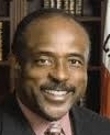
Photo of Roderick Wright
D California Senate · District 35

Sen. Roderick Wright

Compare
Total votes
33,002
all sessions
Attendance
88%
3,131 missed
Lower than 98% of chamber peers
With party
98%
of cast votes
Bipartisan score
4%
crosses aisle rarely
Sponsored
1,066
bills & resolutions
Near the chamber average
Committees
0
assignments
1,066 bills and resolutions

Sponsored bills

Total
1,066
Primary
239
Co-sponsor
827
This page
1,066
matching current filters
Primary SB 1239
Passed · California Senate · Lead sponsor
Local government: assessments, fees, and charges.

Articles XIIIC and XIIID of the California Constitution generally require that assessments, fees, and charges be submitted to property owners for approval or rejection after the provision of written notice and the holding of a public hearing. Existing law, the Proposition 218 Omnibus Implementation Act, prescribes specific procedures and parameters for local jurisdictions to comply with Articles XIIIC and XIIID of the California Constitution and defines various terms for these purposes. This bill would additionally define the term "real property" for purposes of the Proposition 218 Omnibus Implementation Act.

Passed Aug 27, 2012 0 co-sponsors
Primary SB 1390
Passed · California Senate · Lead sponsor
Gambling: sports wagering.

(1) The California Constitution prohibits various gaming activities within the state, including casino-style gaming, but authorizes the Governor, subject to ratification by the Legislature, to negotiate and conclude compacts for the operation of slot machines and the conduct of lottery games and banking and percentage card games by federally recognized Indian tribes on Indian lands in California in accordance with federal law. The California Constitution also authorizes the Legislature to provide for the regulation of horse racing, charitable bingo games, the California State Lottery, and charitable raffles. Existing law prohibits a person, whether or not for gain, hire, or reward, from making a betting pool or placing a bet or wager on the result of any contest or event, including a sporting event, as specified. The Gambling Control Act provides for the licensure of certain individuals and establishments that conduct controlled games, as defined, and for the regulation of these gambling activities by the California Gambling Control Commission. Existing law provides for the enforcement of those regulations by the Department of Justice. Any violation of these provisions is punishable as a misdemeanor, as specified. The Horse Racing Law provides for the licensure of every person who participates in, or has anything to do with, the racing of horses, and every employee of a parimutuel department by the California Horse Racing Board. The board is responsible for adopting rules and regulations for the protection of the public, the control of horse racing, and parimutuel wagering, as well as enforcing all laws, rules, and regulations dealing with horse racing and parimutuel wagering. The law permits the board to authorize an association licensed to conduct a racing meeting to also operate a satellite wagering facility at its racetrack inclosure, and for fairs to locate a satellite wagering facility at their fairgrounds, under specified conditions. Any violation of these provisions is punishable as a misdemeanor. This bill would authorize the owner or operator of a gambling establishment, or the owner or operator of a horse racing track, including a horse racing association, or of a satellite wagering facility, with a current license, to conduct wagering on professional and collegiate sports or athletic events, other than on collegiate sports or athletic events that take place in California or in which any California college team participates, by applying to the California Gambling Control Commission or the California Horse Racing Board, as specified, for authorization to conduct sports wagering, and by paying an annual licensing fee, as specified. The bill would require the commission and the board to adopt regulations to implement these provisions. The bill would authorize the commission and the board to adopt regulations establishing fees in a reasonable amount to recover their costs relating to the administration of these provisions. The bill would authorize the department to adopt regulations establishing fees in the reasonable amount necessary to recover costs incurred relating to the enforcement of these provisions. The bill would require the department to, among other things, investigate any request made by the board or the commission in connection with an application for authorization, and to investigate alleged violations of the above provisions. The bill would authorize the board, commission, and department to regulate sports wagering to the same extent these entities currently regulate other legal gambling in this state, including the ability to audit the books and records of a licensed entity, as defined. The bill would also prohibit a licensed operator from, among other things, accepting a wager from any person who is under 21 years of age or whose name appears on a self-exclusion list. Any violation of these provisions would be punishable as a crime. By creating a new crime, the bill would impose a state-mandated local program. (2) Existing federal law, the Indian Gaming Regulatory Act of 1988, provides for the negotiation and execution of tribal-state gaming compacts for the purpose of authorizing certain types of gaming on Indian lands within a state. The California Constitution authorizes the Governor to negotiate and conclude compacts, subject to ratification by the Legislature. Existing law expressly ratifies a number of tribal-state gaming compacts, and amendments of tribal-state gaming compacts, between the State of California and specified Indian tribes. This bill would provide that a federally recognized Indian tribe may conduct sports wagering on Indian lands consistent with the requirements of the federal Indian Gaming Regulatory Act of 1988, and under terms no more stringent than those applicable to any other owner or operator in the state. (3) The California Constitution requires the state to reimburse local agencies and school districts for certain costs mandated by the state. Statutory provisions establish procedures for making that reimbursement. This bill would provide that no reimbursement is required by this act for a specified reason.

Passed Aug 16, 2012 0 co-sponsors
Primary SB 320
Passed · California Senate · Lead sponsor
Public social services: hearings.

Existing law authorizes an applicant for, or recipient of, public social services who is dissatisfied with certain actions of the county welfare department to request a hearing from the state department administering the social services. Existing law requires the hearing to be conducted by an administrative law judge, with an exception, and authorizes the administrative law judge, under certain circumstances, to render and adopt final decisions, with which decision the county director is required to comply and execute. This bill would require the county appeals representative to review all evidence in the county's possession prior to the hearing and, if the representative finds prescribed occurrences, to offer the claimant a conditional withdrawal or notice of action, as specified. This bill would require the conditional withdrawal to list the agreed-upon conditions that the claimant is required to meet, and require the county to issue any benefits for which the claimant is eligible following the claimant's meeting of those conditions. This bill would authorize a claimant to file for and reopen a state hearing under certain circumstances, at which the administrative law judge may render a decision. This bill would authorize a claimant to request a hearing conducted by telephone, or other electronic means, or at his or her home. This bill would require that certain notices relating to the hearing contain prescribed information. This bill would require the state department administering the social services to determine the format of the hearing if the county and the claimant disagree on its format. Existing law requires, if regulations require an agency to write a position statement concerning the issues in question in a fair hearing or if the agency chooses to develop such a statement, that not less than 2 working days prior to the date of the hearing the agency make available to the applicant for, or recipient of, public social services a copy of the agency's position statement, with an exception. This bill would require the county representative to prepare and transmit to a claimant who is scheduled for specified types of hearings and his or her representative the position statement so that it is received at least 2 working days prior to the hearing. This bill would require the administrative law judge to determine whether the county has met its burden of proof of establishing a prima facie case, with exceptions. This bill would require the administrative law judge to grant the claim if the judge finds that the county has not met its burden. By imposing a higher level of service on county appeals representatives, this bill would impose a state-mandated local program. The California Constitution requires the state to reimburse local agencies and school districts for certain costs mandated by the state. Statutory provisions establish procedures for making that reimbursement. This bill would provide that, if the Commission on State Mandates determines that the bill contains costs mandated by the state, reimbursement for those costs shall be made pursuant to these statutory provisions. This bill would make its provisions operative upon the State Department of Social Services making a specified finding on its Internet Web site relating to the modification of court orders regarding penalties payable to claimants, as agreed to by the parties, in 2 specified cases.

Passed Aug 16, 2012 0 co-sponsors
Co-sponsor SB 991
Signed into law · California Senate · Co-sponsor
Marriage: solemnization.

Existing law provides that a marriage may be solemnized by authorized persons of any religious denomination, by specified legislators, constitutional officers, and California Members of Congress, while those persons are currently holding that office, by specified justices, judges, and magistrates, both current and retired, by the county clerk, and by an elected city mayor, as specified. Existing law requires an elected mayor to obtain and review from the county clerk all available instructions for marriage solemnization before first solemnizing a marriage. This bill would additionally authorize a county supervisor to solemnize a marriage and would also impose the above-described requirements for the elected mayor on the county supervisor.

Signed into law Jul 9, 2012 1 co-sponsor
Primary SB 1550
died · California Senate · Lead sponsor
Community colleges: extension course pilot program.

(1) Existing law establishes the California Community Colleges, which are administered by the Board of Governors of the California Community Colleges. The governing board of any community college district is authorized, without approval of the board of trustees, to establish and maintain community service classes in civic, vocational, literacy, health, homemaking, technical, and general education, as specified. This bill would require the Office of the Chancellor of the California Community Colleges to establish a voluntary pilot program for purposes of authorizing a community college district to establish and maintain an extension program offering career and workforce training credit courses, as defined. The bill would authorize the governing board of a community college district to apply, and would require the chancellor to select no more than 5 campuses out of 5 separate community college districts, to participate in the pilot program. The bill would require applicant campuses to meet specified requirements to be eligible for selection for participation in the pilot program. The bill would require selected campuses to comply with specified requirements for participation in the pilot program. The bill would authorize the governing board of a community college district participating in the pilot program to establish fees not to exceed the actual cost, as defined, of maintaining the pilot program. The bill would encourage each community college district participating in the pilot program to offer as part of the program one or more courses that lead to a certificate or diploma that is recognized by potential employers as satisfying skill requirements necessary for employment. The bill would require each community college district participating in the pilot program to collect specified information and submit that information, and a schedule of the fees established for the pilot program, to the chancellor by August 1 of each year, and would require the chancellor to forward that information to the Legislative Analyst's Office. The bill would require the Legislative Analyst's Office to provide a report that evaluates the pilot program and includes specified information to the Legislature by June 30, 2016. The above provisions would remain in effect only until January 1, 2018. (2) Existing law authorizes the governing board of a community college district to establish contract education programs to provide specific educational programs or training, as specified. This bill would prohibit this provision from being construed to authorize the implementation of a multitiered fee system, as specified, and would prohibit a community college district from charging a per unit fee for courses that are in excess of fee amounts specifically authorized by law, except as provided for in this bill. The bill would state the intent of the Legislature that these provisions are declarative of existing law.

died Jul 3, 2012 0 co-sponsors
Primary SB 1463
In committee · California Senate · Lead sponsor
Internet gambling.

The Gambling Control Act provides for the licensure of certain individuals and establishments that conduct controlled games, as defined, and for the regulation of these gambling activities by the California Gambling Control Commission. The Department of Justice has related investigatory and enforcement duties under the act. Any violation of these provisions is punishable as a misdemeanor, as specified. This bill would establish a framework to authorize intrastate Internet gambling, as specified. The bill would authorize eligible entities to apply to the commission for a 5-year license to operate an intrastate Internet gambling Web site offering the play of authorized gambling games to registered players within California. The bill would prohibit the offer or play of any gambling game provided over the Internet that is not authorized by the state pursuant to this bill. The bill would provide that any violation of its provisions is punishable as a misdemeanor. By creating a new crime, this bill would impose a state-mandated local program. The bill would require a license applicant to pay an application deposit to the commission, for deposit into the Internet Gambling Licensing Fund, as created by the bill, to be continuously appropriated to the department and the commission for the reasonably anticipated costs of investigating the applicant and evaluating the suitability of the applicant. The bill would also create the Internet Gambling Fund, for the deposit of an unspecified regulatory fee, which would be administered by the Controller subject to annual appropriation by the Legislature for the actual costs of license oversight, consumer protection, state regulation, problem gambling programs, and other purposes related to this bill, and which would not be subject to the formulas established by statute directing expenditures from the General Fund. The bill would require each licensee to pay a one-time license fee in the amount of $30,000,000 for deposit in the General Fund. The license fee would be credited against monthly fees imposed on the licensee's gross gaming revenue proceeds, as specified. Existing law provides that a statute that imposes a requirement that a state agency submit a periodic report to the Legislature is inoperative on a date 4 years after the date the first report is due. This bill would require the department, notwithstanding that requirement, in consultation with the commission, the Treasurer, and the Franchise Tax Board, to issue a report to the Legislature describing the state's efforts to meet the policy goals articulated in this bill within one year of the operative date of this bill and, annually, thereafter. The bill would also require the Bureau of State Audits, at least 4 years after the issue date of any license by the state, but no later than 5 years after that date, to issue a report to the Legislature detailing the implementation of this bill, as specified. The California Constitution requires the state to reimburse local agencies and school districts for certain costs mandated by the state. Statutory provisions establish procedures for making that reimbursement. This bill would provide that no reimbursement is required by this act for a specified reason. This bill would declare that it is to take effect immediately as an urgency statute.
In committee Jun 12, 2012 0 co-sponsors
Co-sponsor SCR 86
Signed into law · California Senate · Co-sponsor
Relative to the California Peace Officers' Memorial Day.

This measure would designate Monday, May 7, 2012, as California Peace Officers' Memorial Day, urge all Californians to use that day to honor California peace officers, and recognize specified California peace officers who were killed in defense of their communities.

Signed into law Jun 11, 2012 1 co-sponsor
Showing 81 to 90 of 1,066 bills
Previous 1 8 9 10 107 Next