

Existing law provides various sources of funding to public transit operators. Under the Mills-Alquist-Deddeh Act, also known as the Transportation Development Act, revenues from a 14% sales tax in each county are available, among other things, for allocation by the transportation planning agency to transit operators, subject to certain requirements for the operator to maintain a specified farebox ratio of fare revenues to operating costs. The act requires the transportation planning agency to designate entities other than itself, a county transportation commission, a transit development board, or an operator to make a performance audit of its activities and the activities of each operator to whom it allocates funds. The act requires the transportation planning agency to consult with the entity to be audited prior to designating the entity to make the performance audit and defines "operating cost" for this purpose. Existing law excludes certain costs from this definition, including vehicle lease costs. This bill would also exclude principal and interest payments on all capital projects funded with certificates of participation. The bill would also correct an obsolete cross-reference in the definition of operating costs.
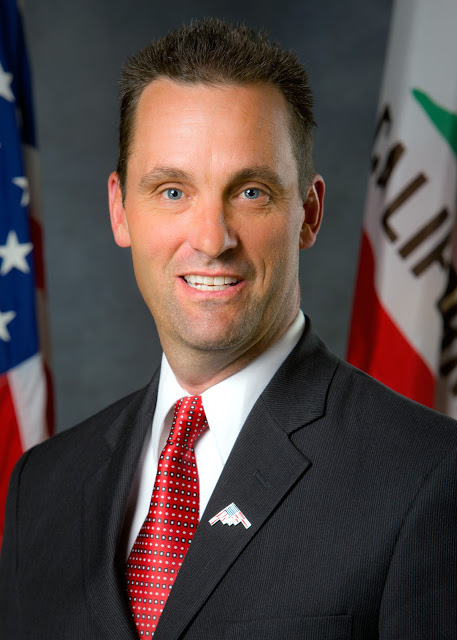
Sponsored bills
Existing sales and use tax laws impose a tax on retailers measured by the gross receipts from the sale of tangible personal property sold at retail in this state, or on the storage, use, or other consumption in this state of tangible personal property purchased from a retailer for storage, use, or other consumption in this state. The Sales and Use Tax Law provides various exemptions from those taxes, including an exemption for the gross receipts from the sale of, and the storage, use, or other consumption of, qualified property for use in space flight. This bill would, until January 1, 2024, expand this exemption to also include equipment and materials used to construct, reconstruct, or improve new or existing facilities designed to launch, manufacture, fabricate, assemble, or process equipment that facilitates the renovation, rehabilitation, or reconstruction of commercial space launch sites. This bill would require the Legislative Analyst's Office, by January 1, 2023, with information provided by the State Board of Equalization, to report to the Legislature on the effect of the exemption on employment and investment in the commercial space flight industry, using data, including, but not limited to, that produced by the Employment Development Department Labor Market Information Division. The Bradley-Burns Uniform Local Sales and Use Tax Law authorizes counties and cities to impose local sales and use taxes in conformity with the Sales and Use Tax Law, and existing law authorizes districts, as specified, to impose transactions and use taxes in accordance with the Transactions and Use Tax Law, which conforms to the Sales and Use Tax Law. Amendments to state sales and use taxes are incorporated into these laws. Section 2230 of the Revenue and Taxation Code provides that the state will reimburse counties and cities for revenue losses caused by the enactment of sales and use tax exemptions. This bill would provide that, notwithstanding Section 2230 of the Revenue and Taxation Code, no appropriation is made and the state shall not reimburse any local agencies for sales and use tax revenues lost by them pursuant to this bill. This bill would take effect immediately as a tax levy, but its operative date would depend on its effective date.
Existing law requires the State Board of Forestry and Fire Protection, on or before September 1, 2011, to adopt emergency regulations to establish a fire prevention fee in an amount not to exceed $150 to be charged on each habitable structure on a parcel that is within a state responsibility area, as defined, and requires that the fire prevention fee be adjusted annually using prescribed methods. Existing law requires the State Board of Equalization to collect the fire prevention fees, as prescribed, commencing with the 2011–12 fiscal year. Existing law establishes the State Responsibility Area Fire Prevention Fund and prohibits the collection of fire prevention fees if, commencing with the 2012–13 fiscal year, there are sufficient amounts of moneys in the fund to finance specified fire prevention activities for a fiscal year. Existing law requires that the fire prevention fees collected, except as provided, be deposited into the fund and be made available to the board and the Department of Forestry and Fire Protection for certain specified fire prevention activities that benefit the owners of structures in state responsibility areas who are required to pay the fee. Existing law further requires the board, on and after January 1, 2013, to submit an annual written report to the Legislature on specified topics. This bill would declare the intent of the Legislature to repeal the state responsibility area fire prevention fees imposed by the above provisions.
Existing law authorizes the governing board of any school district to permit any person, except a person required to register as a sex offender, to serve as a nonteaching volunteer aide under the immediate supervision and direction of certificated personnel of the school district to perform noninstructional work that serves to assist the certificated personnel of the school district in their teaching and administrative responsibilities. Existing law authorizes a school district or county office of education to request that a local law enforcement agency conduct an automated records check of a prospective nonteaching volunteer aide in order to ascertain whether the prospective nonteaching volunteer aide has been convicted of a sex offense. This bill would also prohibit a person who has been convicted of a serious felony, as defined, or who is on postrelease community supervision or parole from serving as a volunteer aide, with exceptions for a parent of a child at the school, as provided. The bill would make conforming and other nonsubstantive changes. This bill would declare that it is to take effect immediately as an urgency statute.
(1) Existing law, the Open Enrollment Act, authorizes the parent of a pupil enrolled in a low-achieving school, as defined, to submit an application for the pupil to attend a school in a school district of enrollment, as defined, as specified. This bill would expand the act to authorize the parent of a pupil enrolled in a school district of residence, as defined, to submit an application for the pupil to attend a school in a school district other than their school district of residence. The Open Enrollment Act requires a school district of enrollment to ensure that pupils enrolled pursuant to the act are enrolled in a school with a higher Academic Performance Index than the school in which the pupil was previously enrolled and are selected through a random, unbiased process, except that pupils applying for transfer are required to be assigned specified priorities for approval. This bill would add a third priority for approval for pupils transferring from a school ranked in decile 2 on the Academic Performance Index. To the extent the bill would expand the duties of school districts under the Open Enrollment Act, the bill would impose a state-mandated local program. (2) Existing law authorizes the governing board of a school district or a county board of education, as specified, after a public hearing on the matter, to request the State Board of Education to waive all or part of any section of the Education Code or any regulation adopted by the state board that implements a provision of the Education Code that may be waived, except for specified provisions. This bill would include additional specified provisions of the Education Code, relating to notice and procedures to apply and transfer schools pursuant to the Open Enrollment Act, that may not be waived. The California Constitution requires the state to reimburse local agencies and school districts for certain costs mandated by the state. Statutory provisions establish procedures for making that reimbursement. This bill would provide that, if the Commission on State Mandates determines that the bill contains costs mandated by the state, reimbursement for those costs shall be made pursuant to these statutory provisions.
Existing law establishes various student financial aid programs that are funded by the state or a public postsecondary educational institution, and also establishes the Student Aid Commission as the primary state agency for the administration of state-authorized student financial aid programs for students attending all segments of postsecondary education. This bill would express the Legislature's intent to enact legislation that would address student financial aid fraud.
The Personal Income Tax Law allows various credits against the taxes imposed by that law. This bill would, for taxable years beginning on or after January 1, 2013, and before January 1, 2018, allow a credit in the amount of either $1,000 for an eligible science, technology, engineering, or mathematics (STEM) teacher that teaches one or more STEM courses in any kindergarten or any of grades 1 to 12, inclusive, during an academic year ending in the taxable year, or $1,500 for those eligible STEM teachers who teach in a high-needs school, as defined. This bill would take effect immediately as a tax levy.
Existing law specifies the number of judges of the superior court for each county, and allocates additional judgeships to the various counties in accordance with uniform standards for factually determining additional need in each county, as approved by the Judicial Council, and other specified criteria. Existing law requires the Judicial Council to report biennially to the Legislature and the Governor on the factually determined need for new judgeships in each superior court, using that uniform criteria. This bill would require the Judicial Council, upon the availability of funding, to allocate 12 additional judges each fiscal year to those counties in which the current judicial position allocations are disproportionate to the Judicial Council's recommendation of assessed judicial need.
The Personal Income Tax Law imposes a net tax at specified rates each taxable year on the entire taxable income of every resident of this state. This bill would make a technical, nonsubstantive change to that provision.
Existing law requires a local educational agency to implement one of several specified interventions for a school not identified as a persistently lowest-achieving school that, after one full school year, is subject to corrective action, as specified, and fails to meet specified criteria and has a specified percentage of parents and legal guardians of pupils sign a petition requesting the local educational agency to implement at least one of 5 specified interventions. Existing law requires a local educational agency to implement the intervention option requested by the petition unless the agency makes a specified finding in a regularly scheduled public hearing. This bill would delete the provision excluding schools identified as persistently lowest-achieving schools, and would also make the provisions applicable to schools ranked in deciles 1 to 3, inclusive, of the Academic Performance Index. The bill would make technical changes by updating cross-references. By imposing additional duties on school districts, the bill would impose a state-mandated local program. The California Constitution requires the state to reimburse local agencies and school districts for certain costs mandated by the state. Statutory provisions establish procedures for making that reimbursement. This bill would provide that, if the Commission on State Mandates determines that the bill contains costs mandated by the state, reimbursement for those costs shall be made pursuant to these statutory provisions.