

Passed Jun 2, 2022
1 co-sponsor
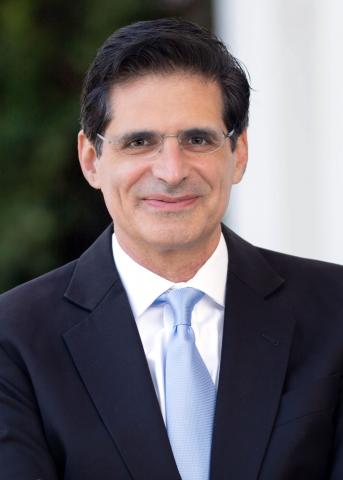
Total votes
14,289
all sessions
Attendance
96%
411 missed
Near the chamber average
With party
99%
of cast votes
Near the chamber average
Bipartisan score
0%
crosses aisle rarely
Near the chamber average
Sponsored
499
bills & resolutions
Near the chamber average
Committees
9
assignments
499 bills and resolutions
Sponsored bills
Total
499
Primary
130
Co-sponsor
369
This page
499
matching current filters
Relative to California Holocaust Memorial Day.
This measure would proclaim April 28, 2022, as California Holocaust Memorial Day, and would urge all Californians to observe this day of remembrance for the victims of the Holocaust in an appropriate manner.
Signed into law Jun 2, 2022
1 co-sponsor
Relative to California Holocaust Memorial Day.
This measure would proclaim April 28, 2022, as California Holocaust Memorial Day, and would urge all Californians to observe this day of remembrance for the victims of the Holocaust in an appropriate manner.
Signed into law May 27, 2022
1 co-sponsor
Firearms.
(1) Existing law requires a licensed firearm dealer to report sales and transfers of firearms to the Department of Justice. This bill would, commencing on July 1, 2023, until July 1, 2028, require the department, upon request from the City of San Jose, to mail notifications, as specified, to all firearm owners of record within the City of San Jose, to inform them of any city code or ordinance imposing any new requirement upon firearm owners within the City of San Jose. The bill would require the City of San Jose to pay the cost to the department of the processing and mailing of the notifications. This bill would state that the mailing of notices by the department does not constitute an endorsement of the code or ordinance or the legality thereof. The bill would request the California Firearm Violence Research Center at UC Davis to conduct a study analyzing the impact of the notification letters on compliance with the local code or ordinance, and to prepare and submit a report to the Legislature, as specified. (2) Existing law requires any person who purchases or receives a firearm, as specified, to possess a firearm safety certificate. Existing law requires the Department of Justice to develop a written test required for the issuance of a firearm safety certificate. Existing law requires the department to post specified information for certificate applicants on their internet website and to regularly update that information to reflect current laws and regulations. This bill would require the department to update the information on the internet website no less frequently than once annually.
In committee May 19, 2022
1 co-sponsor
Privacy: data brokers.
Existing law, the California Consumer Privacy Act of 2018 (CCPA) , grants a consumer various rights with respect to personal information that is collected or sold by a business, as defined, and also establishes, as approved by the voters as Proposition 24 at the November 3, 2020, statewide general election, the California Privacy Protection Agency and vests it with full administrative power, authority, and jurisdiction to implement and enforce the CCPA. The California Constitution grants a right of privacy. Existing law requires data brokers to register with, and provide certain information to, the Attorney General. Existing law defines a data broker as a business that knowingly collects and sells to third parties the personal information of a consumer with whom the business does not have a direct relationship, subject to specified exceptions. Existing law subjects data brokers that fail to register to injunction and liability for civil penalties, fees, and costs in an action brought by the Attorney General, with any recovery to be deposited in the Consumer Privacy Fund, as specified. Existing law imposes a $100 civil penalty for each day a data broker fails to register. This bill would include in the definition of data broker a business that knowingly collects and shares, as defined, certain personal information to third parties. The bill would transfer all authority and responsibilities under the provisions relating to data broker registration from the Attorney General to the CCPA, including by requiring data brokers to annually register with the CPPA on or before January 31. However, the bill would authorize the Attorney General to also bring an action against a data broker that fails to register. The bill would require data brokers to provide additional information to the CPPA during the registration process would increase the civil penalty for failing to register to $200 for each day the data broker fails to register. The bill would require the CPPA to adopt regulations in compliance with the Administrative Procedure Act. The bill would also make other technical changes.
died May 19, 2022
0 co-sponsors
Load-serving entities: integrated resource plans.
Under existing law, the Public Utilities Commission has regulatory authority over public utilities, including electrical corporations. Existing law requires the commission to adopt a process for each load-serving entity, defined as including electrical corporations, electric service providers, and community choice aggregators, to file an integrated resource plan and a schedule for periodic updates to the plan to ensure that load-serving entities accomplish specified objectives. Existing law requires each load-serving entity to prepare and file an integrated resource plan consistent with certain requirements on a time schedule directed by the commission and subject to commission review. This bill would require the commission to require each load-serving entity to undertake sufficient procurement to achieve a diverse, balanced, and reliable statewide portfolio and realize specified electricity sector greenhouse gas emissions reductions, as provided. Under existing law, a violation of the Public Utilities Act or any order, decision, rule, direction, demand, or requirement of the commission is a crime. Because the provisions of this bill would be a part of the act and because a violation of an order or decision of the commission implementing its requirements would be a crime, the bill would impose a state-mandated local program by creating a new crime. The California Constitution requires the state to reimburse local agencies and school districts for certain costs mandated by the state. Statutory provisions establish procedures for making that reimbursement. This bill would provide that no reimbursement is required by this act for a specified reason.
In committee May 19, 2022
1 co-sponsor
Foster care: enrichment activities.
Under existing law, every child adjudged a dependent child of the juvenile court is entitled to participate in age-appropriate extracurricular, enrichment, and social activities. Existing law requires a short-term residential therapeutic program or a group home administrator, a facility manager, or their responsible designee, and a caregiver, to use a reasonable and prudent parent standard in determining whether to give permission for a child residing in foster care to participate in extracurricular, enrichment, and social activities. This bill would establish the California Foster Youth Enrichment Grant Pilot Program, to be administered by the State Department of Social Services. The bill would require the department to develop an application for the program and to solicit applications from foster youth. The bill would authorize foster youth to use grant money to participate in various activities to enhance their skills, abilities, self-esteem, or overall well-being. The bill would make those provisions operative upon appropriation by the Legislature.
In committee May 19, 2022
1 co-sponsor
Local planning.
(1) Existing law requires the Department of Housing and Community Development, in consultation with each council of governments, to determine the existing and projected need for housing for each region, and requires the share of a city or county of the regional housing need to include that share of the housing need of persons at all income levels within the area significantly affected by the general plan of the city or county. Existing law requires the housing element to identify adequate sites for housing, as specified. Existing law allows the department to permit a city or county to substitute up to 25% of its obligation to identify adequate sites for any income category in its housing element if the city or county includes a program that commits the local government to provide units in that income category through the provision of committed assistance during the planning period covered by the element to low- and very low income households at affordable housing costs or affordable rents, as specified. Existing law provides that this provision does not apply to any city or county that has not met its share of regional housing needs for low- and very low income households, as specified. This bill would provide that any city or county that has not met its share of regional housing needs for moderate-, low-, and very low income households is not authorized to substitute up to 25% of its obligation to identify adequate sites through a committed assistance program. (2) Existing law requires a city or county to provide by April 1 of each year an annual report to, among other entities, the Department of Housing and Community Development. The law requires that the annual report include, among other specified information, the number of net new units of housing, including both rental housing and for-sale housing, that have been issued a completed entitlement, building permit, or certificate of occupancy, and the income category, by area median income, that each unit of housing satisfies, as specified. This bill would authorize the planning agency to include in the portion of its report detailing the number of net new units of housing single-room occupancy units, permanent hotel and motel converted units, floating homes, as defined, and other nontraditional housing units, as those terms are defined, if those units are subject to authorization by the department. Existing law authorizes a planning agency to include in its annual report, for up to 25% of a jurisdiction's moderate-income regional housing need allocation, the number of units in an existing multifamily building that were converted to deed-restricted rental housing for moderate-income households by the imposition of affordability covenants and restrictions for the unit, as specified. This authorization applies only to converted units that meet specified requirements, including that the rent for the unit prior to conversion was not affordable to very low, low-, or moderate-income households and the initial postconversion rent for the unit is at least 10% less than the average monthly rent charged over the 12 months prior to conversion. Existing law authorizes a city or county to reduce its share of regional housing need for the income category of the converted units on a unit-for-unit basis, as specified. This bill would expand these provisions to authorize a planning agency to include the number of units in an existing multifamily building that were converted to deed-restricted rental housing for very low or low-income households. (3) Existing law, for award cycles commenced after July 1, 2021, awards a city, county, or city and county that has adopted a housing element determined by the department to be in substantial compliance with specified provisions of the Planning and Zoning Law and that has been designated by the department as prohousing based upon its adoption of prohousing local policies, as specified, additional points in the scoring of prescribed program applications for housing and infrastructure programs, including the Affordable Housing and Sustainable Communities Program, the Infill Incentive Grant Program of 2007, and other state programs when already allowable under state law, pursuant to regulations adopted by the department. This bill would remove the Affordable Housing and Sustainable Communities Program from the prescribed programs for which the department may award additional points and would provide that additional points shall be awarded for the qualifying infill area portion of the Infill Incentive Grant Program of 2007. The bill would also permit additional bonus points to be awarded under other state programs for which local governments are the sole or primary applicants when already allowable under state law. (4) Existing law establishes the Infill Infrastructure Grant Program of 2019, which requires the Department of Housing and Community Development, upon appropriation of funds by the Legislature, to establish and administer a grant program to allocate those funds to capital improvement projects that are an integral part of, or necessary to facilitate the development of, a qualifying infill project or qualifying infill area, as those terms are defined, pursuant to specified requirements. Existing law prescribes conditions that the qualifying infill project or qualifying infill area shall meet in order to be awarded, including that the project or area be located in a city, county, or city and county that has submitted its annual progress reports and that has adopted a housing element that has been found to be in substantial compliance with specified law. This bill would require that only a qualifying infill area shall be located in a city, county, or city and county that has submitted its annual progress reports and that has adopted a housing element that has been found to be in substantial compliance with specified law. (5) Existing law establishes the Strategic Growth Council and sets forth its powers and duties relating to developing and administering a program for the purpose of reducing greenhouse gas emissions through projects that implement land use, housing, transportation, and agricultural land preservation practices to support infill and compact development and that support other related and coordinated public policy objectives, including, among others, preserving and developing affordable housing for lower income households. Existing law requires the council to develop guidelines and selection criteria for the implementation of the program, as specified. This bill would prohibit the guidelines from disqualifying a project applicant that is a nonprofit or for-profit housing developer if the jurisdiction the project is proposed to be located in has not been found by the Department of Housing and Community Development to be in substantial compliance with specified law.
In committee May 19, 2022
0 co-sponsors
Tobacco products: single-use electronic cigarettes.
Under existing law, the Stop Tobacco Access to Kids Enforcement Act, an enforcing agency, as defined, may assess civil penalties against any person, firm, or corporation that sells, gives, or furnishes specified tobacco and cigarette related items, including cigarette papers, to a person who is under 21 years of age, except as specified. The existing civil penalties range from $400 to $600 for a first violation, up to $5,000 to $6,000 for a 5th violation within a 5-year period. Existing law prohibits the sale, distribution, or nonsale distribution of tobacco products directly or indirectly to any person under 21 years of age through the United States Postal Service or other public or private postal or package delivery service. Under existing law, a district attorney, city attorney, or the Attorney General may assess civil penalties against a violator of not less than $1,000 or more than $2,000 for the first violation and up to $10,000 for a 5th or subsequent violation within a 5-year period. Under existing law, every person, firm, or corporation that knowingly or under circumstances in which it has knowledge, or should otherwise have grounds for knowledge, sells, gives, or furnishes a cigarette, among other specified items, to another person who is under 21 years of age is, except as specified, subject to either a criminal action for a misdemeanor or to a civil action brought by a city attorney, a county counsel, or a district attorney, punishable by a fine of $200 for the first offense, $500 for the 2nd offense, and $1,000 for the 3rd offense. This bill would prohibit a person or entity from selling, giving, or furnishing to another person of any age in this state a single-use electronic cigarette, as defined, except as specified. The bill would prohibit that selling, giving, or furnishing, whether conducted directly or indirectly through an in-person transaction, or by means of any public or private method of shipment or delivery to an address in this state. This bill would authorize a city attorney, county counsel, or district attorney to assess a $500 civil fine against each person determined to have violated those prohibitions in a proceeding conducted pursuant to the procedures of the enforcing agency, as specified. This bill would make its provisions operative on January 1, 2024.
In committee May 16, 2022
1 co-sponsor
Passed May 16, 2022
1 co-sponsor
Ask Maddy
·
AI policy assistant
Ask Maddy about Josh Becker
Scope: california
Hi! I can help you understand Josh Becker's legislative record. What would you like to know?
Try one of these
i
Maddy answers using official bill text and legislative records. Always verify before sharing.
Sources cited inline