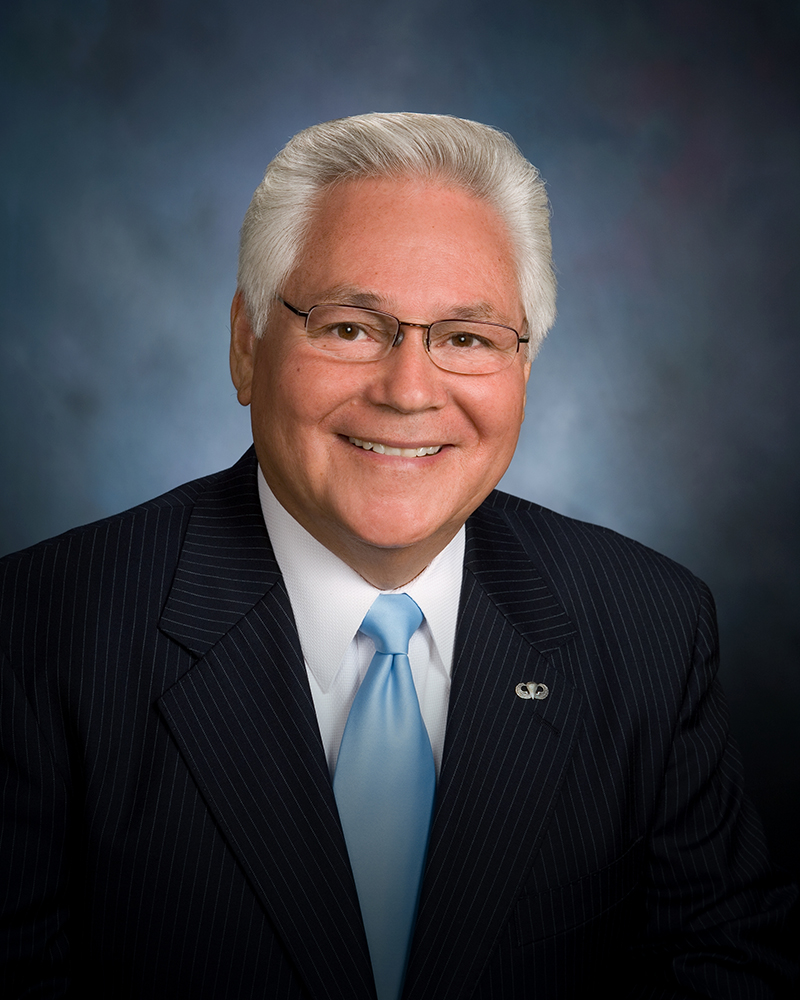
This measure would designate a specified portion of State Highway Route 152 in the County of Santa Clara as the Rusty Areias Highway. The measure would request that the Department of Transportation determine the cost of appropriate signs showing this special designation and, upon receiving donations from nonstate sources sufficient to cover the cost, to erect those signs.
This bill would designate a specified portion of State Route 20 in the County of Sutter as the Gordon Lee Bordsen Memorial Highway. The measure would request that the Department of Transportation determine the cost of appropriate signs showing this special designation and, upon receiving donations from nonstate sources sufficient to cover the cost, to erect those signs.
Existing law establishes the Department of Transportation and vests the department with full possession and control of all state highways and all property and rights in property acquired for state highway purposes. Existing law establishes the Tahoe Transportation District as a special purpose district managed by representatives from the States of California and Nevada to, among other things, operate a public transportation system in the Lake Tahoe Basin. This bill would authorize the department, within the Tahoe corridor, to contract with a state agency, a local government, or the district relating to safety, access, and parking in the corridor to (1) designate the portions of state highways that constitute the corridor, (2) prevent unsafe parking and pedestrian movement in the corridor, as provided, and (3) enhance public access to the corridor and public recreation sites, by, among other things, developing public parking, establishing and collecting fees for public parking, and developing transit facilities and pedestrian pathways to connect public parking to recreation sites, as specified. This bill would require all moneys collected from a fee for that public parking to be deposited into the Tahoe Safe Recreation Access Fund, which the bill would establish, and would, upon appropriation by the Legislature, require the department to use those moneys for purposes of improving transportation facilities on state highways in the Tahoe Basin, as specified. The bill would require all penalty moneys collected through citations issued for failing to pay parking fees to be deposited into the Tahoe Safe Recreation Access Penalty Account, which the bill would establish, and would, upon appropriation by the Legislature, require the department to use those moneys for enforcement of parking restrictions and prohibitions on state highways in the Tahoe Basin. This bill would make legislative findings and declarations as to the necessity of a special statute for the Lake Tahoe Basin.
Existing law vests the Department of Transportation (Caltrans) with full possession and control of the state highway system and requires Caltrans to improve and maintain the state highways. Existing law requires Caltrans, in consultation with the California Transportation Commission, to prepare a robust asset management plan to guide selection of projects for the state highway operation and protection program (SHOPP) . This bill would require the department, in connection with each revision of the asset management plan, to prepare and publish a supplemental list of wildlife connectivity improvements on the state highway system, as specified, and would require the department to submit the supplemental list to the commission for review and comments before the final list is published. Existing law declares the intent of the Legislature that Caltrans review the full extent of the state highway system, as currently maintained, in consultation with the Department of Fish and Wildlife and with opportunities for the public to provide data input for consideration, to develop a comprehensive approach to address wildlife connectivity needs throughout the state with the goal of implementing measures that protect, conserve, and improve the state's unique wildlife, landscapes, and natural resources. This bill would explicitly require Caltrans to undertake this duty, in consultation with the Department of Fish and Wildlife and with opportunities for the public to provide data and input for consideration, as specified. Existing law requires Caltrans, in consultation with the Department of Fish and Wildlife and other appropriate agencies, to establish an inventory of connectivity needs on the state highway system where the implementation of wildlife passage features could reduce wildlife-vehicle collisions or enhance wildlife connectivity, and to update the inventory on a biennial basis, as specified. This bill would instead require Caltrans, in consultation with the Department of Fish and Wildlife and other appropriate agencies, to assess potential barriers to wildlife to establish an inventory of connectivity needs on the state highway system where the implementation of wildlife passage features could reduce wildlife-vehicle collisions or enhance wildlife connectivity. The bill would require the biennial update to the inventory to be based on an analysis of transportation assets within priority route segments identified by the Department of Fish and Wildlife. The bill would require Caltrans to consult with the Department of Fish and Wildlife on the development of each update to the inventory, as prescribed. Existing law requires Caltrans to prepare a State Highway System Management Plan (SHSMP) , which includes a 10-year rehabilitation plan for the rehabilitation or reconstruction by the SHOPP of all state highways and bridges, and a 5-year maintenance plan that addresses the maintenance needs of the state highway system, as provided. Existing law requires the SHSMP to include specific quantifiable accomplishments, goals, objectives, costs, and performance measures consistent with the asset management plan described above. Existing law requires the SHSMP to be updated every 2 years. This bill would require Caltrans to include wildlife connectivity as an objective in the SHSMP.
Existing law makes it unlawful to dump waste matter in certain locations, such as upon a public or private highway or road, upon private property without the consent of the owner, or in or upon a public park or other public property, as specified. Existing law also makes it unlawful to place, deposit, or dump rocks, concrete, asphalt, or dirt in certain locations, as specified. A person violating these provisions is guilty of an infraction, as specified. Existing law makes a violation of these provisions in commercial quantities, as defined, a misdemeanor punishable by imprisonment in a county jail and by a fine, as specified. This bill would make technical, nonsubstantive changes to these provisions.
Existing law makes it unlawful to dump waste matter in certain locations, such as upon a public or private highway or road, upon private property without the consent of the owner, or in or upon a public park or other public property, as specified. Existing law also makes it unlawful to place, deposit, or dump rocks, concrete, asphalt, or dirt in certain locations, as specified. A person violating these provisions is guilty of an infraction, as specified. Existing law makes a violation of these provisions in commercial quantities, as defined, a misdemeanor punishable by imprisonment in a county jail and by a fine, as specified. Under existing law, a private owner is not restricted in the use of their own private property, unless the placing, depositing, or dumping of the waste matter on the property creates a public health and safety hazard, a public nuisance, or a fire hazard, as determined by a local health or fire department or the Department of Forestry and Fire Protection. This bill would make it a crime to transport waste matter, rocks, concrete, asphalt, dirt, or other construction debris for the purpose of placing, depositing, or dumping it in the locations described above. The bill would increase the maximum fine to $5000 for violating these provisions a 4th or subsequent time. The bill would also make it unlawful to transport for the purpose of placing, depositing, or dumping waste matter, rocks, concrete, asphalt, dirt or other construction debris in commercial quantities, as defined, in the locations described above. The bill would specify that the fact that a person is operating a vehicle with actual or apparent rocks, concrete, asphalt, dirt, or other construction debris in their vehicle does not in itself constitute reasonable suspicion to stop or detain the person, or probable cause to arrest the person. For a person who violates these provisions in commercial quantities in excess of 25 cubic yards, the bill would make that violation a misdemeanor punishable in a county jail for not more than one year and by a fine, as specified. For commercial quantities in excess of 50 cubic yards, the bill would make a violation punishable as a misdemeanor or a felony, as specified. By expanding the application of a crime and creating new crimes, this bill would impose a state-mandated local program. The bill would specify that a private owner or a person with the owner's permission is prohibited from placing, depositing, dumping, or transporting waste matter, rocks, concrete, asphalt, dirt, or construction debris on their property if the activity requires a permit or license from a state or local agency and one was not obtained, or creates a public health and safety hazard, a public nuisance, or a fire hazard, as determined by specified entities. The bill would prohibit a person from being charged with dumping commercial quantities under these provisions if it was completed during the course of the person's employment and at the direction of their employer, as specified. The California Constitution requires the state to reimburse local agencies and school districts for certain costs mandated by the state. Statutory provisions establish procedures for making that reimbursement. This bill would provide that no reimbursement is required by this act for a specified reason.
Under existing law, generally a motor vehicle may not be driven upon a highway unless it is registered. However, off-highway motor vehicles issued an identification plate or device may cross highways under specified conditions, including, among others, a peace officer in an emergency response situation. This bill would similarly authorize first responders, as defined, to operate or drive an off-highway vehicle upon a highway to provide emergency response services or while performing official departmental duties.
This measure would designate a specified portion of State Route 18 in the County of San Bernardino as the Huuc Atam Highway. The measure would request that the Department of Transportation determine the cost of appropriate signs showing this special designation and, upon receiving donations from nonstate sources sufficient to cover the cost, to erect those signs.
Existing law establishes the Department of Transportation and requires the department to improve and maintain the state highways. This bill would require the department, in collaboration with the California Transportation Commission, to prepare a report to assess the services provided by the department to maintain and improve the state highway system, and the needs of state highway infrastructure, in the southeast portion of the County of Los Angeles. The bill would require the department to submit the report to the Legislature, and post the report on its internet website, on or before February 1, 2028. In preparing the report, the bill would require the department to provide an opportunity to comment on the topic of the report, as specified. This bill would make legislative findings and declarations as to the necessity of a special statute for County of Los Angeles.
(1) Existing law authorizes a city or county in which a planned transportation facility was to be located on State Highway Route 238 in the City of Hayward and the County of Alameda to develop and file with the California Transportation Commission a local alternative transportation improvement program that addresses transportation problems and opportunities in the county, and provides for the use of revenues from the sale of excess properties acquired for the planned state facility in order to fund the local alternative transportation improvement program. Existing law prohibits the commission from approving a local alternative transportation improvement program submitted under these provisions after July 1, 2010. Existing law requires revenues from excess property sales for State Highway Route 238 to be deposited into a separate account in the Special Deposit Fund, a continuously appropriated fund, to be available for expenditure by local agencies for projects designated in the local alternative transportation improvement program. This bill would authorize the Alameda County Transportation Commission to file an amendment to the local alternative transportation improvement program for approval by the commission, and would authorize that amendment to propose to revise the projects listed in the program. Before filing the proposed amendment with the commission, the bill would require the Alameda County Transportation Commission to obtain the approval of the amendment from the city councils of the Cities of Hayward and San Leandro and the board of supervisors of the County of Alameda. By authorizing the commission to approve a revised list of projects, the bill would expand the purposes for which continuously appropriated funds may be expended, thereby making an appropriation. (2) Existing law makes it a crime for a person to pilot a vessel through the Golden Gate and into or out of a harbor in the Bays of San Francisco, San Pablo, and Suisun, unless the person has a license as a pilot, as provided. Existing law defines "Bays of San Francisco, San Pablo, and Suisun" as all the waters of the Bay of San Francisco, Bay of San Pablo, and Bay of Suisun, and of the tributaries, ports, and harbors of those bays, including the water areas from the south end of San Francisco Bay and from the Ports of Sacramento and Stockton to the Golden Gate Bridge. Existing law requires a pilot that provides pilotage service in the Bays of San Francisco, San Pablo, and Suisun to be insured, as provided, and requires a vessel, owner, operator, or demise or bareboat charterer hiring the pilot to either defend, indemnify, and hold harmless the pilot or provide trip insurance, as provided. This bill would clarify that the Bays of San Francisco, San Pablo, and Suisun includes the Ports of Sacramento and Stockton. The bill would also clarify that those insurance provisions apply to any portion of a vessel transit that occurs within the waters of the Ports of Sacramento and Stockton. To the extent the bill would expand the definition of the Bays of San Francisco, San Pablo, and Suisun, it would increase the scope of a crime and impose a state-mandated local program. (3) Existing law specifies standards and requirements for the equipment of motor vehicles. Existing law generally requires motor carriers, drivers, and vehicles to comply with the Federal Motor Carrier Safety Regulations related to safety requirements for commercial motor vehicle operations, subject to department regulations. Under existing law, it is an infraction for a person to violate, or fail to comply with, a provision of the Vehicle Code, unless otherwise specified. This bill would additionally require motor carriers, drivers, vehicles, and shippers to comply with specified federal regulations related to the transportation of hazardous materials to the extent that they relate to transportation by highway unless the motor carrier, driver, vehicle, or shipper is an agency of the federal government. The bill would clarify that motor carriers, drivers, vehicles, and shippers not subject to the federal regulations described above are required to comply with those regulations unless specifically exempted from that compliance pursuant to department regulations. Because a violation of these provisions would be a crime, the bill would impose a state-mandated local program. (4) Existing law authorizes a city, county, or city and county to establish an automated traffic enforcement system program to use those systems to detect a violation of a traffic control signal, if the system meets specified requirements. Existing law makes photographic, video, and administrative records made by a system confidential and specifies that data about the number of violations issued is not an administrative record required to be disclosed. Existing law establishes an administrative hearing process for notices of violations issued under these provisions and authorizes a contestant to seek review of the final decision by filing an appeal to the small claims division of the superior court or the traffic division of the superior court, as specified. Existing law provides that the conduct of the hearing on appeal is a subordinate duty that may be performed by a commissioner or other subordinate judicial officer, as specified. This bill would instead specify that data about the number of violations issued is not an administrative record prohibited from disclosure and is subject to disclosure. The bill would delete references to the small claims division or traffic division of a superior court in the above-described provisions and instead authorize a contestant to file an appeal to the superior court. The bill would provide that the conduct of the hearing on appeal may be a subordinate duty. The bill would also make a conforming change. (5) The California Constitution requires the state to reimburse local agencies and school districts for certain costs mandated by the state. Statutory provisions establish procedures for making that reimbursement. This bill would provide that no reimbursement is required by this act for a specified reason.