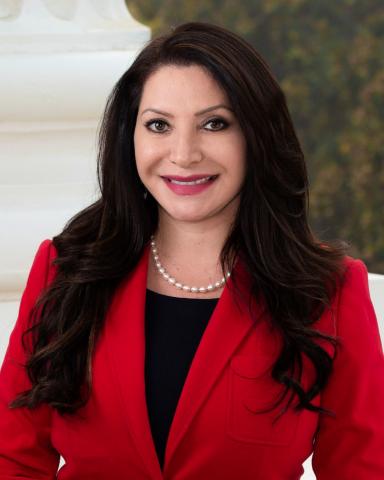
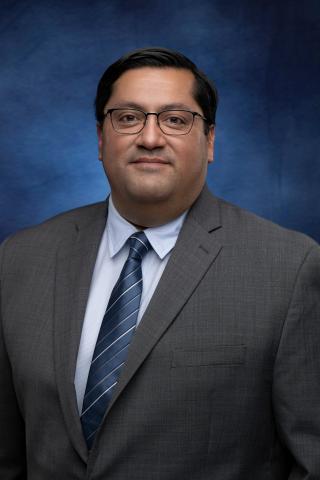
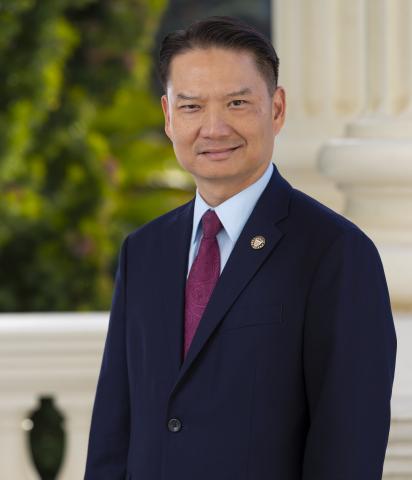
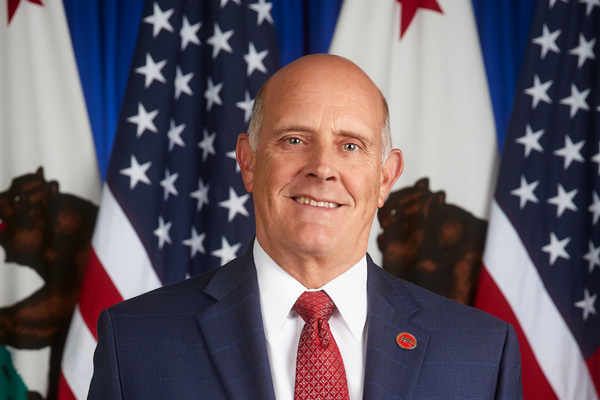
This measure would recognize May 4, 2026, to May 8, 2026, inclusive, and every first full week of May thereafter, as Black Health Equity Advocacy Week and commend the California Black Health Network and other organizations throughout the state for their efforts to improve the health, well-being, and life expectancy of Black Californians.
This Senate resolution officially designates May 2026 as Lupus Awareness Month in California to highlight the chronic autoimmune disease that affects 1.5 million people in the United States. The bill specifically commends the California Lupus Foundation for its long-standing efforts in providing support, education, and medical care resources to patients and their families. By recognizing the foundation's leadership, the resolution aims to increase public understanding of the disease's symptoms and the importance of early diagnosis. This measure serves as a symbolic gesture rather than establishing new laws or funding requirements.
This bill designates May 2026 as Maternal Mental Health Awareness Month to highlight the importance of mental health support for mothers. It serves as a symbolic proclamation rather than a law that changes regulations or imposes new requirements. The measure directly affects state officials who will recognize the month and may encourage public awareness campaigns during that time.
This measure would call on Medi-Cal managed care plans operating across the state of California to sustain and expand medically supportive food and nutrition services offerings to Medi-Cal patients through federal In Lieu of Services (ILOS) authority until these services can become permanent Medi-Cal benefits.
The Personal Income Tax Law allows various credits against the taxes imposed by that law. This bill would allow a credit against those taxes to a licensed nurse employed at a rural health facility, as specified, for each taxable year beginning on or after January 1, 2027, and before January 1, 2032, in an amount equal to $2,000 per taxpayer per taxable year. The bill would require the Department of Health Care Access and Information to provide an annual list to the Franchise Tax Board of rural health facilities, as specified. Existing law requires any bill authorizing a new tax expenditure, as defined, to include tax credits, to contain, among other things, specific goals, purposes, and objectives that the tax credit will achieve, detailed performance indicators, and data collection requirements. This bill would include findings and reporting requirements in compliance with this requirement. This bill would take effect immediately as a tax levy.
The Personal Income Tax Law, in conformity or modified conformity with federal income tax laws, allows various deductions in computing the income that is subject to the taxes imposed by that law, including a deduction for the medical and dental expenses paid during the taxable year, not compensated for by insurance or otherwise, for the medical or dental care of the taxpayer, spouse, or a dependent, to the extent that such expenses exceed 7.5% of federal adjusted gross income. This bill would, for taxable years beginning on or after January 1, 2026, and before January 1, 2031, allow a deduction from adjusted gross income for the costs of medical care, as defined, of a qualified taxpayer to the extent the costs exceed 4% of the qualified taxpayer's federal adjusted gross income. The bill would limit the deduction to $5,000. The bill would define "qualified taxpayer" for this purpose to mean an individual with adjusted gross income that does not exceed 300% of the federal poverty level and who does not take an itemized deduction for costs of medical care pursuant to the above-referenced provisions on their California income tax return. Existing law requires any bill authorizing a new tax expenditure to contain, among other things, specific goals that the tax expenditure will achieve, detailed performance indicators, and data collection requirements. This bill also would include additional information required for any bill authorizing a new tax expenditure. This bill would take effect immediately as a tax levy.
Existing law establishes the Medi-Cal program, which is administered by the State Department of Health Care Services and under which qualified low-income individuals receive health care services. The Medi-Cal program is in part governed by, and funded pursuant to, federal Medicaid program provisions. Existing federal law, enacted on July 4, 2025, sets forth various changes to different health care programs, including certain requirements for Medicaid eligibility with regard to work or community engagement reporting, redeterminations, and cost sharing, among other factors, for certain Medicaid populations pursuant to a specified implementation timeline. This bill would create the California Health Access Fund, to be administered by the department. Under the bill, moneys in the fund would include deposits, through any applicable transfers made by the Legislature, equal to the amount of any savings to the state resulting from decreased enrollment in the Medi-Cal program caused by enrollment barriers created by the above-described federal law. Under the bill, moneys in the fund would, upon appropriation, be used to ensure that California residents losing health care coverage due to the impacts of the federal law or due to any other divestments from the health care system can continue to receive health care services and that health care providers are reimbursed for these services.
(1) Existing law, the Lanterman-Petris-Short (LPS) Act, authorizes the involuntary commitment and treatment of a person, when the person, as a result of a mental health disorder, is a danger to themselves or others, or is gravely disabled. For the purposes of these provisions, existing law defines "gravely disabled" as a condition in which a person, as a result of a mental health disorder, a severe substance use disorder, or a co-occurring mental health disorder and a severe substance use disorder, is unable to provide for their basic personal needs for food, clothing, shelter, personal safety, or necessary medical care. Existing law also authorizes a conservator of a person, estate, or person and the estate to be appointed for a person who is gravely disabled or impaired by chronic alcoholism, subject to specified procedures. Existing law provides the person for whom conservatorship is sought to have the right to demand a court or jury trial on the issue of whether the person is gravely disabled. Existing law prohibits a person from being tried or adjudged to punishment while that person is mentally incompetent, and establishes a process by which a defendant's mental competency is evaluated. This bill would prohibit a court, for purposes of LPS conservatorship, from determining a person's ability to provide for their basic personal needs based solely on the fact that the person has temporary access to those basic personal needs while incarcerated. The bill would also authorize a district attorney to be present and represent public safety interests at any hearing to determine whether an individual is gravely disabled for purposes of the LPS Act. Existing law requires the court to determine the most appropriate placement for a conservatee who is gravely disabled, as defined. Existing law requires the officer providing conservatorship investigation to investigate all available alternatives to conservatorship, as applicable, and to render to the court a comprehensive, written report of the investigation prior to the hearing, as specified. This bill would authorize the district attorney to review all filed documents regarding the investigation, initiation, termination, or modification of, and to be present and represent public safety interests at all hearings that consider, a conservatorship of a person who is gravely disabled, as defined by being found mentally incompetent and meeting the above-described conditions, to provide input to the court about appropriate placement or interim placement by the public conservator. The bill would require a copy of the conservatorship investigation report to be transmitted to the district attorney if the investigation was initiated as part of a determination of mental competence for trial. The bill would authorize the district attorney, if the individual has been appointed a conservator under specified provisions, to challenge the recommendation of the public conservator after the conservatorship investigation for an abuse of discretion in a contested hearing before a judge. The bill would prohibit the district attorney from using the information contained in these reports in subsequent criminal proceedings, except as specified. To the extent the bill imposes a higher level of service on county agencies that prepare and transmit conservatorship investigation reports and on a district attorney to receive those reports, the bill would impose a state-mandated local program. This bill would authorize a county with a population size of 750,000 or greater to consider prioritizing the placement of specified conservatees in a state hospital run by the State Department of State Hospitals if at least 40 of those conservatees are waiting for placement in a state hospital. The bill would also authorize the placement to be on an interim basis at a county detention facility pending acceptance into a facility that achieves the purposes of treatment of the conservatee and protection of the public. The bill would require the conservatee to receive treatment services in accordance with the conservatorship plan within the detention facility pending permanent placement and would require the court to review the conservator's placement efforts every 60 calendar days. The California Constitution requires the state to reimburse local agencies and school districts for certain costs mandated by the state. Statutory provisions establish procedures for making that reimbursement. This bill would provide that, if the Commission on State Mandates determines that the bill contains costs mandated by the state, reimbursement for those costs shall be made pursuant to the statutory provisions noted above.
Existing law, the Sherman Food, Drug, and Cosmetic Law, under the administration and enforcement of the State Department of Public Health, provides for the regulation of various subjects relating to the manufacturing, processing, labeling, advertising, and sale of food, drugs, and cosmetics. Existing law places product testing and disclosure requirements on various products, including baby food and prenatal vitamins. A violation of the Sherman Food, Drug, and Cosmetic Law is punishable as a misdemeanor. This bill would, commencing January 1, 2028, require a manufacturer of a bulk protein product or a packaged protein product, as defined, that is sold, manufactured, delivered, held, or offered for sale in this state to test a representative sample of each lot of the product for heavy metals, as defined. The bill would require both a manufacturer and brand owner to provide test results to an authorized agent of the department upon their request, as specified. The bill would, commencing January 1, 2028, require a brand owner of a packaged protein product that is sold, manufactured, delivered, held, or offered for sale in the state to disclose specified product information to the public, including, among other things, the heavy metal testing information. Commencing on or after January 1, 2028, the bill would require a statement regarding heavy metal testing to be included on the outermost package of a packaged protein product sold in a retail store and on the product details page on an internet website for products sold online or directly to consumers. The bill would, commencing January 1, 2028, prohibit a person from selling in the state or manufacturing, delivering, holding, or offering for sale in the state a protein product that does not comply with these provisions. By creating a new crime, the bill would impose a state-mandated local program. The California Constitution requires the state to reimburse local agencies and school districts for certain costs mandated by the state. Statutory provisions establish procedures for making that reimbursement. This bill would provide that no reimbursement is required by this act for a specified reason.
Existing law, the Medical Practice Act, establishes the Medical Board of California to license and regulate the practice of medicine. Existing law establishes within the act the Licensed Physicians from Mexico Program, which authorizes the board to issue a limited number of nonrenewable 3-year physician's and surgeon's licenses to physicians from Mexico who are licensed, certified, or recertified and in good standing in their medical specialty in Mexico and who meet specified other requirements. This bill would establish the Doctors from El Salvador Program for the purpose of permitting licensed physicians from El Salvador to practice medicine in California for up to 3 years. The bill would require the program to be developed in consultation with representatives from a community health clinic in California that has an established partnership and framework with specified universities in El Salvador and would require the program to, among other things, recruit and vet candidates and assist candidates for the program in El Salvador to meet all program requirements. The bill would require the board to issue a nonrenewable 3-year physician and surgeon's license to a person who is licensed, certified, or recertified, and in good standing in the applicable medical specialty in El Salvador and who meets other requirements of the program. This bill would require a licensee in the program to practice only in the nonprofit community health center that offered the licensee employment and the corresponding hospital. The bill would require a federally qualified health center employing a licensee in the program to take certain actions, including creating and maintaining medical quality assurance protocols for those licensees. The bill would also require the federally qualified health centers to work with a California medical school or residency program to conduct 10 secondary reviews of randomly selected patient encounters with each of those licensees every 6 months, as specified. The bill would also require the faculty from the medical school or residency program and federally qualified health center chief medical officers to jointly develop 2 quality assurance seminars to be attended by the licensees. This bill would require an evaluation of the program to be conducted 12 months after the program has commenced by one of specified universities in El Salvador and an unspecified medical school in southern California, except that if the evaluation does not begin within 18 months of commencement of the program, the bill would require the Director of Consumer Affairs to select an independent consultant to conduct the evaluation. The bill would require progress reports to be provided to the Legislature on achievable time intervals beginning in the 2nd year of implementation of the program. The bill would require the board to coordinate with the community health center, as specified, to ensure that the number of program participants that are issued a license does not exceed a certain number of licensees, based on the year in which the applicant applies. The bill would establish various fees to be deposited in the Contingent Fund of the Medical Board of California or the CURES Fund, as specified. This bill would make legislative findings and declarations as to the necessity of a special statute.