Issue · Environment

Environment

Every environment bill, vote, and legislator stance in California, automatically classified by Maddy, our AI policy reader.

Total bills
478
2025-2026 Regular Session
Top supporter
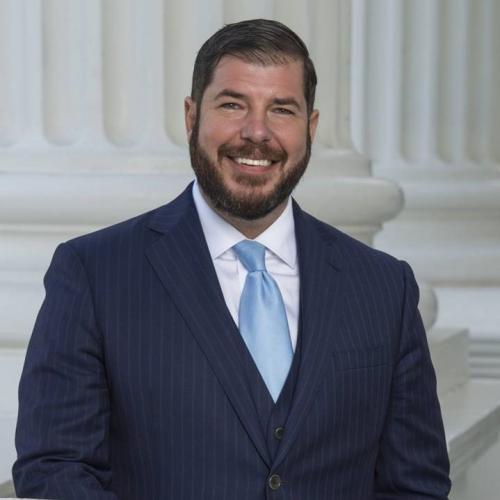
Diane Papan
98% support rate
Top opponent
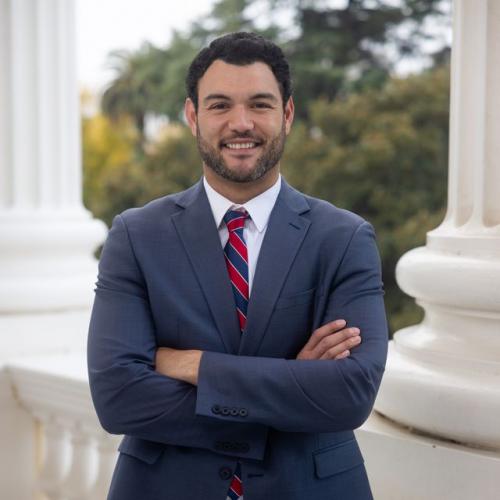
Natasha Johnson
4% support rate
Ranked legislators
10
5 support · 5 oppose
Key legislators

Who's moving environment in California

Legislators moving environment in California
Legislator Party Stance Support rate Votes
Diane Papan
Diane Papan House · District 21
D
Strong +
98% 153
Lisa Calderon
Lisa Calderon House · District 56
D
Strong +
96% 167
Patrick Ahrens
Patrick Ahrens House · District 26
D
Strong +
96% 117
Joaquin Arambula
Joaquin Arambula House · District 31
D
Strong +
96% 184
Lori Wilson
Lori Wilson House · District 11
D
Strong +
96% 160
Natasha Johnson
Natasha Johnson House · District 63
R
Strong −
4% 84
David Tangipa
David Tangipa House · District 8
R
Strong −
5% 217
Carl DeMaio
Carl DeMaio House · District 75
R
Strong −
6% 153
Kate Sanchez
Kate Sanchez House · District 71
R
Strong −
6% 166
Roger Niello
Roger Niello Senate · District 6
R
Strong −
6% 174
Showing 81–90 of 478 bills

All environment bills

died · California · Senate May 14, 2026

SB 1258: Hazardous waste: site remediation: residential suitability guidelines.

Existing law authorizes, when a release of waste occurs and remedial action is required, a responsible party, as defined, to request a local officer to supervise the remedial action if the site is not already overseen by the Department of Toxic Substances Control or a regional water quality control board. Existing law authorizes the department or a regional water quality control board to retain or assume oversight authority from a local officer, as specified. This bill would require the State Water Resources Control Board, working jointly with the department and in consultation with the Office of Land Use and Climate Innovation, to develop guidelines for developers and for agencies overseeing development-specific site remediations and making determinations of site suitability, as provided. The bill would require the board, in conjunction with the department, to develop thresholds of significance for contaminants from different sources and for different future uses, as provided. The bill would specify that sites with contamination above those thresholds shall be deemed not suitable for residential use.
in committee · California · Assembly May 14, 2026

AB 2112: Greenhouse gases: soil carbon sequestration.

The California Global Warming Solutions Act of 2006 establishes the State Air Resources Board as the state agency responsible for monitoring and regulating sources emitting greenhouse gases and requires the state board to ensure that statewide greenhouse gas emissions are reduced to at least 40% below the 1990 level no later than December 31, 2030. The act declares the policy of the state to achieve net zero greenhouse gas emissions as soon as possible, but no later than 2045, and to achieve and maintain net negative greenhouse gas emissions thereafter. The act also requires the Natural Resources Agency, in collaboration with specified entities, to determine an ambitious range of targets for natural carbon sequestration, and for nature-based climate solutions, that reduce greenhouse gas emissions for 2030, 2038, and 2045 to support state goals to achieve carbon neutrality and foster climate adaptation and resilience. The act requires the Natural Resources Agency and the state board to establish an expert advisory committee composed of specified entities to provide recommendations on addressing barriers to efficient implementation of the provisions relating to climate targets. This bill would additionally require that expert advisory committee to include an expert in soil carbon sequestration. The bill would establish the Climate-smart Organics Management for Protecting Our Soil and Terrain (COMPOST) Act of 2026. The bill would require the Natural Resources Agency, in collaboration with specified entities, to, on or before January 1, 2028, develop an integrated nature-based climate strategy to link waste diversion goals with soil health practices on natural and working lands. The bill would require the strategy to include multiagency recommendations and incentives to increase climate-friendly on-farm compost production and use, including compost application on grasslands and priority rangeland for improved vegetation and carbon storage. The bill would require the recommendations to be consistent with specified publications, standards, and strategies, including the reduction of at least 5,000,000 metric tons of greenhouse gas emissions in the state annually. This bill would require the Secretary of the Natural Resources Agency to use best available science, mapping, and land management planning tools to support prioritization, siting, and deployment of soil amendment strategies to maximize climate benefits. The bill would require the Natural Resources Agency to publish, and annually update, the nature-based climate strategy for compost on its internet website.
in committee · California · Senate May 14, 2026

SB 1039: Air resources: refinery-related community air monitoring system.

Existing law requires a refinery-related community air monitoring system to be installed near each refinery, as provided, and requires the monitoring system to include equipment capable of measuring compounds emitted to the atmosphere from refinery processes. Existing law requires owners or operators of petroleum refineries to develop, install, operate, and maintain a fence-line monitoring system in accordance with guidance developed by the appropriate regional air pollution control district or regional air quality management district. This bill would require guidance adopted to implement the fence-line monitoring system to include a process for a petroleum refinery to provide substantial evidence to the appropriate air district to exclude a pollutant for monitoring in a fence-line monitoring system and would authorize the air district to exclude a pollutant for monitoring at a petroleum refinery fence-line monitoring system if the air district determines that substantial evidence supports certain considerations. Because the bill would require air districts to revise their guidance related to the fence-line monitoring system, this bill would impose a state-mandated local program. The California Constitution requires the state to reimburse local agencies and school districts for certain costs mandated by the state. Statutory provisions establish procedures for making that reimbursement. This bill would provide that no reimbursement is required by this act for a specified reason.
Sub-Topics Air Quality
in committee · California · Senate Apr 9, 2026

SB 1289: Hazardous materials: non-RCRA hazardous waste: landfill disposal.

Under existing law, as part of the hazardous waste control laws, the Department of Toxic Substances Control generally regulates the management and handling of hazardous waste and hazardous materials. Under existing law, the hazardous waste control laws are partially enforced by a certified unified program agency (CUPA) and a violation of hazardous waste control laws is a crime. Existing law defines "non-RCRA hazardous waste," for purposes of those laws, as meaning hazardous waste that is regulated by the state, other than hazardous waste subject to the federal Resource Conservation and Recovery Act of 1976 (RCRA) . This bill would require non-RCRA hazardous waste that is destined for land disposal to be disposed of in a landfill regulated by specific provisions of RCRA. By increasing the duties of a CUPA, and by expanding the scope of a crime, the bill would impose a state-mandated local program. The California Constitution requires the state to reimburse local agencies and school districts for certain costs mandated by the state. Statutory provisions establish procedures for making that reimbursement. This bill would provide that with regard to certain mandates no reimbursement is required by this act for a specified reason. With regard to any other mandates, this bill would provide that, if the Commission on State Mandates determines that the bill contains costs so mandated by the state, reimbursement for those costs shall be made pursuant to the statutory provisions noted above.
passed both · California · Assembly Aug 30, 2026

AB 1934: State Fire Marshal: home hardening certification program implementation plan.

Existing law requires the Office of the State Fire Marshal to develop and make available on its internet website a Wildland-Urban Interface Fire Safety Building Standards Compliance training intended for use in the training of local building officials, builders, and fire service personnel, as specified. Existing law authorizes the Office of the State Fire Marshal to allow certification of contractors who conduct defensible space, home hardening, fuel reduction, roadside clearance, and other contracting activities for wildlife resiliency efforts and who have completed specified training programs. Existing law requires the Office of the State Fire Marshal to develop and update a Wildland-Urban Interface Products listing of products and construction assemblies that comply with prescribed regulations regarding building in a wildland-urban interface area. Existing law authorizes the Office of the State Fire Marshal to expend funds from the Building Standards Administration Special Revolving Fund, upon an appropriation by the Legislature, for the purposes of researching and developing the products listing and the educational and training provisions. Existing law requires the Office of the State Fire Marshal to establish the State Fire Marshal's Wildfire Mitigation Advisory Committee. This bill would require, on or before January 1, 2028, the State Fire Marshal's Wildfire Mitigation Advisory Committee to develop an implementation plan for a home hardening certification program that identifies home hardening measures, including defensible space, that can be voluntarily implemented during renovation or property improvement projects, or both, to substantially reduce the risk of loss during a fire and bring existing building stock into alignment with state building standards for wildland-urban interface areas. The bill would require the committee, in developing the implementation plan for the home hardening certification program, to provide specified recommendations. The bill would authorize the Office of the State Fire Marshal to expend funds from the Building Standards Administration Special Revolving Fund, upon an appropriation by the Legislature, for the purposes of developing the implementation plan for the home hardening certification program. The bill would require the committee, on or before January 1, 2028, to provide a report to specified legislative committees on its findings and recommendations pursuant to these provisions. The bill would require, on or before January 1, 2029, the State Fire Marshal to establish the home hardening certification program based on the recommendations made by the Wildfire Mitigation Advisory Committee.
Sub-Topics Forestry Wildlife
passed · California · Senate Aug 13, 2026

SR 108: Relative to World Asthma Day.

Senate Resolution 108 formally recognizes May 5, 2026, as World Asthma Day in California. The measure highlights the disproportionate impact of asthma on vulnerable populations, including communities of color and farmworker families, who face higher risks due to poor air quality and limited healthcare access. While the resolution does not create new laws, it expresses the Senate's support for asthma education, improved air quality standards, and evidence-based management practices in schools and healthcare settings. Additionally, the bill honors the Central California Asthma Collaborative for its work in community health programs.
signed · California · Assembly Aug 12, 2026

ACR 149: Relative to the California Coastal Act of 1976.

This measure would acknowledge and celebrate 50 years of coastal protection and affirm the state's longstanding commitment to protecting its coastal waters, as specified.
passed both · California · Senate Aug 30, 2026

SB 1423: Regional planning: standardized spatial planning datasets.

Existing law establishes the Office of Land Use and Climate Innovation in the Governor's office for the purpose of serving the Governor and the Governor's cabinet as staff for long-range planning and research and constituting the comprehensive state planning agency. This bill would require the office, on or before July 1, 2028, to compile, standardize, maintain, and make publicly available through a consolidated online platform a core set of statewide standardized spatial planning datasets, as defined. The bill would require the datasets to include specified categories of information, including hazardous data, natural resource sensitivity data, and agricultural value data, as provided. The bill would also require the office, on or before January 1, 2029, to develop and provide guidance for agencies to inform how to use and integrate the datasets in regional planning processes and products. The bill would require the office to update those datasets as new or revised data becomes available from the originating state or federal agencies. This bill would permit state, regional, and local governments to consider use of the standardized spatial planning datasets published by the office in the development and production of land use and infrastructure plans, as specified. The bill would require the office to provide technical assistance, upon request, for use of the data from these provisions. The bill would specify that it does not create new regulatory requirements, regulate land use or zoning, establish land use designations, or preempt the local land use authority of cities and counties.
in committee · California · Assembly Apr 20, 2026

AB 2752: Bay Area Air Quality Management District and South Coast Air Quality Management District: policies: oil refineries.

Existing law establishes the Bay Area Air Quality Management District, which is vested with the authority to regulate air emissions located in the boundaries of the Counties of Alameda, Contra Costa, Marin, Napa, San Francisco, San Mateo, and Santa Clara and portions of the Counties of Solano and Sonoma. Under existing law, the Lewis-Presley Air Quality Management Act establishes the South Coast Air Quality Management District in those portions of the Counties of Los Angeles, Orange, Riverside, and San Bernardino included within the South Coast Air Basin as the local agency with the responsibility for comprehensive air pollution control within the basin. This bill would require the Bay Area Air Quality Management District and the South Coast Air Quality Management District, on or before December 31, 2027, to analyze specified policies to determine the cost of compliance, potential cost to consumers, impacts on state and local tax revenue, refinery employment, and impacts on the statewide gasoline supply, as provided. The bill would also require those districts, on or before January 1, 2028, to make a good faith effort to minimize any adverse impacts identified pursuant to that requirement. By requiring a higher level of service of local entities, the bill would impose a state-mandated local program. Existing law requires, whenever a district intends to propose the adoption, amendment, or repeal of a rule or regulation that will significantly affect air quality or emissions limitations, that district to perform an assessment of the socioeconomic impacts of the adoption, amendment, or repeal of the rule or regulation. Existing law defines "socioeconomic impact" for these purposes. With respect to the adoption, amendment, or repeal of a rule or regulation related to oil refineries by the Bay Area Air Quality Management District and the South Coast Air Quality Management District, the bill would expand the definition of "socioeconomic impact" to also mean the cost to consumers, impacts on state and local tax revenue, and impacts on the statewide gasoline supply. The bill would also require those districts to actively consider those additional socioeconomic impacts and make a good faith effort to minimize any adverse impacts, as provided, before adopting, amending, or repealing a rule or regulation related to oil refineries. This bill would make legislative findings and declarations as to the necessity of a special statute for the Bay Area Air Quality Management District and the South Coast Air Quality Management District. The California Constitution requires the state to reimburse local agencies and school districts for certain costs mandated by the state. Statutory provisions establish procedures for making that reimbursement. This bill would provide that, if the Commission on State Mandates determines that the bill contains costs mandated by the state, reimbursement for those costs shall be made pursuant to the statutory provisions noted above.
Sub-Topics Air Quality
passed both · California · Senate Aug 21, 2026

SB 952: State Water Project: renewable energy resources and zero-carbon resources.

Under existing law, it is the policy of the state that eligible renewable energy resources and zero-carbon resources supply 90% of all retail sales of electricity to California end-use customers by December 31, 2035, 95% of all retail sales of electricity to California end-use customers by December 31, 2040, 100% of all retail sales of electricity to California end-use customers by December 31, 2045, and 100% of electricity procured to serve all state agencies by December 31, 2035, as specified. Existing law requires the Department of Water Resources to procure eligible renewable energy resources and zero-carbon resources to satisfy those state agency obligations imposed on the State Water Resources Development System, commonly known as the State Water Project, pursuant to that policy. Existing law authorizes the department to defer, until no later than December 31, 2040, procuring zero-carbon electricity resource quantities equal to the amount of electricity provided under an existing contract to procure fossil generation entered into before January 1, 2010, if the department determines that the full achievement of the state agency obligations imposed on the State Water Project would require the early termination of the existing contract and that early termination of the existing contract would result in significant uneconomic costs. Existing law requires the department, in conducting procurement, to consider specified factors and requires that all resources procured be used first to meet the department's own electricity needs. This bill would require the department, in conducting that procurement, to also consider portfolio diversity, resource type, location, and hours of typical peak operation. The bill would expand the scope of the department's authorization to defer the procurement of those resource quantities to apply to an existing contract to procure fossil generation entered into before January 1, 2011, rather than January 1, 2010. The bill would authorize, on and after January 1, 2036, excess procurement of eligible renewable energy resources and zero-carbon resources, as defined, in one year to be applied to any subsequent year's obligation, as provided.
Sub-Topics Renewable Energy
Showing 81 to 90 of 478 bills
Previous 1 8 9 10 48 Next