Issue · Environment

Environment

Every environment bill, vote, and legislator stance in California, automatically classified by Maddy, our AI policy reader.

Total bills
434
2025-2026 Regular Session
Top supporter
Diane Papan
98% support rate
Top opponent
Natasha Johnson
4% support rate
Ranked legislators
10
5 support · 5 oppose
Key legislators

Who's moving environment in California

Legislators moving environment in California
Legislator Party Stance Support rate Votes
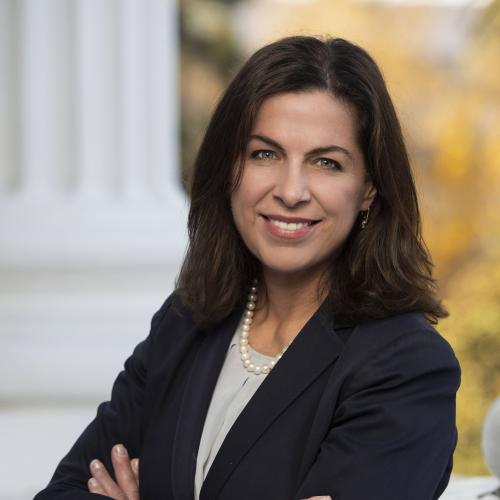
Diane Papan
Diane Papan House · District 21
D
Strong +
98% 153
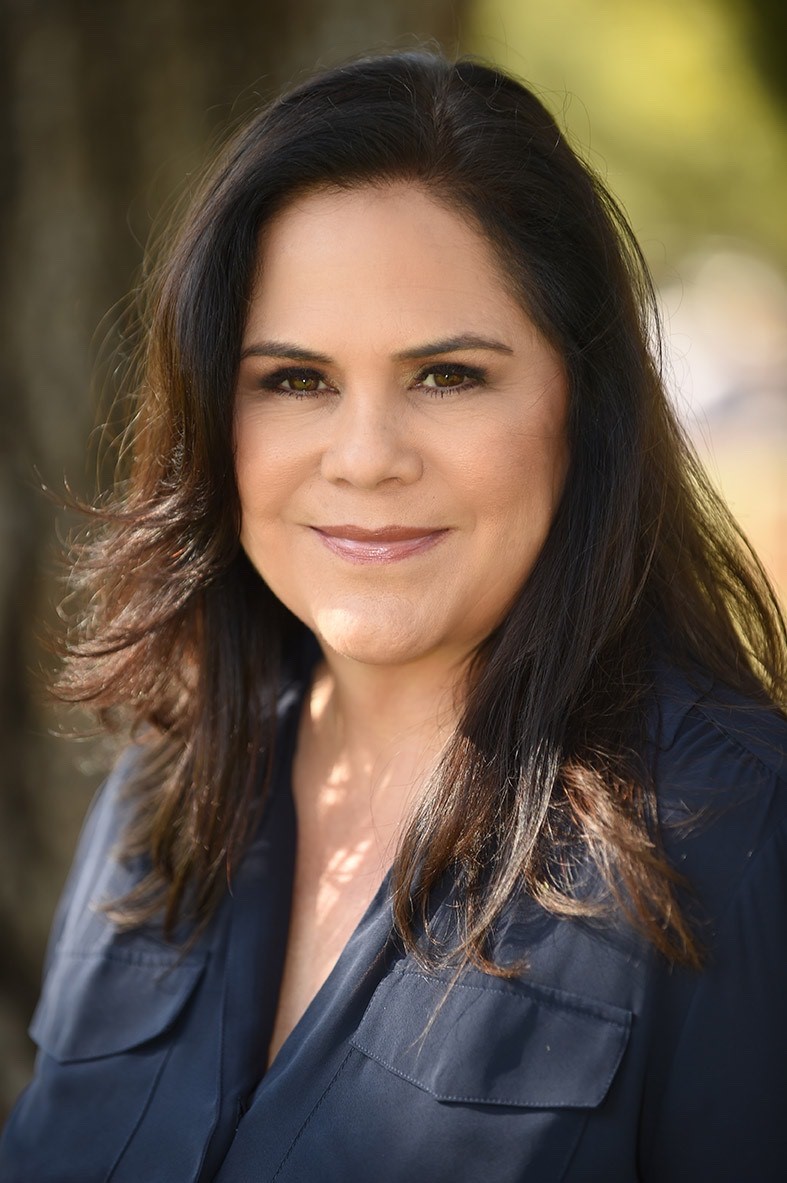
Lisa Calderon
Lisa Calderon House · District 56
D
Strong +
96% 167
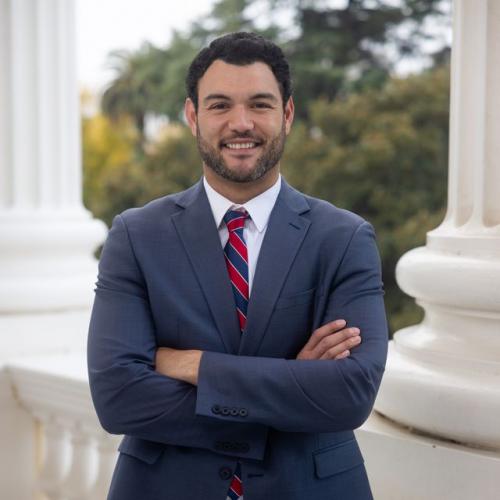
Patrick Ahrens
Patrick Ahrens House · District 26
D
Strong +
96% 117
Joaquin Arambula
Joaquin Arambula House · District 31
D
Strong +
96% 184
Lori Wilson
Lori Wilson House · District 11
D
Strong +
96% 160
Natasha Johnson
Natasha Johnson House · District 63
R
Strong −
4% 84
David Tangipa
David Tangipa House · District 8
R
Strong −
5% 217
Carl DeMaio
Carl DeMaio House · District 75
R
Strong −
6% 153
Kate Sanchez
Kate Sanchez House · District 71
R
Strong −
6% 166
Roger Niello
Roger Niello Senate · District 6
R
Strong −
6% 174
Showing 271–280 of 434 bills

All environment bills

passed · California · Senate Aug 29, 2025

SB 234: Wildfires: workgroup: toxic heavy metals.

Existing law requires the Department of Forestry and Fire Protection to do certain things with respect to fire prevention, including organizing fire crews and patrols. This bill would require, upon appropriation by the Legislature, the Department of Forestry and Fire Protection, the Office of Emergency Services, and the Department of Toxic Substances Control, in consultation with specified entities, to form a workgroup related to exposure to toxic heavy metals after a wildfire. The bill would require the workgroup to do certain things, including establishing best practices and recommendations for wildfire-impacted communities, first responders, and other personnel engaged in wildfire response and cleanup to avoid exposure to heavy metals after a wildfire, including outreach. The bill would authorize the Department of Forestry and Fire Protection to contract with public universities, research institutions, and other technical experts to support the work of the workgroup. The bill would require the Department of Forestry and Fire Protection, the Office of Emergency Services, and the Department of Toxic Substances Control to report their findings to the Legislature not more than 3 years after the convening of the first meeting of the workgroup.
signed · California · Senate Sep 2, 2025

SCR 25: Relative to nuclear fusion.

This measure would proclaim that the State of California celebrates the numerous contributions of public and private sector nuclear fusion organizations within California for advancing fusion energy research and development, applauds recent scientific advances in magnetic fusion energy and inertial confinement at public research facilities in San Diego and Livermore, recognizes the vast potential of fusion energy for addressing key climate and national security goals and the contributions of California's private fusion industry, commends the University of California's Office of the President for its leadership in establishing the Pacific CREST Fusion initiative, and supports developing the fusion energy ecosystem with the goal of siting a first-of-a-kind fusion pilot plant in California by the 2040s.
signed · California · Assembly Oct 11, 2025

AB 899: Beverage containers: recycled glass: market development.

The California Beverage Container Recycling and Litter Reduction Act, a violation of which is a crime, requires a distributor of beverage containers, as defined, to pay to the Department of Resources Recycling and Recovery a monthly redemption payment for every beverage container sold or transferred, as provided. The act requires the department to deposit those amounts into the California Beverage Container Recycling Fund. The fund is continuously appropriated to, among other things, pay refund values and administrative fees to processors that receive empty beverage containers from recyclers. The act authorizes, until January 1, 2028, the department to pay a market development payment to a glass beverage container manufacturer who purchases recycled glass collected within this state for use in manufacturing new beverage containers in this state, as provided. The act requires the department to set the market development payment at an amount not to exceed $50 per ton. The act continuously appropriates $60,000,000 annually from the fund to the department to the make market development payments. This bill would authorize the department to set the market development payment at different levels, but would prohibit that payment from exceeding $150 per ton. The bill would, on and after January 1, 2028, and until January 1, 2030, authorize the department to expend $20,000,000 annually from the fund, upon appropriation by the Legislature, for glass market development payments.
Sub-Topics Recycling
failed · California · Assembly Feb 2, 2026

AB 916: Safer Soap Act.

(1) Existing law prohibits various ingredients in consumer products for the protection of the health of Californians, including, among others, perfluoroalkyl and polyfluoroalkyl substances in juvenile products, textile articles, and food packaging, and intentionally added Di(2-ethylhexyl) phthalate in intravenous solution containers, as specified. This bill would, on and after January 1, 2028, prohibit a person, as defined, from manufacturing, selling, delivering, distributing, or offering for sale, into commerce in this state consumer body wash and hand soap, as those terms are defined, that contains a prohibited ingredient, which includes substances such as benzalkonium chloride, among others. The bill would not apply to products intended for use in health care facilities. The bill would require, on or before July 1, 2028, a manufacturer of hand soap or body wash to register with the Department of Toxic Substances Control and provide, among other things, a registration charge and a statement of compliance with the prohibition. Upon request by the department, the bill would require a manufacturer to provide technical documentation to demonstrate compliance with the prohibition, as specified. This bill would, on or before January 1, 2028, require the department to adopt regulations to implement, interpret, enforce, or make specific the above provisions. The bill would require the department to specify by regulation the manner of registering and the amount of the registration charge. This bill would require the department to issue a notice of violation to a person in violation of the prohibition, as specified. The bill would make a violation of these provisions punishable by an administrative or civil penalty of not less than $10,000, as specified. The bill would authorize the Attorney General, on behalf of the department or the people of the state, to bring an action in superior court to obtain an order restraining a person from violating any of these provisions, as specified. The bill would require penalties collected to be deposited in the Safer Soap Act Fund, which the bill would create in the State Treasury, as provided. This bill would make it a crime for a person to willfully prevent, interfere with, or impede the lawful enforcement of these provisions, as specified. By expanding the scope of a crime, the bill would impose a state-mandated local program. The bill would provide that the department's duties to initiate, implement, or enforce any of these requirements are contingent upon sufficient funds in the Toxic Substances Control Account, as determined by the Department of Finance, and an appropriation by the Legislature for the purposes of implementing and enforcing these requirements. (2) The California Constitution requires the state to reimburse local agencies and school districts for certain costs mandated by the state. Statutory provisions establish procedures for making that reimbursement. This bill would provide that no reimbursement is required by this act for a specified reason.
failed · California · Assembly Feb 2, 2026

AB 436: Composting facilities: zoning.

Existing law provides that the Office of Land Use and Climate Innovation serves the Governor and the Governor's Cabinet as staff for long-range planning and research, and constitute the comprehensive state planning agency. In that capacity, existing law requires the office to, among other things, assist local governments in land use planning. Existing law, the California Integrated Waste Management Act of 1989, establishes the Department of Resources Recycling and Recovery to administer an integrated waste management program. Existing law establishes a goal that statewide landfill disposal of organic waste be reduced from the 2014 level by 75% by 2025. This bill, on or before June 1, 2027, would require the Office of Land Use and Climate Innovation, in consultation with the Department of Resources Recycling and Recovery, to develop and post on the office's internet website, a technical advisory, as provided, reflecting best practices to facilitate the siting of composting facilities to meet the organic waste reduction goals. The bill would require the office to consult with specified entities throughout the development of the technical advisory. The Planning and Zoning Law requires each county and city to adopt a comprehensive, long-term general plan for its physical development, and the development of certain lands outside its boundaries, that includes, among other mandatory elements, a land use element that designates the proposed general distribution and general location and extent of the uses of the land for housing, business, solid and liquid waste disposal facilities, and other categories of public and private uses of land, as prescribed. This bill, upon a substantive revision of the land use element, as specified, on or after January 1, 2029, would require a city, county, or city and county to consider, among other things, the best practices, sample general plan, and model ordinance reflected in the technical advisory and to consider updating the land use element to identify areas where composting facilities may be appropriate as an allowable use. By increasing duties on a city, county, or city and county, the bill would impose a state-mandated local program. The California Constitution requires the state to reimburse local agencies and school districts for certain costs mandated by the state. Statutory provisions establish procedures for making that reimbursement. This bill would provide that no reimbursement is required by this act for a specified reason.
signed · California · Assembly Oct 1, 2025

AB 1423: Transportation electrification: electric vehicle charging stations: payment methods.

Existing law prohibits requiring a person desiring to use an electric vehicle charging station, as defined, that requires payment of a fee from paying a subscription fee in order to use the station, or requiring the person to obtain membership in any club, association, or organization as a condition of using the station. Existing law authorizes an electric vehicle charging station to offer services on a subscription- or membership-only basis if the station allows nonsubscribers or nonmembers to use the station through a contactless payment method that accepts major credit and debit cards, as specified, and either an automated toll-free telephone number or a short message system (SMS) that provides the customer with the option to initiate a charging session and submit payment. Existing law authorizes the State Energy Resources Conservation and Development Commission, by regulation that is effective no earlier than January 1, 2028, to add to or subtract from those required payment methods, as specified. This bill would instead authorize the commission to modify, add to, or subtract from those required payment methods, as appropriate in light of changing technologies or cost impacts. This bill would incorporate additional changes to Section 44268.2 of the Health and Safety Code proposed by SB 533 to be operative only if this bill and SB 533 are enacted and this bill is enacted last.
signed · California · Senate Oct 13, 2025

SB 533: Electric vehicle charging stations: arenas: payments: internet-based applications.

Existing law prohibits requiring a person desiring to use an electric vehicle charging station that requires payment of a fee from paying a subscription fee in order to use the station, or requiring the person to obtain membership in any club, association, or organization as a condition of using the station. Existing law authorizes an electric vehicle charging station to offer services on a subscription- or membership-only basis, if the station provides nonsubscribers or nonmembers the ability to use the station through a contactless payment method that accepts major credit and debit cards, as specified, and either an automated toll-free telephone number or a short message system (SMS) that provides the electric vehicle charging customer with the option to initiate a charging session and submit payment. Existing law requires a direct current fast charging station that is first installed or made publicly available on or after July 10, 2023, to also include Plug and Charge payment capabilities, as specified. Existing law authorizes the State Energy Resources Conservation and Development Commission to add to or subtract from these payment methods by regulation that is effective no earlier than January 1, 2028, as provided. This bill would create an exception to the above-described provisions to authorize an electric vehicle charging station to require that payment for charging services be made through the use of an internet-based application if the charging station is on the premises of an arena that has a seating capacity of at least 15,000 seats and can only be accessed through the use of that internet-based application. This bill would incorporate additional changes to Section 44268.2 of the Health and Safety Code proposed by AB 1423 to be operative only if this bill and AB 1423 are enacted and this bill is enacted last.
Sub-Topics Electric Vehicles
passed · California · Senate Jun 15, 2026

SB 330: Budgets: multiyear financial commitments.

Existing law requires the Superintendent of Public Instruction, the Controller, and the Director of Finance to develop and update as necessary, standards and criteria to be reviewed and adopted by the State Board of Education and to be used by local educational agencies in the development of annual budgets and the management of subsequent expenditures from that budget, as specified. Existing law requires these standards and criteria to include, among other things, multiyear commitments, including cost-of-living adjustments. This bill would specify that the multiyear commitments are for only the current fiscal year and the subsequent fiscal year. The bill would require the state board, on or before March 1, 2027, to amend specified related regulations, as provided, and would require the State Department of Education to modify the Standardized Account Code Structure reporting software infrastructure to eliminate reporting fields for a 2nd subsequent fiscal year and, commencing with the 2027–28 fiscal year, ensure that the system reflects a 2-year operational and forecasting structure. Existing law requires the governing board of a school district and each county board of education, on or before July 1 of each year, to adopt a budget, as specified, and requires that budget to be filed with the county superintendent of schools or the Superintendent, respectively. Existing law requires the county superintendent of schools or the Superintendent, as applicable, to, among other things, examine the adopted budget to determine whether it complies with the standards and criteria adopted by the state board for local educational agency budgets and determine whether the adopted budget (1) will allow the school district or county office of education to meet its financial obligations during the fiscal year and (2) is consistent with a financial plan that will enable the school district or county office of education to satisfy its multiyear financial commitments. Existing law requires the governing board of each school district and each county superintendent of schools to certify whether the school district or county office of education is able to meet its financial obligations for the remainder of the fiscal year and for the subsequent 2 fiscal years. Existing law requires (1) a negative certification to be assigned to any school district or county office of education that will be unable to meet its financial obligations for the remainder of the fiscal year or the subsequent fiscal year, (2) a qualified certification to be assigned to the school district or county office of education that may not meet its financial obligations for the current fiscal year or 2 subsequent fiscal years, and (3) a positive certification to be assigned to a school district or county office of education that will meet its financial obligations for the current fiscal year and subsequent 2 fiscal years. Existing law requires a copy of the school district's or county superintendent's certification to be filed with the county superintendent of schools or the Superintendent, respectively. The bill would instead only require certification for the current fiscal year and the subsequent fiscal year, and would require determinations for qualified and positive certifications to instead be assigned based only on the current fiscal year and the subsequent fiscal year. The bill would also make conforming changes to related provisions.
vetoed · California · Assembly Jan 22, 2026

AB 620: Medium- and Heavy-Duty Zero-Emission Vehicle Fleet Purchasing Assistance Program: rental vehicles.

Existing law establishes the Air Quality Improvement Program that is administered by the State Air Resources Board for purposes of funding projects related to, among other things, the reduction of criteria air pollutants and improvement of air quality. Existing law establishes the Medium- and Heavy-Duty Zero-Emission Vehicle Fleet Purchasing Assistance Program (program) within the Air Quality Improvement Program to make financing tools and nonfinancial supports available to operators of medium- and heavy-duty vehicle fleets to enable those operators to transition their fleets to zero-emission vehicles. This bill, for any regulation adopted to develop or implement the program, or other regulations that are regarding the procurement or use of medium- and heavy-duty zero-emission vehicles by a public or private fleet, would require the state board to consider specified things, including, among other things, the environmental and supply chain benefits of renting medium- and heavy-duty zero-emission vehicles compared to procuring them.
Sub-Topics Air Quality
vetoed · California · Senate Mar 2, 2026

SB 369: Salton Sea: restoration projects: skilled and trained workforce.

Existing law requires the Secretary of the Natural Resources Agency, in consultation and coordination with the Salton Sea Authority, to lead Salton Sea restoration efforts. Existing law, to the extent that funding is appropriated to the Department of Fish and Wildlife for Salton Sea restoration activities, authorizes the Department of Water Resources, in coordination and under agreement with the Department of Fish and Wildlife, to undertake certain restoration efforts. This bill would require, except as provided, specified state agencies undertaking a Salton Sea restoration project in excess of $1,000,000 to obtain, as part of a contract entered into on or after January 1, 2026, an enforceable commitment that every bidder, contractor, subcontractor, or other entity at every tier, as defined, shall use a skilled and trained workforce, as provided, to perform all work that falls within an apprenticeship occupation in the building and construction trades.
Sub-Topics Wildlife
Showing 271 to 280 of 434 bills
Previous 1 27 28 29 44 Next