Issue · Education

Education

Every education bill, vote, and legislator stance in California, automatically classified by Maddy, our AI policy reader.

Total bills
414
2025-2026 Regular Session
Top supporter
Pilar Schiavo
100% support rate
Top opponent
Natasha Johnson
0% support rate
Ranked legislators
10
5 support · 5 oppose
Key legislators

Who's moving education in California

Legislators moving education in California
Legislator Party Stance Support rate Votes
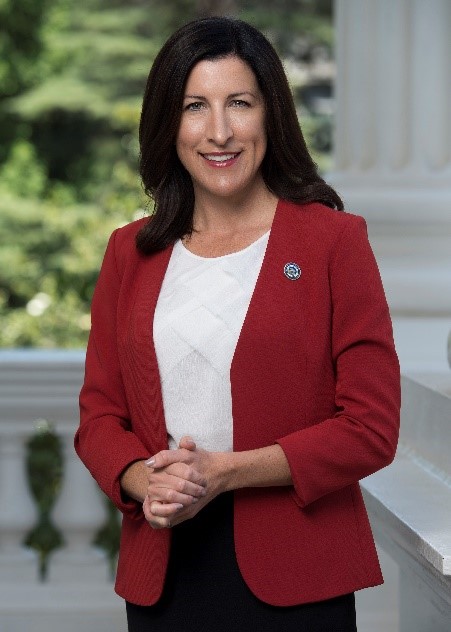
Pilar Schiavo
Pilar Schiavo House · District 40
D
Strong +
100% 467
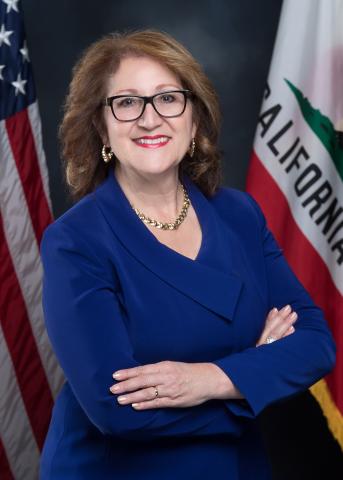
Cottie Petrie-Norris
Cottie Petrie-Norris House · District 73
D
Strong +
100% 451
Eloise Reyes
Eloise Reyes Senate · District 29
D
Strong +
100% 393
Ash Kalra
Ash Kalra House · District 25
D
Strong +
99% 609
Catherine Stefani
Catherine Stefani House · District 19
D
Strong +
99% 603
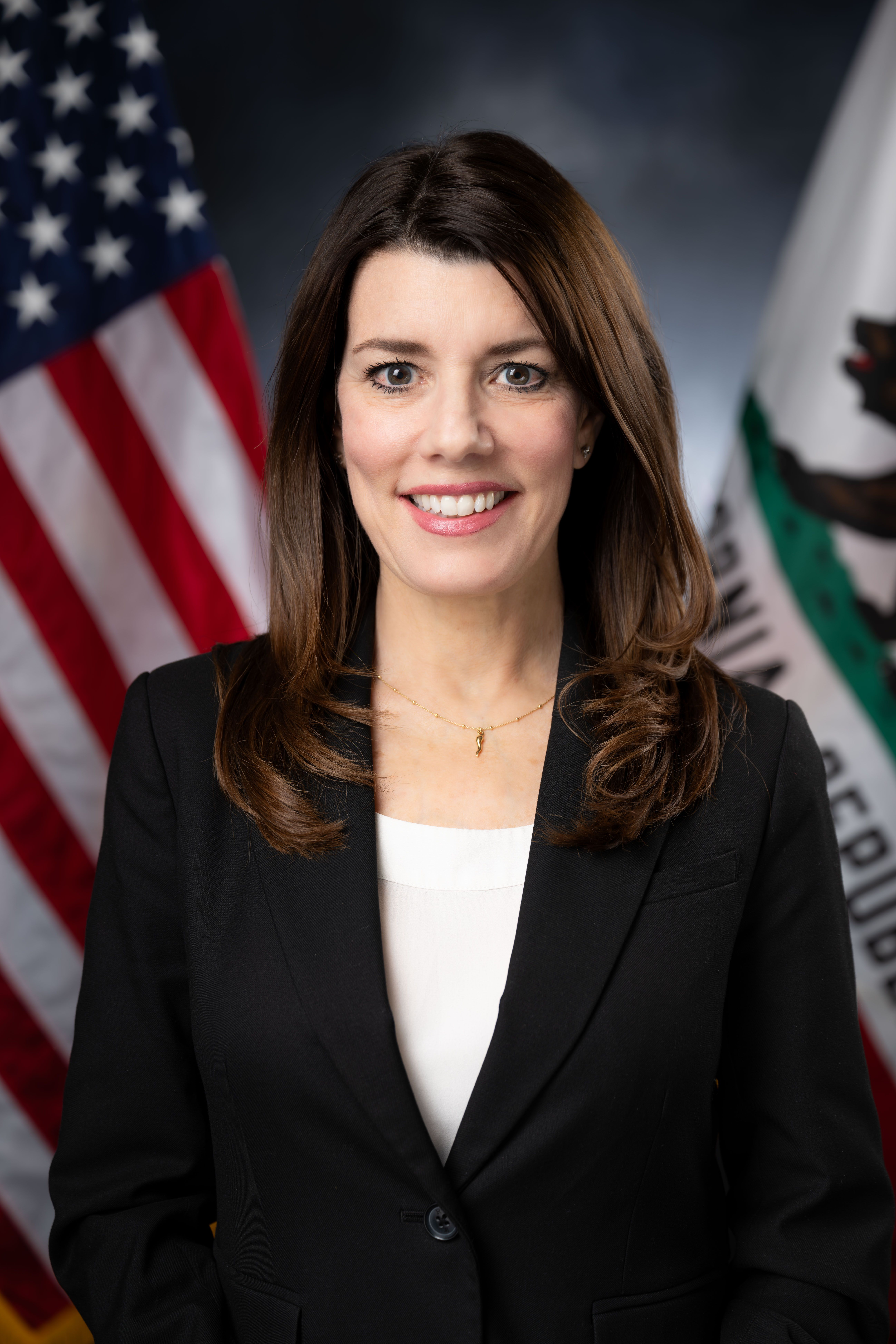
Natasha Johnson
Natasha Johnson House · District 63
R
Strong −
0% 329
Stan Ellis
Stan Ellis House · District 32
R
Strong −
0% 504
James Gallagher
James Gallagher House · District 3
R
Strong −
2% 324
Ali Macedo
Ali Macedo House · District 33
R
Strong −
3% 580
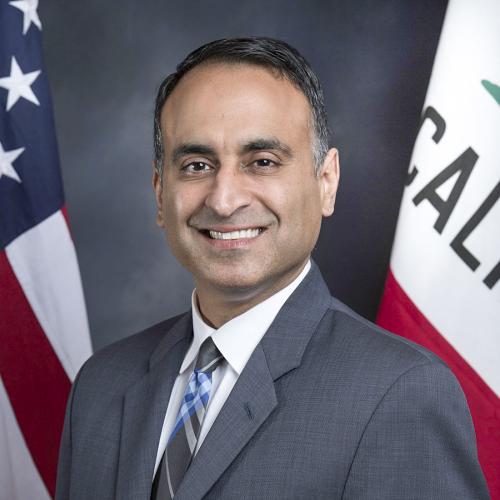
Roger Niello
Roger Niello Senate · District 6
R
Strong −
4% 487
Showing 391–400 of 414 bills

All education bills

passed · California · Assembly Sep 9, 2025

AB 908: Instructional materials: compliance review.

Existing law requires governing boards of school districts, when adopting instructional materials for use in the schools, to include materials that accurately portray the cultural and racial diversity of our society, including, among others, the contributions of people of all genders in all types of rolls, and the role and contributions of Native Americans, African Americans, Latino Americans, Asian Americans, Pacific Islanders, European Americans, LGBTQ+ Americans, persons with disabilities, and members of other ethnic, cultural, religious, and socioeconomic status groups to the total development of California and the United States. This bill would require the State Department of Education to monitor compliance with the above-described instructional materials adoption requirement as part of its annual compliance monitoring of state and federal programs.
Sub-Topics Curriculum Libraries
passed · California · Assembly Aug 29, 2025

AB 291: Teachers: credentialed educator apprenticeship programs.

Under existing law, it is the public policy of this state to encourage the utilization of apprenticeship as a form of on-the-job training, when such training is cost effective in developing skills needed to perform public services. Existing law requires state and local public agencies to make a diligent effort to establish apprenticeship programs for apprenticeable occupations in their respective workforces. Existing law requires the Commission on Teacher Credentialing to, among other duties, establish standards for the issuance and renewal of credentials. Existing law requires, as a minimum requirement for a preliminary multiple-subject, single-subject, or education specialist teaching credential, the satisfactory completion of a program of professional preparation, as specified. This bill would require the commission and the Division of Apprenticeship Standards to partner in the dissemination, approval, and monitoring of credentialed educator apprenticeship programs in California, and to communicate apprenticeship requirements to professional preparation programs, local educational agencies, and other potential sponsors of educator apprenticeship programs. The bill, notwithstanding any other law, would authorize the commission to issue apprenticeship certificates or permits to educator candidates without a credential who are employed by local educational agencies and participating in approved credentialed educator apprenticeship programs, as specified. The bill would authorize the commission and the division to enter into a memorandum of understanding to establish processes and procedures for information sharing, application review, and data collection and reporting, and would authorize the Chief of the Division of Apprenticeship Standards, in consultation with the commission, to issue rules and regulations that govern credentialed educator apprenticeship programs, including the approval and denial of programs, registration of agreements, program administration and procedures, evaluations, working conditions, and minimum standards, as specified. The bill would require an applicant for a new credentialed educator apprenticeship program or for the expansion of an existing credentialed educator apprenticeship program into a new geographic or credential area to submit specified documentation to the chief. The bill would require the division to present the apprenticeship program application to the commission for its review, as provided, and would require the commission, if it is satisfied that specified conditions have been met, to provide written notice of that fact to the chief.
passed · California · Assembly May 28, 2025

AB 972: Postsecondary education: discrimination: sex.

Existing law prohibits a person from being subjected to discrimination on the basis of specified characteristics, including, among others, disability, gender, gender identity, gender expression, or sexual orientation in a program or activity conducted by a postsecondary educational institution that receives, or benefits from, state financial assistance or enrolls students who receive state student financial aid. This bill would expressly include sex in the list of specified characteristics.
passed both · California · Assembly Aug 27, 2026

AB 1128: Mobilehome parks: rent caps: City of Torrance.

Existing law, the Mobilehome Residency Law, prescribes various terms and conditions of tenancies in mobilehome parks. The law defines "mobilehome park" for these purposes to mean an area of land where 2 or more mobilehome sites are rented, or held out for rent, to accommodate mobilehomes used for human habitation. The law caps the amount by which management of a qualified mobilehome park may increase the gross rental rate for a tenancy over the course of any 12-month period. The cap is the lower of 5% of the lowest gross rental rate charge for a tenancy at any time during the preceding 12 months or 3% of that amount plus the percentage change in the cost of living. Under that law, a mobilehome park is subject to that cap if it is located within and governed by the jurisdictions of 2 or more incorporated cities. The law repeals these rent cap provisions on January 1, 2030. This bill would additionally make any mobilehome park that is located in the City of Torrance subject to that cap, as specified, and would extend the repeal of these rent cap provisions to January 1, 2036. For a mobilehome park that is located in the City of Torrance, the bill would cap the rent on January 1, 2027, at the amount of rent as of January 5, 2026, plus the maximum permissible increase described above. This bill would make legislative findings and declarations as to the necessity of a special statute for the City of Torrance.
Sub-Topics Teachers
passed · California · Assembly Aug 29, 2025

AB 477: Fair Pay for Educators Act: local control funding formula: base grants: funding targets.

(1) Existing law, commencing with the 2013–14 fiscal year, establishes a public school financing system that requires state funding for county superintendents of schools, school districts, and charter schools to be calculated pursuant to a local control funding formula, as specified. Existing law requires the Superintendent of Public Instruction to annually calculate a county local control funding formula for each county superintendent of schools that includes, among other components, a county office of education operations grant composed of (A) $655,920, as adjusted each fiscal year for inflation; (B) $109,320 per school district under the county office of education's jurisdiction, as adjusted each fiscal year for inflation; (C) $70 per unit of countywide average daily attendance up to 30,000 units, $60 per unit for 30,001 to 60,000 units, $50 per unit for 60,001 to 140,000 units, and $40 per unit above 140,000 units, as adjusted each fiscal year for inflation; and (D) commencing with the 2022–23 fiscal year, add-ons of (i) $175,000 to the per-school district amount and (ii) $14 to each per-unit amount. This bill, commencing with the 2036–37 fiscal year, would increase each of those inflation-adjusted amounts to instead be $1,308,227, $520,751, $164, $144, $124, and $104, respectively, and would retain the requirement to adjust those amounts for inflation each fiscal year. The bill, commencing with the 2036–37 fiscal year, would increase the per-school district and per-unit add-on amounts to instead be $262,500 and $21, respectively. (2) Existing law requires the county office of education local control funding formula to also include, among other things, an alternative education base grant that includes, among its own components, a base grant equal to the grade span-adjusted base grant for average daily attendance in grades 9 to 12, inclusive, for the 2022–23 fiscal year, multiplied by 1.33, as specified. Existing law requires that amount to be adjusted for inflation each fiscal year. This bill, commencing with the 2036–37 fiscal year, would require the inflation-adjusted base grant component of the alternative education grant to instead be $24,593 and would retain the requirement to adjust that amount for inflation each fiscal year. (3) Existing law provides for the funding of necessary small schools and high schools, as specified. Existing law requires that funding to include, among other things, various specified per-pupil and per-teacher amounts for different tiers based on the numbers of pupils and teachers, as specified. Existing law requires those amounts to be adjusted for inflation each fiscal year. This bill, commencing with the 2036–37 fiscal year, would increase those various per-pupil and per-teacher inflation-adjusted amounts, as specified, and would retain the requirement to adjust that amount for inflation each fiscal year. (4) Existing law, commencing with the 2013–14 fiscal year, requires school district and charter school funding pursuant to the local control funding formula to include, among other things, a base grant based on average daily attendance in kindergarten and grades 1 to 3, inclusive, grades 4 to 6, inclusive, grades 7 and 8, and grades 9 to 12, inclusive, of $6,845, $6,947, $7,154, and $8,289 per pupil, respectively. Existing law requires those amounts to be adjusted for inflation each fiscal year. This bill, commencing with the 2036–37 fiscal year, would increase those inflation-adjusted base grant amounts to instead be $14,879, $15,104, $15,551 and $18,023 per pupil, respectively, and would retain the requirement to adjust those amounts for inflation each fiscal year. (5) Existing law requires funding pursuant to the local control funding formula to include, in addition to the base grant, supplemental and concentration grant add-ons that are based on the percentage of unduplicated pupils, as specified, served by the school district or charter school. In addition to the base, supplemental, and concentration grants of the local control funding formula, existing law, commencing with the 2022–23 school year, requires the Superintendent to compute an additional add-on of $2,813 multiplied by the then current fiscal year's average daily attendance in transitional kindergarten, as specified, and requires that add-on to be annually adjusted for inflation. This bill, commencing with the 2036–37 fiscal year, would increase that inflation-adjusted add-on based on attendance in transitional kindergarten to instead be equal to $8,318 multiplied by the then current fiscal year's average daily attendance in transitional kindergarten for the school district or charter school, as specified, and would retain the requirement to adjust that amount for inflation each fiscal year.
passed both · California · Assembly Aug 27, 2026

AB 1381: Education-related positions: previous employment disclosures: Commission on Teacher Credentialing: unprofessional conduct.

Existing law requires the Commission on Teacher Credentialing to, among other duties, establish standards for the issuance and renewal of credentials, certificates, and permits. Existing law requires the commission to appoint a Committee of Credentials and requires allegations of acts or omissions for which adverse action may be taken against applicants or holders of teaching or services credentials to be reported to the committee. Existing law requires a person applying for a certificated or noncertificated position at a school district, county office of education, charter school, state special school or diagnostic center operated by the State Department of Education, or private school to provide that prospective employer with a complete list of every school district, county office of education, charter school, state special school or diagnostic center operated by the department, and private school that previously employed the applicant. Existing law requires those entities, when considering an applicant for a certificated or noncertificated position, to inquire with each disclosed entity as to whether the applicant, while previously employed by the disclosed entity, was the subject of any credible complaints of, substantiated investigations into, or discipline for, egregious misconduct. Existing law requires the responding entities that have made a report of an employee's egregious misconduct to the commission to disclose this fact to the inquiring entity, and to provide the inquiring entity with a copy of all relevant information within its possession that was reported to the commission, as applied to certificated employees, or used to support a substantiated investigation, as applied to noncertificated employees. This bill would establish that the failure by a certificated employee to provide the above-described employment history constitutes unprofessional conduct and may subject the person applying for the certificated position to adverse action by the commission. The bill would prohibit the superintendent of a school district or county office of education, or the chief administrator of a charter or private school, from hiring a certificated or noncertificated employee without completing the applicable inquiry for employment history, as described above. The bill would require the superintendent of a school district or county office of education, or the chief administrator of a charter or private school, to ensure compliance with the above-described inquiries for employment history of certificated or noncertificated employees. The bill would establish that the failure to comply with these requirements constitutes unprofessional conduct and may subject the superintendent or chief administrator to adverse action by the commission. To the extent the bill would impose additional duties on local agencies or officials, the bill would impose a state-mandated local program. The California Constitution requires the state to reimburse local agencies and school districts for certain costs mandated by the state. Statutory provisions establish procedures for making that reimbursement. This bill would provide that, if the Commission on State Mandates determines that the bill contains costs mandated by the state, reimbursement for those costs shall be made pursuant to the statutory provisions noted above.
Sub-Topics Affordable Housing
passed · California · Assembly Feb 11, 2026

AJR 19: United States Department of Education: proposed closure.

This measure would urge California's Members of Congress to reject any proposal to dismantle the United States Department of Education or strip it of its core functions and would call on the President of the United States to preserve, protect, and strengthen the United States Department of Education and its mission to serve all students.
signed · California · Senate Aug 28, 2025

SB 510: Pupil instruction: treatment of African Americans.

Existing law establishes the Instructional Quality Commission and requires the commission to, among other things, recommend curriculum frameworks to the State Board of Education. Existing law requires the commission, when the history-social science curriculum framework is next revised, on or after January 1, 2025, to consider providing for inclusion, in that curriculum framework, related evaluation criteria, and accompanying instructional materials, of instruction on the treatment and perspectives of Native Americans during the Spanish colonization of California and the Gold Rush Era. This bill would require the commission, when the state board next revises the history-social science curriculum framework or adopts new instructional materials, on or after January 1, 2026, to consider including content on the historical, social, economic, and political contributions of African Americans during the Spanish colonization of California, the Gold Rush Era, and Antebellum, as provided.
Sub-Topics Curriculum
signed · California · Senate Sep 9, 2025

SJR 4: Research and education: federal funding cuts: the National Institutes of Health and postsecondary educational institutions.

This measure would urge the administration of President Donald J. Trump and the Congress of the United States to rescind the National Institutes of Health funding cuts. This measure also affirms the Legislature's commitment to postsecondary educational institutions.
signed · California · Senate Oct 7, 2025

SB 48: Educational equity: discrimination prevention coordinators.

Existing law states the policy of the State of California is to afford all persons in public schools, regardless of their disability, gender, gender identity, gender expression, nationality, race or ethnicity, religion, sexual orientation, or any other specified characteristic, equal rights and opportunities in the educational institutions of the state. AB 715 of the 2025–26 Regular Session proposes to, among other things, (1) establish the Office of Civil Rights, under the administration of the Government Operations Agency, with the purpose of working directly with local educational agencies to prevent and address discrimination and bias, as specified, and (2) state the intent of the Legislature to enact future legislation to establish coordinators to be employed within the Office of Civil Rights to prevent and address discrimination and bias. This bill would require the Office of Civil Rights to employ a Religious Discrimination Prevention Coordinator, a Race and Ethnicity Discrimination Prevention Coordinator, a Gender Discrimination Prevention Coordinator, and an LGBTQ Discrimination Prevention Coordinator. The bill would require each of the coordinators to be appointed by the Governor and confirmed by the Senate. This bill would make the operation of its provisions contingent upon the enactment of AB 715 of the 2025–26 Regular Session.
Sub-Topics School Safety
Showing 391 to 400 of 414 bills
Previous 1 39 40 41 42 Next