Issue · Criminal Justice

Criminal Justice (Sentencing)

Every criminal justice bill, vote, and legislator stance in California, automatically classified by Maddy, our AI policy reader.

Total bills
24
2025-2026 Regular Session
Top supporter
Jesse Arreguín
100% support rate
Top opponent
Tom Lackey
0% support rate
Ranked legislators
10
5 support · 5 oppose
Key legislators

Who's moving sentencing in California

Legislators moving sentencing in California
Legislator Party Stance Support rate Votes
JA
Jesse Arreguín Senate · District 7
D
Strong +
100% 8
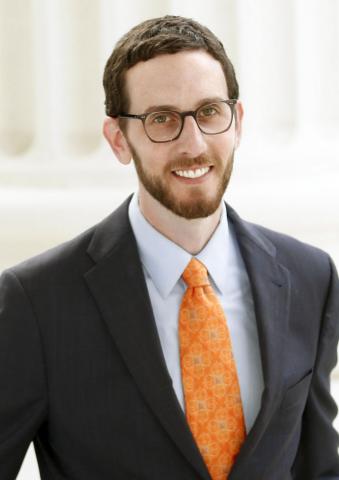
Scott Wiener
Scott Wiener Senate · District 11
D
Strong +
100% 8
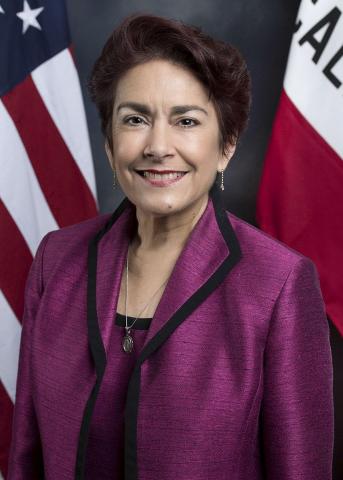
Anna Caballero
Anna Caballero Senate · District 14
D
Strong +
100% 7
MG
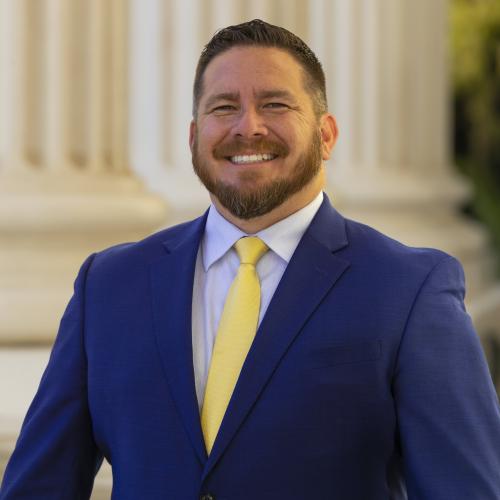
Mark González House · District 54
D
Strong +
100% 7
SP
Sasha Pérez Senate · District 25
D
Strong +
100% 7
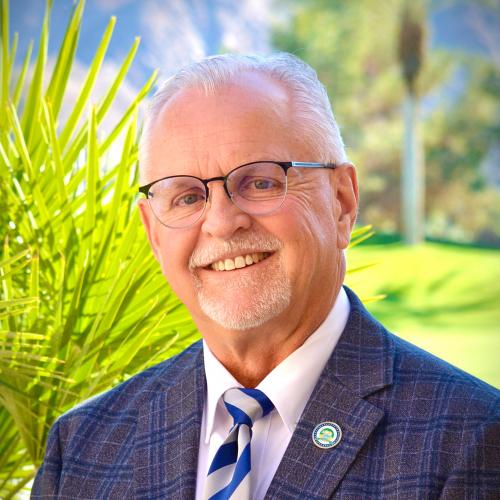
Tom Lackey
Tom Lackey House · District 34
R
Strong −
0% 6
Juan Alanis
Juan Alanis House · District 22
R
Strong −
0% 5
David Tangipa
David Tangipa House · District 8
R
Strong −
0% 4
Diane Dixon
Diane Dixon House · District 72
R
Strong −
0% 4
Megan Dahle
Megan Dahle Senate · District 1
R
Strong −
0% 4
Showing 11–20 of 24 bills

All criminal justice bills

passed both · California · Senate Aug 30, 2026

SB 907: Driving under the influence and other driving offenses: comprehensive reform.

Existing law makes it a crime to operate a vehicle while under the influence of alcohol or drugs, and sets forth the penalties for a violation of these provisions. Existing law requires the driver of a vehicle involved in an accident resulting in injury or death to a person, other than that driver, to immediately stop the vehicle at the scene of the accident and provide specified personal information to the injured person or the occupants of the other vehicle and to any traffic or police officer at the scene of the accident. Existing law makes failing to comply with these requirements a crime, punishable as a misdemeanor for an accident resulting in injury and punishable as a misdemeanor or a felony for an accident resulting in death or serious injury, as defined. This bill would make the above-described violation for an accident resulting injury punishable as a misdemeanor or a felony and would impose an increased felony penalty for the above-described violation for an accident resulting in death or serious injury, if either of those violations occurred within 10 years of a separate driving under the influence, reckless driving, or gross vehicular manslaughter violation, as specified. By increasing the potential time of imprisonment, the bill would impose a state-mandated local program. Existing law requires a person who is convicted of specified crimes related to driving under the influence to be advised by the court of the dangerousness of their actions and that if that behavior in the future results in a person's death, they may be charged with murder. This bill would additionally require this advisement to be given if a person enters a plea to a different or lesser offense, as described. The California Constitution requires the state to reimburse local agencies and school districts for certain costs mandated by the state. Statutory provisions establish procedures for making that reimbursement. By imposing an increased term of imprisonment, this bill would create a state-mandated local program. This bill would provide that no reimbursement is required by this act for a specified reason.
in committee · California · Assembly May 14, 2026

AB 1545: Sexually violent predators.

Existing law defines a sexually violent predator to mean a person who has been convicted of a sexually violent offense against one or more victims and who has a diagnosed mental disorder that makes the person a danger to the health and safety of others in that it is likely that the person will engage in sexually violent criminal behavior. For purposes of this definition, a conviction for a sexually violent offense includes convictions that resulted in either a determinate or an indeterminate prison sentence, as specified. Existing law requires the Secretary of the Department of Corrections and Rehabilitation to refer a person who is in custody under that department's jurisdiction, and who is serving a determinate sentence or whose parole has been revoked, for evaluation by the State Department of State Hospitals at least 6 months prior to that individual's scheduled date for release from prison if the secretary determines that the person may be a sexually violent predator. Existing law requires a petition for commitment as a sexually violent predator to be filed in the county in which the person was convicted of the sexual offense for which the person was committed to the jurisdiction of the Department of Corrections and Rehabilitation. This bill would also require the Executive Officer of the Board of Parole Hearings to make that referral and revise the criteria for referral to additionally apply to a person who is serving an indeterminate prison sentence. The bill would also authorize the secretary, or the Executive Officer of the Board of Parole Hearings, to refer the person for evaluation if the person will be scheduled for a parole hearing within the next 6 months. By imposing additional duties on counties regarding commitment of persons as sexually violent predators, this bill would impose a state-mandated local program. The bill would also make conforming changes. The California Constitution requires the state to reimburse local agencies and school districts for certain costs mandated by the state. Statutory provisions establish procedures for making that reimbursement. This bill would provide that, if the Commission on State Mandates determines that the bill contains costs mandated by the state, reimbursement for those costs shall be made pursuant to the statutory provisions noted above.
Sub-Topics Courts Sentencing
signed · California · Assembly Oct 11, 2025

AB 1094: Crimes: torture of a minor: parole.

Existing law makes a person who, with the intent to cause cruel or extreme pain and suffering for the purpose of revenge, extortion, persuasion, or for any sadistic purpose, inflicts great bodily injury upon the person of another guilty of torture, and makes the crime punishable by imprisonment in the state prison for a term of life. Existing law specifies that an inmate imprisoned under a life sentence shall not be paroled until they have served a term of at least 7 years or as established pursuant to a law that establishes a minimum term. This bill would prohibit a person imprisoned for committing the crime of torture from being eligible for parole until they have served at least 10 years, if the defendant is an adult who had care or custody of the victim and the victim was 14 years of age or younger at the time of the crime. By creating a new sentencing enhancement, the bill would impose a state-mandated local program. The California Constitution requires the state to reimburse local agencies and school districts for certain costs mandated by the state. Statutory provisions establish procedures for making that reimbursement. This bill would provide that no reimbursement is required by this act for a specified reason.
signed · California · Assembly Oct 11, 2025

AB 848: Sexual battery.

Existing law prohibits the touching of any intimate part of another person for the purpose of sexual arousal, gratification, or abuse, under specified circumstances, including if the victim is unconscious of the nature of the act because the perpetrator fraudulently represented that the touching served a professional purpose. A violation of these provisions is punishable as a misdemeanor or as a felony by imprisonment in the state prison for 2, 3, or 4 years, and by a fine not exceeding $10,000. Existing law requires, in the case of a felony conviction for a violation of these provisions, the fact that the defendant was an employer and the victim was an employee of the defendant to be a factor in aggravation in sentencing. This bill would require, in the case of a felony conviction for a violation of these provisions, the fact that the defendant was employed at a hospital where the offense occurred and the victim was in the defendant's care or seeking medical care at the hospital to be a factor in aggravation in sentencing. By increasing the punishment for a crime, this bill would impose a state-mandated local program. The California Constitution requires the state to reimburse local agencies and school districts for certain costs mandated by the state. Statutory provisions establish procedures for making that reimbursement. This bill would provide that no reimbursement is required by this act for a specified reason.
Sub-Topics Sentencing
failed · California · Assembly Feb 2, 2026

AB 47: Elderly Parole Program.

Existing law establishes the Elderly Parole Program for the purpose of reviewing the parole suitability of inmates who are 50 years of age or older and who have served a minimum of 20 years of continuous incarceration on their sentence. Existing law requires the Board of Parole Hearings, when considering the release of qualifying inmates, to give special consideration to whether certain criteria have reduced the elderly inmate's risk for future violence. Existing law excludes various persons from these provisions, including persons sentenced pursuant to existing sentencing provisions commonly known as the three strikes law. Under an existing court order, although statutorily excluded, an individual may be eligible for parole under the Elderly Parole Program when they are 60 years of age or older and have been continuously incarcerated for at least 25 years. This bill would instead specify that persons required to register as sexual offenders, habitual sexual offenders, and persons convicted of various sexual offenses, including rape or sodomy, are not suitable for parole under the Elderly Parole Program until the person is 60 years of age or older and has served a minimum of 25 years of continuous incarceration on their current sentence.
passed · California · Assembly Jun 23, 2026

AB 292: Domestic violence.

Under existing law, a person who willfully inflicts corporal injury resulting in a traumatic condition upon specified persons, including, among others, the offender's spouse or former spouse, is guilty of a crime, punishable by imprisonment in the state prison for 2, 3, or 4 years, or in a county jail for not more than 1 year, or by a fine of up to $6,000. Existing law also provides conditions for probation for a violation of these provisions if the person has a previous conviction of certain assault and battery offenses, as specified. This bill would make this crime punishable by imprisonment in state prison for 2, 4, or 5 years, or by imprisonment and a fine of up to $10,000 if a person is convicted for violating these provisions within 7 years of a previous felony conviction under these provisions. The bill would also, if a person has one prior felony conviction under these provisions, require that the defendant be imprisoned in a county jail for not less than 60 days as a condition of probation. By increasing the penalty for existing crimes, the bill would impose a state-mandated local program. The California Constitution requires the state to reimburse local agencies and school districts for certain costs mandated by the state. Statutory provisions establish procedures for making that reimbursement. This bill would provide that no reimbursement is required by this act for a specified reason.
failed · California · Assembly Feb 2, 2026

AB 991: Sentencing: dismissal of enhancements.

Existing law generally authorizes a court to dismiss an action in the furtherance of justice. Existing law requires a court to dismiss an enhancement if it is in the furtherance of justice to do so, except if dismissal of that enhancement is prohibited by any initiative statute. This bill would make the provision relating to the dismissal of enhancements inapplicable to firearms-related enhancements, but would allow the court to dismiss these firearm-related enhancements pursuant to the court's general authority to dismiss an action, as specified.
Sub-Topics Firearms Sentencing
failed · California · Senate Feb 2, 2026

SB 432: Serious felonies: furnishing fentanyl to a minor.

Existing law, as added by the Victims' Bill of Rights, approved as Proposition 8 at the June 8, 1982, statewide primary election, and as amended by the Gang Violence and Juvenile Crime Prevention Act of 1998, approved as Proposition 21 at the March 7, 2000, statewide primary election, among other things, defines a serious felony. 2 3 vote, or by a statute that becomes effective only when approved by the voters."?> Existing law prohibits plea bargaining in a case in which a serious felony is charged and imposes a 5-year enhancement for conviction of a serious felony if the person has previously been convicted of a serious felony. This bill would include knowingly furnishing fentanyl to a minor within the definition of a serious felony. By expanding the scope of an enhancement, this bill would impose a state-mandated local program. The California Constitution requires the state to reimburse local agencies and school districts for certain costs mandated by the state. Statutory provisions establish procedures for making that reimbursement. This bill would provide that no reimbursement is required by this act for a specified reason.
signed · California · Assembly Oct 13, 2025

AB 812: Recall and resentencing: incarcerated firefighters.

Existing law authorizes a court, on its own motion within 120 days of the date of the defendant's commitment, or at any time if the applicable sentencing laws have changed or upon a recommendation from the Secretary of the Department of Corrections and Rehabilitation, the Board of Parole Hearings, or the district attorney, to recall a defendant's sentence and resentence that defendant to a lesser sentence. Existing law establishes the California Conservation Camps for the purpose of having incarcerated persons work on projects supervised by the Department of Forestry and Fire Protection. Existing law requires the department to utilize incarcerated persons assigned to conservation camps in performing fire prevention, fire control, and other work at the department. This bill would require the Department of Corrections and Rehabilitation, no later than July 1, 2027, to promulgate regulations, as specified, regarding the referral of participants in the California Conservation Camp program and incarcerated persons working at institutional firehouses for resentencing.
failed · California · Assembly Feb 2, 2026

AB 38: Crimes: serious and violent felonies.

Existing law classifies certain criminal offenses as a "violent felony" for the purposes of various provisions of the Penal Code, including sentencing enhancements for prior convictions, as well as numerous other provisions. Existing law includes among the list of violent felonies rape accomplished against a person's will by means of force, violence, duress, menace, or fear, or rape accomplished against the victim's will by threat of violent retaliation, but does not include rape of a person unable to give consent due to disability, rape under false pretenses, or rape accomplished by threat of incarceration, arrest, or deportation. This bill would also include specified crimes involving the rape or sexual assault of a minor who has a developmental disability in the list of violent felonies. By expanding the scope of an enhancement, this bill would impose a state-mandated local program. The California Constitution requires the state to reimburse local agencies and school districts for certain costs mandated by the state. Statutory provisions establish procedures for making that reimbursement. This bill would provide that no reimbursement is required by this act for a specified reason.
Showing 11 to 20 of 24 bills