

Maddy summaryThis bill reauthorizes the Conrad State 30 program, which allows U.S. states to request waivers enabling foreign medical graduates (J-1 visa holders) to work in medically underserved areas without having to return to their home countries. It extends the program's expiration date, creates new mechanisms for physicians to maintain legal status after completing service requirements, and adds protections against non-compete clauses in employment contracts. The bill modifies requirements for foreign medical graduates to work in underserved areas, including clarifying the 3-year service requirement and establishing a process for states to recapture waiver slots when physicians move between states. It also requires annual reporting on program usage by state and includes provisions for academic medical centers to request waivers without geographic constraints. The bill directly affects foreign-trained physicians, U.S. states, and health care facilities in underserved areas.
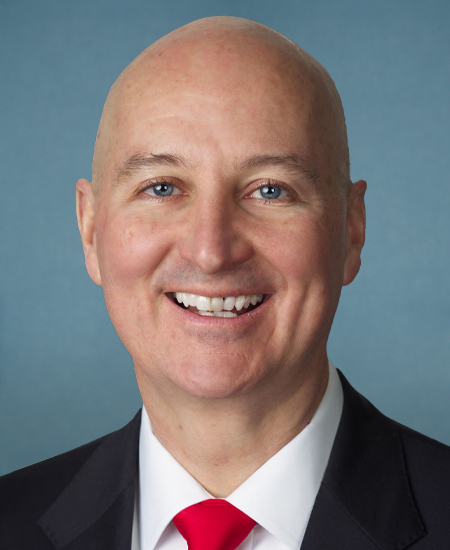
Sen. Pete Ricketts
Sponsored bills
Maddy summarySRES 57 is a Senate resolution honoring David Ferdinand Durenberger, a former U.S. Senator from Minnesota (served 1978-1989). It commemorates his life and career, highlighting his role as the lead Republican sponsor of the Americans with Disabilities Act and his work protecting Minnesota's natural resources like the Boundary Waters Canoe Area Wilderness. The resolution directs the Senate to formally recognize his passing and transmit a copy to his family. This is a ceremonial resolution with no policy changes or direct impact on constituents.
Maddy summaryS 641, the FREEBIRD Act, ends the U.S. Centers for Disease Control and Prevention (CDC) requirement that foreign air travelers show proof of COVID-19 vaccination to enter the United States. The bill immediately terminates this rule upon enactment and prohibits federal funding for its administration or enforcement. It requires the CDC to report, within 90 days, how many travelers were denied entry under the previous vaccination rule between April 2022 and the bill’s enactment. The Act does not affect other travel rules, such as the separate requirement for negative COVID-19 test results for travelers from China.
Maddy summaryThe "Stopping Overdoses of Fentanyl Analogues Act" (S 600) amends federal drug laws to automatically classify a broad range of fentanyl-like substances as illegal under Schedule I. It defines "fentanyl-related substances" to include any compound with specific structural changes to fentanyl - such as modifications to its ring structures or chemical groups - making these analogues automatically controlled without needing individual bans. This directly affects drug manufacturers, distributors, and users of these substances, as well as law enforcement agencies tasked with identifying and regulating new fentanyl variants. The bill aims to close loopholes that allow dangerous, unregulated fentanyl analogues to enter the market before being specifically prohibited. It takes effect one day after enactment.
Maddy summaryThis bill prohibits federally funded schools and athletic programs from allowing individuals assigned male at birth to participate in women's or girls' sports teams. It defines "sex" for this purpose solely based on biological sex assigned at birth, including reproductive anatomy and genetics. The law amends Title IX of the Education Amendments of 1972 to make such participation a violation of federal civil rights law. It directly affects all schools, colleges, and organizations receiving federal funds that operate athletic programs for women or girls.
Maddy summaryThis bill repeals two provisions that reduce Social Security benefits for certain public-sector retirees. It eliminates the government pension offset (GPO), which currently cuts Social Security checks for people with government pensions, and removes the windfall elimination provision (WEP), which reduces benefits for those with pensions from jobs not covered by Social Security. The changes directly affect public employees (like teachers, firefighters, and state/local government workers) who have pensions from jobs that didn't pay into Social Security. The bill takes effect for Social Security benefits paid after December 2023, restoring full benefits for eligible retirees.
Maddy summaryThis bill changes how often federal credit unions must hold board meetings based on their performance ratings. For all federal credit unions, boards must meet at least monthly for the first 5 years after their charter is approved. After that, credit unions rated 1 or 2 (highest performance) must meet at least 6 times yearly (with one per quarter), while those rated 3-5 must meet monthly. The bill directly affects all federal credit unions by adjusting their board meeting requirements according to their Uniform Financial Institutions Rating System score. These changes aim to align meeting frequency with credit union performance and oversight needs.
Maddy summaryS 566, the "Charitable Act," modifies tax deductions for charitable contributions for individuals who do not itemize their deductions on federal income taxes. It allows these taxpayers to deduct up to one-third of their standard deduction amount for 2023 and 2024 tax years, instead of the usual itemized deduction. The bill also removes references to a repealed penalty provision (Section 6662(b)(10)) and adjusts related penalty language in the tax code. This directly affects non-itemizing taxpayers who make charitable contributions, providing a new deduction option for those years only. The changes apply to tax years beginning after December 31, 2022.
Maddy summaryThe DAIRY PRIDE Act (S 549) amends federal food labeling rules to prevent plant-based products from using dairy-related terms like "milk," "yogurt," or "cheese" unless they meet the FDA's definition of dairy: derived from the lacteal secretion of hooved mammals (e.g., cows). It directly affects manufacturers of plant-based alternatives (e.g., almond, oat, or coconut milk) that currently label products with dairy terms. The bill requires the FDA to enforce this definition through new guidance within 180 days of enactment, clarifying that products not meeting the standard cannot be marketed as dairy. It does not change nutritional requirements but aims to reduce consumer confusion about product composition.
Maddy summaryThe National Right-to-Work Act would amend federal labor law to prohibit requiring employees to join a union or pay union dues as a condition of employment. It removes existing provisions in the National Labor Relations Act that allowed for "union security agreements" (such as agency shops) and similarly amends the Railway Labor Act for railroad workers. This change would mean private sector and railroad workers nationwide would not face mandatory union fees to retain their jobs, applying to all new or renewed employment agreements after enactment. The bill directly affects all covered employees in the private workforce and railroad industry by eliminating forced financial contributions to labor unions.