

Maddy summaryThis bill amends the Natural Gas Act to give the Federal Energy Regulatory Commission (FERC) exclusive authority to approve U.S. LNG export terminal projects, requiring FERC to deem such exports consistent with the public interest. It directly affects natural gas companies seeking to build or expand export facilities and streamlines FERC's review process by removing prior requirements for interagency coordination. The bill clarifies that FERC's decisions won't override existing sanctions laws, including restrictions on trade with countries designated as state sponsors of terrorism under current law. This change aims to accelerate domestic LNG export projects while maintaining legal safeguards for national security and foreign policy.
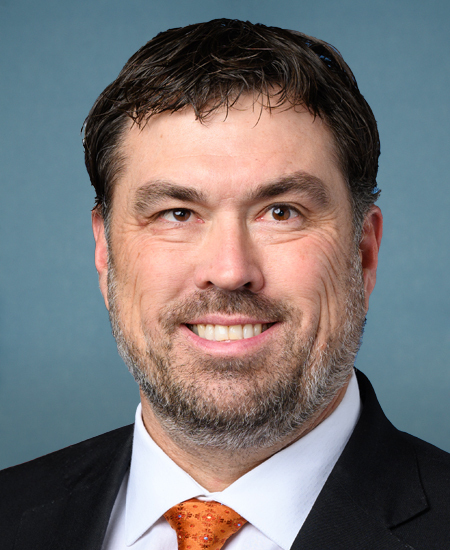
Rep. Morgan Luttrell
Sponsored bills
Maddy summaryThis bill (HR 6456) requires the Veterans Affairs Secretary to move the remains of Fernando V. Cota from Fort Sam Houston National Cemetery in Texas within one year of the bill becoming law. It mandates that the VA notify Cota’s next of kin before moving the remains and then either return the remains to them or arrange for final disposition if no response is received. The bill directly affects the VA’s handling of Cota’s burial site and the next of kin’s right to claim the remains. It is a procedural measure with no broader policy changes beyond this specific disinterment request.
Maddy summaryThe Freedom to Heal Act of 2025 creates a new federal registration process for physicians to directly administer Schedule I investigational drugs under the "Right to Try" framework. It requires physicians to apply to the Attorney General with evidence of state compliance, manufacturer agreements, and training, and limits the amount of drugs they may possess based on approved applications. The bill mandates the Attorney General to issue interim rules within 240 days and final rules within two years covering drug delivery, storage, recordkeeping, and registration management. This affects physicians treating eligible patients with Schedule I drugs under federal Right to Try provisions, not the patients themselves.
Maddy summaryThe Rx ACCESS Act improves prescription drug access for TRICARE beneficiaries, including military service members, retirees, and their families, by establishing fair reimbursement standards for pharmacies and expanding medication choice. It requires pharmacies to be reimbursed at actual drug costs (or the national average drug cost for certain medications) plus a standard dispensing fee, while banning hidden fees like point-of-sale charges. Starting October 1, 2026, beneficiaries can choose how they receive non-generic medications for ongoing health conditions. The law also mandates annual audits to verify reimbursement fairness and ensure pharmacy networks provide accessible care, especially in rural and underserved areas.
Maddy summaryHR 6019 repeals a requirement that Senate offices must be notified when legal requests seek Senate data. Specifically, it removes Section 213 of the 2026 appropriations act, which mandated that Senate offices be informed about legal processes requesting disclosure of Senate data. This change directly affects Senate offices by eliminating a procedural notification step for legal requests involving their data. The bill makes no other policy changes, solely removing this specific administrative requirement.
Maddy summaryHR 4070, the Tren de Aragua Border Security Threat Assessment Act, requires the Secretary of Homeland Security to conduct a detailed assessment of the criminal threats posed by the Venezuelan gang Tren de Aragua to U.S. borders within 180 days of the bill's enactment. The assessment must cover the group's origins, methods, funding, and specific threats to the southwest, northern, and maritime borders, followed by a strategic plan within one year outlining how federal, state, and local agencies will counter these threats through information sharing, interdiction, and preventing the group's expansion in the U.S. The bill directly affects DHS, intelligence agencies, and border law enforcement partners by mandating these reports and planning processes.
Maddy summaryHR 1327, the Syria Terrorism Threat Assessment Act, requires the Secretary of Homeland Security to conduct a threat assessment of individuals in Syria affiliated with designated foreign or global terrorist organizations. The assessment must identify each individual's country of origin, describe their terrorist group affiliation, detail DHS's capability to track them, and outline actions taken to mitigate threats and prevent entry into the U.S. The Secretary must submit this report to Congress within 60 days of the bill's enactment. This is a procedural requirement focused on gathering and reporting threat information, not on changing existing laws or policies.
Maddy summaryThis bill establishes a voluntary DHS cybersecurity training program for current Department of Homeland Security employees not yet in cybersecurity roles. It requires the DHS Director to create a curriculum using existing frameworks (like the Federal Cyber Defense Skilling Academy), offer training through various methods (online, in-person, on-the-job), and set participation criteria. The program mandates annual reports to Congress for seven years, tracking participants, positions filled after training, and success metrics. The Under Secretary for Management must also report on cybersecurity vacancies, support recruitment into the program, and connect graduates with cybersecurity job opportunities within DHS.
Maddy summaryHRES 782 is a non-binding House resolution expressing condolences to victims of the July 4, 2025, catastrophic floods in Texas, which caused at least 135 deaths (including 37 children) and widespread destruction. It honors first responders who rescued over 850 people and community heroes like camp staff who saved children, while committing the House to stand with affected Texans. The resolution does not create new laws or allocate funds - it formally mourns the loss of life, recognizes acts of courage, and urges prioritization of rebuilding infrastructure and support for vulnerable residents. This symbolic gesture was introduced by multiple Texas representatives and referred to the Transportation Committee.
Maddy summaryHR 6000, the Veterans’ Sentinel Act, requires the Department of Veterans Affairs (VA) to improve data collection and analysis of suicides and attempted suicides occurring on VA property. It mandates an annual evaluation of trends and prevention recommendations, establishes a working group to review root cause data (including Behavioral Health Autopsy Program findings), and standardizes data collection across VA facilities. The working group must develop unified reporting systems, modify incident forms to include on-campus suicide data, and coordinate with medical centers. The VA must submit annual briefings to congressional committees and a final report detailing the working group’s effectiveness and data management improvements. This bill directly affects VA facilities and veterans who experience suicide-related incidents on VA property.