Issue · Education

Education

Every education bill, vote, and legislator stance in Arkansas, automatically classified by Maddy, our AI policy reader.

Total bills
40
119th Congress
Top supporter
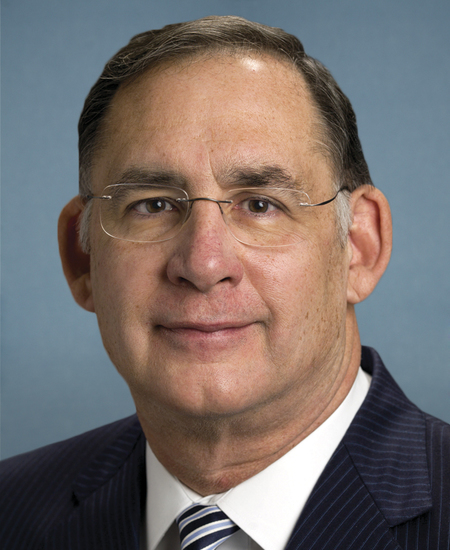
John Boozman
57% support rate
Top opponent
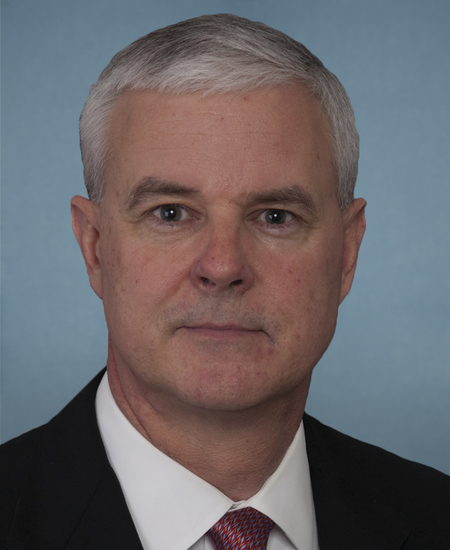
Steve Womack
33% support rate
Ranked legislators
6
2 support · 4 oppose
Key legislators

Who's moving education in Arkansas

Legislators moving education in Arkansas
Legislator Party Stance Support rate Votes
John Boozman
John Boozman Senate
R
Mixed
57% 167
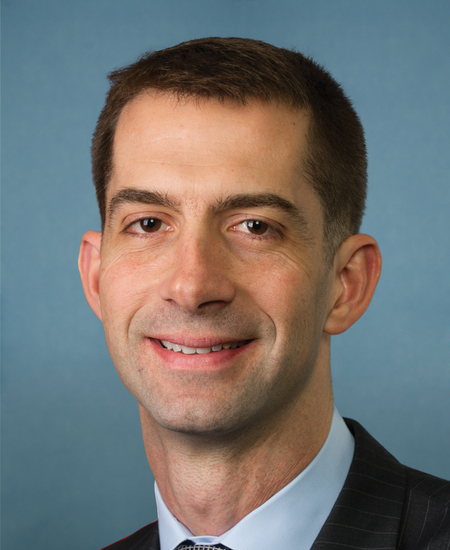
Tom Cotton
Tom Cotton Senate
R
Mixed
57% 167
Steve Womack
Steve Womack House · District 3
R
Oppose
33% 121
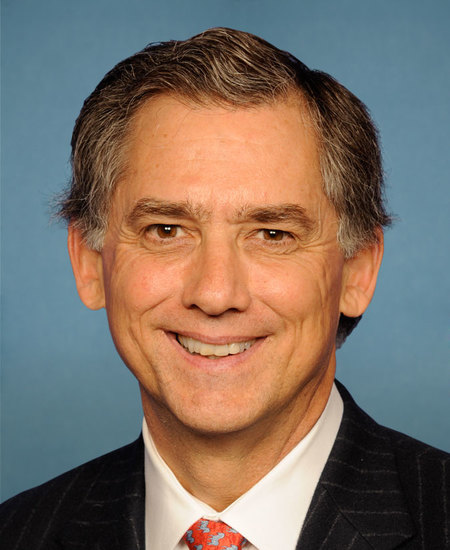
J. French Hill
J. French Hill House · District 2
R
Oppose
33% 131
Bruce Westerman
Bruce Westerman House · District 4
R
Oppose
33% 130
Eric A. "Rick" Crawford
Eric A. "Rick" Crawford House · District 1
R
Oppose
33% 130
Showing 1–10 of 40 bills

All education bills

in committee · United States · House Aug 31, 2026

HRES 1501: Recognizing the 80th anniversary of the Fulbright Program.

This House resolution formally recognizes the 80th anniversary of the Fulbright Program, which was established in 1946 to promote international goodwill through student and scholar exchanges. The bill highlights that the program currently operates in over 160 countries and has provided grants to more than 450,000 individuals since its inception. It encourages Congress to continue supporting educational and cultural affairs programs as tools for advancing foreign policy and national security. Additionally, the resolution congratulates past and present recipients and calls on global professionals to engage in cross-cultural partnerships.
passed · United States · Senate Aug 4, 2026

SRES 830: A resolution recognizing the 80th anniversary of the Fulbright Program.

This Senate resolution commemorates the 80th anniversary of the Fulbright Program, an initiative that facilitates international student and scholar exchanges in education, culture, and science. The bill formally acknowledges the program's role in promoting global goodwill and advancing U.S. foreign policy and national security through its extensive network of grants in over 160 countries. Additionally, it congratulates all past and present recipients of Fulbright awards and encourages people worldwide to pursue opportunities that foster international understanding and partnership.
in committee · United States · Senate May 21, 2026

S 4629: Government Bailout Prevention Act

The Government Bailout Prevention Act prohibits the use of federal funds, Treasury resources, or Federal Reserve assistance to support state, local, or school district governments facing financial distress starting January 1, 2026. Specifically, the bill bars the government from purchasing or guaranteeing debt for entities that have filed for bankruptcy, defaulted on obligations, or are at risk of defaulting without such help. This restriction also covers debt restructuring activities but includes an exception for financial aid provided in response to declared disasters.
passed · United States · Senate Apr 28, 2026

SRES 694: A resolution designating April 2026 as "Financial Literacy Month".

This resolution designates April 2026 as Financial Literacy Month to raise public awareness about the importance of personal finance education. The bill calls on the federal government, states, schools, businesses, and other organizations to hold programs and activities during this month. It is based on data showing high levels of financial stress, debt, and a lack of financial education among many Americans.
in committee · United States · House May 13, 2026

HR 8791: IGNITE HBCU Excellence Act

The IGNITE HBCU Excellence Act authorizes federal grants to Historically Black Colleges and Universities (HBCUs) to fund long-term improvements to their campus facilities and infrastructure. These grants are awarded competitively to eligible HBCUs based on criteria such as the age of their facilities, deferred maintenance needs, financial capacity, and student enrollment levels. Recipients may use the funds to construct or renovate buildings, upgrade technology and broadband systems, improve safety measures, and develop workforce training hubs, while being prohibited from using the money for routine maintenance or athletic facilities. The legislation also includes provisions for reporting on project outcomes and requires institutions to create comprehensive master plans that involve consultation with diverse campus and community stakeholders.
in committee · United States · Senate May 14, 2026

S 4528: IGNITE HBCU Excellence Act

The IGNITE HBCU Excellence Act establishes a competitive grant program administered by the Department of Education to provide long-term funding for infrastructure improvements at Historically Black Colleges and Universities. These grants are intended to support projects such as modernizing campus facilities, upgrading technology and broadband systems, enhancing safety measures, and acquiring research equipment, with a specific focus on addressing deferred maintenance and health risks. Priority for funding is given to institutions that demonstrate the greatest need due to facility conditions or financial limitations, as well as those serving high percentages of low-income students. The legislation also includes requirements for recipients to submit detailed plans, engage in community partnerships, and use a portion of funds for administrative costs, while prohibiting the use of money for routine maintenance or athletic facilities.
in committee · United States · House Apr 14, 2026

HR 8264: HBCU Research Capacity Act

The HBCU Research Capacity Act establishes a Federal Clearinghouse within the Department of Education, in coordination with several other federal agencies, to provide Historically Black Colleges and Universities (HBCUs) with comprehensive information on federal grant opportunities. This Clearinghouse will identify grants supporting research and development and institutional capacity building at HBCUs, while also sharing best practices for securing federal funding. The Department of Education will notify HBCUs and Congress about the Clearinghouse and offer quarterly updates to participating institutions. Additionally, several federal agencies, including Defense, Energy, and the National Science Foundation, are mandated to review their grant programs to align with the Clearinghouse's recommendations and report any identified funding gaps to Congress annually.
in committee · United States · Senate May 22, 2025

S 1918: Access Technology Affordability Act of 2025

S 1918, the Access Technology Affordability Act of 2025, creates a new federal tax credit for expenses related to access technology for blind individuals. It allows taxpayers to claim a credit of up to $2,000 per 3-year period for qualified hardware, software, or IT tools that convert visual information into accessible formats for themselves, their spouse, or a blind dependent. The credit amount adjusts annually for inflation starting in 2026 and expires after 2030. This policy directly affects taxpayers who pay for such technology for blind family members, reducing their tax liability for these qualifying expenses.
Sub-Topics Tax Credits
in committee · United States · House May 21, 2025

HR 3552: Second Chance Reauthorization Act of 2025

This bill extends existing federal reentry programs under the Second Chance Act through 2030, continuing funding for services supporting people returning to communities after incarceration. It specifically maintains grants for state/local reentry projects (including substance use treatment, housing, and peer recovery services), family-based substance abuse treatment, prison/jail educational programs, career training, and community mentoring by nonprofits. The bill updates program timelines from their previous 2019-2023 authorization period to 2026-2030 without altering the core services provided. It directly affects state/local agencies, prisons, and nonprofit organizations administering these reentry programs. The legislation focuses solely on extending current funding mechanisms, not changing program requirements or creating new initiatives.
in committee · United States · Senate May 13, 2025

S 1745: Dismantling Ideological Policies for Semiconductors and Science Act

This bill would repeal numerous diversity, equity, and inclusion (DEI) requirements in federal STEM programs established under the CHIPS and Science Act. It targets provisions requiring outreach to underrepresented communities, diversity considerations in research programs, data collection on faculty demographics, and DEI-focused funding programs. The bill also repeals the NSF Chief Diversity Officer position and modifies programs to focus on STEM achievements for historically Black colleges and universities (HBCUs) and Tribal Colleges or Universities (TCUs) without race-based activities. The bill would affect federal agencies like the National Science Foundation, Department of Energy, and National Institute of Standards and Technology that administer STEM programs.
Sub-Topics Early Childhood
Showing 1 to 10 of 40 bills
1 2 3 4 Next