

Maddy summaryHR 7640, the "Shut Down Sanctuary Policies Act of 2026," requires state and local governments to cooperate with federal immigration enforcement by mandating that law enforcement agencies comply with federal requests to hold individuals for immigration status checks and share related information. It overrides state or local laws that restrict such cooperation, with non-compliant jurisdictions losing eligibility for specific federal law enforcement grants (like Byrne JAG funds) and facing potential lawsuits if released immigrants commit crimes. The bill creates a private right to sue state/local entities that fail to honor federal detainers, allowing victims of crimes committed by such individuals to seek damages. This directly affects state and local governments, law enforcement agencies, and jurisdictions with "sanctuary" policies that previously limited immigration cooperation.
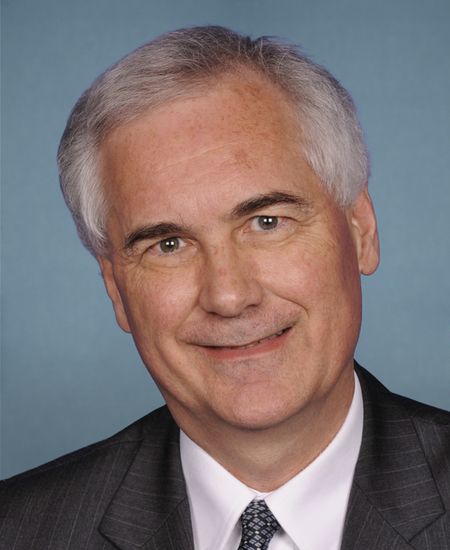
Rep. Tom McClintock
Sponsored bills
Maddy summaryThis bill would allow individuals who receive wildfire relief payments to exclude those amounts from their taxable income. It directly affects people who suffer financial losses from federally declared forest or range fires after December 31, 2014. The key provision states that relief payments for expenses like additional living costs, lost wages, personal injury, or emotional distress are not taxable, but only to the extent those losses are not already covered by insurance or other compensation. The tax exclusion applies to payments received after December 31, 2025, and ends for payments received after December 31, 2032.
Maddy summaryThe FAIR Act of 2026 reforms federal civil asset forfeiture laws, directly affecting individuals and businesses whose property is seized by the government and federal law enforcement agencies. The bill eliminates administrative (non-judicial) forfeiture, requiring all federal property forfeitures to proceed through a court, and raises the government's burden of proof to "clear and convincing evidence" for seizing property. It shifts the burden to
Maddy summaryThis bill prevents state or local governments from banning or restricting energy connections (like installation, modification, or access) based on the type or source of energy, such as electricity, natural gas, or renewable fuels. It directly affects consumers choosing energy providers and energy companies seeking to offer services. The key provision prohibits local laws, regulations, or policies that limit energy services sold in interstate commerce, covering all energy types listed in the bill’s definitions. It does not create new programs but limits regulatory authority at the state or local level. The law aims to ensure open access to diverse energy sources without source-based restrictions.
Safeguard American Voter Eligibility Act or the SAVE America Act This bill requires individuals to provide documentary proof of U.S. citizenship when registering to vote, and requires photo identification to vote, in federal elections. Specifically, the bill prohibits states from accepting and processing an application to register to vote in a federal election unless the applicant presents documentary proof of U.S. citizenship. The bill specifies what documents are considered acceptable proof of U.S. citizenship, such as identification that complies with the REAL ID Act of 2005 that indicates U.S. citizenship. Further, the bill (1) prohibits states from registering an individual to vote in a federal election unless, at the time the individual applies to register to vote, the individual provides documentary proof of U.S. citizenship; and (2) requires states to establish an alternative process to demonstrate U.S. citizenship. Each state must take affirmative steps on an ongoing basis to ensure that only U.S. citizens are registered to vote, which shall include establishing a program to identify individuals who are not U.S. citizens using information supplied by certain sources. Additionally, states must remove noncitizens from their official lists of eligible voters. The bill (1) provides for a private right of action for certain violations, and (2) establishes criminal penalties for certain offenses. Individuals voting in federal elections must present an eligible photo identification document. An individual who votes by absentee ballot must submit a copy of their identification document with both the request for, and the submission of, the absentee ballot.
Maddy summaryHR 4255, the Enhancing Safety for Animals Act of 2025, would remove the Mexican wolf (Canis lupus baileyi) from the U.S. Endangered Species Act protections. It directly affects ranchers in the Mexican Wolf Experimental Population Area, who report livestock losses and safety concerns, and shifts regulatory authority from the U.S. Fish and Wildlife Service to state and local management. Key provisions include formally delisting the wolf, nullifying two existing federal rules governing the species, and prohibiting future consideration of Mexican wolf populations in Mexico when making ESA decisions. The bill aims to streamline livestock compensation for ranchers by changing evidentiary standards for wolf depredation claims.
Maddy summaryHR 179, the Proven Forest Management Act of 2025, requires U.S. Forest Service and Interior Department managers to conduct forest management activities on National Forest System land in ways that achieve multiple ecosystem benefits - including reducing wildfire fuels, maintaining biodiversity, improving water quality, and increasing climate resilience. It simplifies environmental reviews for fuel-reduction projects under 10,000 acres (with no more than 3,000 acres of mechanical thinning) by exempting them from standard National Environmental Policy Act (NEPA) requirements, provided projects are coordinated with local governments and fire departments. The bill also mandates post-activity monitoring of ground conditions and allows cooperative agreements with local entities for activities like erosion control and stream restoration. This directly affects federal forest managers and local stakeholders involved in wildfire risk reduction on public lands.
Maddy summaryHR 178 requires the U.S. Forest Service (under the Secretary of Agriculture) to put out wildfires on specific National Forest lands within 24 hours of detection. It directly affects National Forest System lands in areas experiencing severe drought (D2-D4 ratings), high fire risk (National Wildland Fire Preparedness Level 5), or in the top 10% of wildfire exposure risk. Key provisions mandate using all available resources for rapid suppression, prohibiting interference with state/local firefighting efforts, and strictly limiting the use of planned controlled burns or backfires (only allowed under specific safety orders or to protect personnel). The bill does not create new funding but sets operational requirements for wildfire response on defined high-risk lands.
Maddy summaryHR 6840, the ARMENIA Security Partnership Act, requires the U.S. Secretary of Defense to annually certify whether Azerbaijan has met specific conditions related to Armenia, including withdrawing forces from Armenian territory, releasing prisoners, ending hostilities, and recognizing Armenian rights in Nagorno-Karabakh. If certification fails, the bill mandates an immediate review of U.S. security assistance to Armenia to assess gaps in Armenia’s defense capabilities and identify needed support. The review must evaluate historical U.S. security aid, threats to Armenia, and recommend steps to strengthen Armenia’s self-defense. It also blocks the use of a specific waiver (under the FREEDOM Support Act) that could bypass security aid restrictions if certification is not met. The bill directly affects U.S. security assistance decisions for Armenia based on Azerbaijan’s compliance with these conditions.
Maddy summaryThis bill denies immigration benefits to individuals who participated in, supported, or facilitated Hamas attacks against Israel starting October 7, 2023. It amends immigration law to make such individuals inadmissible (barred from entering the U.S.) and ineligible for any immigration relief, including asylum or other protections. The law requires annual reports from the Homeland Security Secretary tracking how many people are denied entry or removed under these provisions. It directly affects non-U.S. nationals involved in Hamas-related violence against Israel since the October 7, 2023, attacks.