

Maddy summarySB 1683 prohibits foreign governments or their agents from owning, leasing, or controlling real property in Arizona - including through shell companies or disguised transactions - and bans them from installing surveillance equipment like drones or sensors on such land. The law requires utilities and infrastructure owners to report suspected violations to the Attorney General, who can sue to seize property, remove equipment, and distribute sale proceeds to lienholders and state costs. Exceptions allow foreign entities to inherit property if they sell within 120 days, and the bill explicitly prohibits discrimination based on race or national origin during enforcement. This applies to all land transactions in Arizona, including those involving debt instruments or future interests.
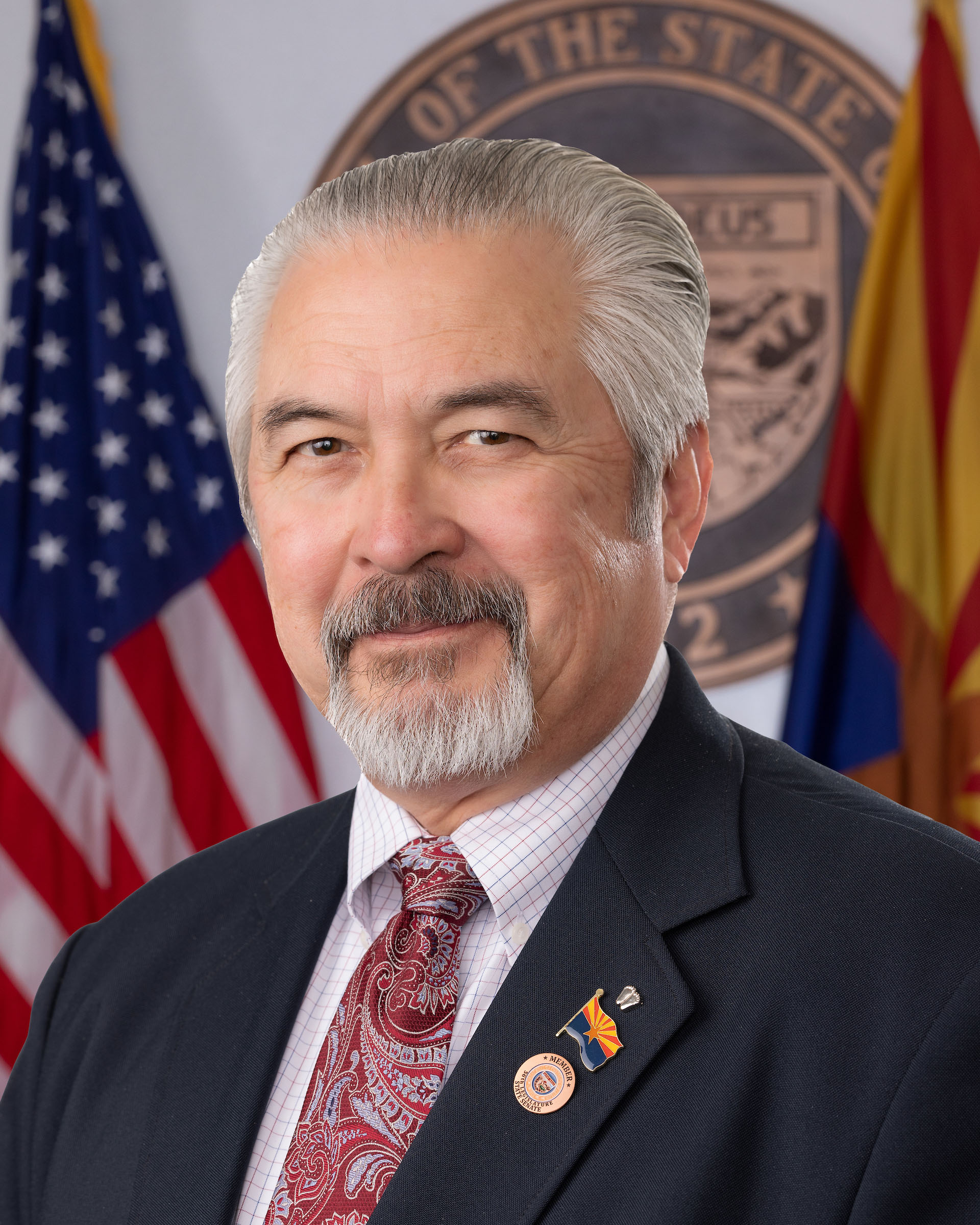
Sen. Frank Carroll
Sponsored bills
Maddy summarySB 1206 regulates insurance claims and repair contracts following catastrophic storms in Arizona. It prohibits public adjusters from representing clients during active storms or emergencies and bans them from working on repairs they are adjusting. For residential repair contracts, the bill requires contractors to include clear cancellation rights (72 hours after claim denial and 4 business days after signing), detailed repair estimates with specific damage descriptions, and a 50% down payment cap. Homeowners gain protections like refunds within 10 days of cancellation and mandatory written change orders for contract modifications.
Maddy summarySB 1164 modifies Arizona's long-term care system rules to streamline ownership transitions for facilities serving Medicaid beneficiaries. It allows new owners of skilled nursing or assisted living facilities (that continue providing ALTCS services) to have claims for member care processed and paid under the previous owner's contract until the new owner completes their enrollment and contracting process. This prevents payment delays during ownership changes, ensuring uninterrupted care for members. The provision applies only when the new owner requests continuation and the facility maintains service under the ALTCS program.
Maddy summarySB 1165 prohibits Arizona health insurance plans (including hospital service corporations and health care service organizations) from charging cost-sharing fees (like deductibles or copays) for diagnostic and supplemental breast exams starting January 1, 2027. Diagnostic exams cover evaluations of abnormalities found during screenings or other tests, while supplemental exams are risk-based screenings for individuals with dense breasts, family history, or other factors. The bill requires insurers to cover these exams without cost-sharing even before a high-deductible plan’s deductible is met, aligning with National Comprehensive Cancer Network guidelines. It directly affects insurance providers and beneficiaries seeking these specific breast cancer screening services.
Maddy summarySB 1186 requires companies bidding on state contracts or applying for state grants to disclose any "anything of value" (like donations or loans) they or their executives provided to the governor or related entities (such as campaign committees or political groups supporting the governor) within the past five years. It also mandates that state agencies retain all notes from proposal evaluations and prohibits destroying these notes; if notes are destroyed, related contracts may need to be re-bid. The bill directly affects businesses seeking state contracts or grants by adding transparency requirements about their political contributions. Key provisions include mandatory disclosure for both contract proposals (Section 1) and grant applications (Section 3), alongside new record retention rules for procurement evaluations (Section 2).
Maddy summaryThis bill increases burial expense coverage under workers' compensation from $10,000 to $15,000 for workers who die on the job. It directly affects surviving family members (spouses, children, dependent parents, or siblings) who were financially reliant on the deceased worker. Key provisions clarify benefit calculations: for example, surviving spouses receive 35% of the deceased's average monthly wage (plus 31.6% for children), children receive benefits until age 18 (or 22 if in school), and dependent parents may receive 25% of the wage. Funeral costs for dependents who die before the benefit period ends are capped at $800. The changes apply to Arizona workers' compensation claims following a work-related death.
Maddy summarySB 1136 amends Arizona's workers' compensation law to clarify death benefits for surviving spouses who remarry. It specifies that when a surviving spouse remarries, they receive a lump sum payment equal to two years of benefits instead of benefits simply ending. This change applies to all surviving spouses (with or without children) who lose eligibility due to remarriage, and it also updates provisions for when children become ineligible (at age 18 or 22 if in school), ensuring the surviving spouse's benefits continue as if no children existed. The bill directly affects families of workers who died on the job, particularly those where the surviving spouse remarries. The key mechanism is the mandatory lump sum payment upon remarriage, replacing the prior practice of benefit termination without compensation.
Maddy summaryHB 2950 establishes a framework for Arizona municipalities and counties to create "tourism improvement areas" (TIAs) to fund tourism promotion. It requires a petition signed by lodging business owners representing at least 67% of rooms in the proposed area, including specific boundaries, assessment rates (based on property size or room count), and a detailed plan for how funds will be used. Lodging businesses within a TIA must pay an assessment on room rentals, which can be a fixed fee per night or a percentage of sales, with funds strictly limited to advertising, promotion, and business recruitment directly benefiting lodging businesses. The bill prohibits using these funds for physical infrastructure and sets a 30-day deadline to legally challenge the assessment. This directly affects hotels and resorts in designated areas by requiring them to pay a new, locally determined fee.
Maddy summarySB 1511 requires commercial motor vehicle operators in Arizona to present evidence of lawful presence in the U.S. (such as documents listed under Section 41-1080) when stopped by law enforcement. Drivers who cannot show this proof may face vehicle impoundment until related charges are resolved, with the vehicle owner responsible for impoundment fees. The law directly affects commercial drivers operating in Arizona who lack acceptable immigration documentation. It does not create new immigration status requirements but adds enforcement mechanisms for existing federal standards. The bill is currently pending in the Arizona Senate.
Maddy summarySB 1418 amends Arizona zoning law to allow small modular reactors (SMRs) to be constructed and operated without local zoning restrictions in counties with fewer than 500,000 residents, provided they are located at a site where a large industrial energy user has already secured all necessary zoning approvals. This prevents counties from imposing additional zoning rules on such SMR projects, specifically targeting smaller counties (e.g., excluding Maricopa County, which exceeds 500,000 residents). The bill defines key terms like "colocated" and "large industrial energy user" based on rules set by the Corporation Commission. It directly affects developers of SMRs and local governments in smaller counties, aiming to streamline clean energy infrastructure development by removing regulatory barriers.