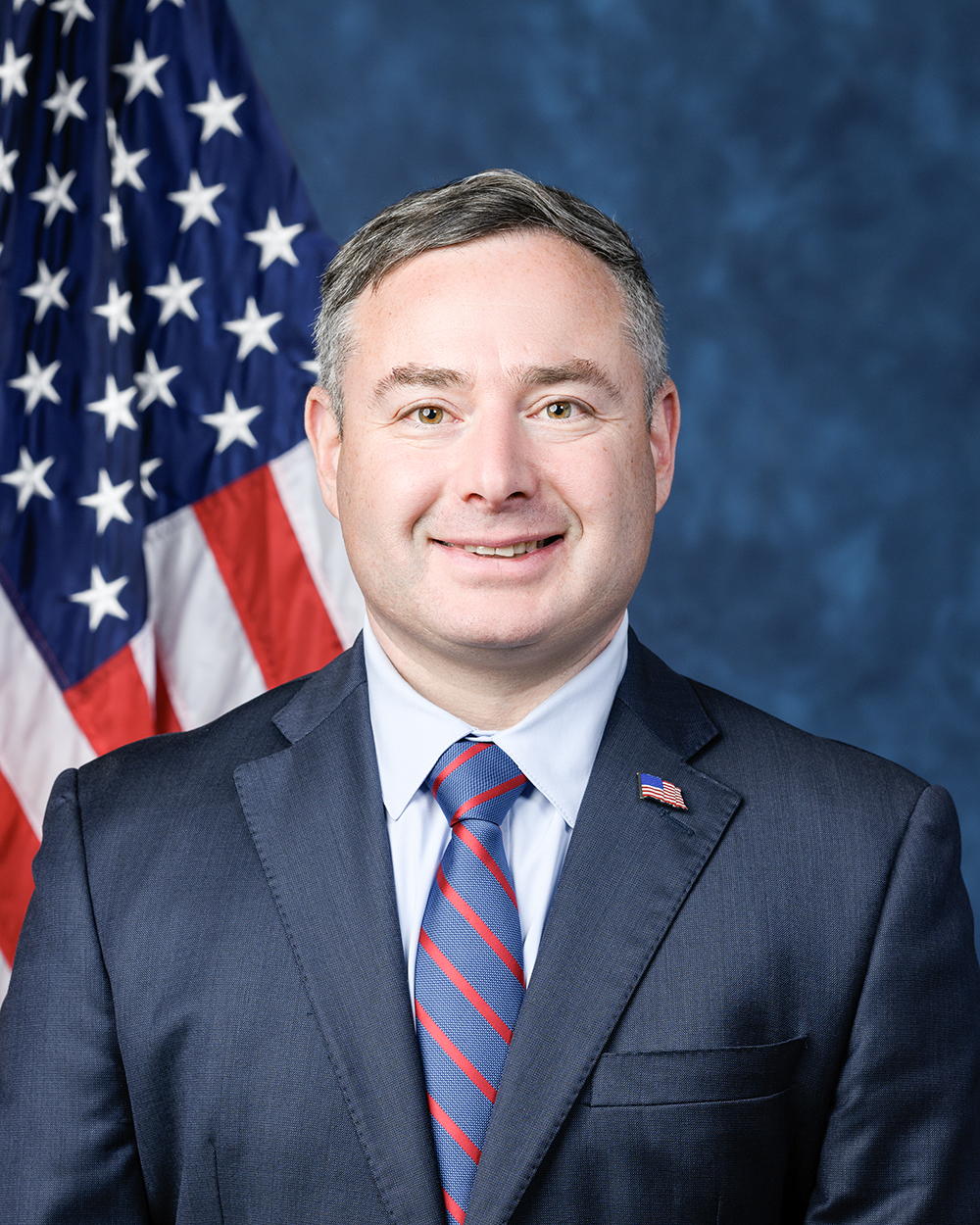
Photo of Eugene Simon Vindman
D United States House · District 7 · Virginia On the 2026 ballot

Rep. Eugene Simon Vindman

Compare
Total votes
669
all sessions
Attendance
99%
5 missed
Higher than 78% of chamber peers
With party
91%
of cast votes
Lower than 92% of chamber peers
Bipartisan score
5%
crosses aisle rarely
Higher than 91% of chamber peers
Sponsored
1,110
bills & resolutions
Higher than 98% of chamber peers
Committees
6
assignments
1,110 bills and resolutions

Sponsored bills

Total
1,110
Primary
73
Co-sponsor
1,037
This page
1,110
matching current filters
Co-sponsor HR 7391
In committee · Alaska House · Co-sponsor
Community Health Center Drug Pricing Protection Act

Maddy summaryHR 7391, the Community Health Center Drug Pricing Protection Act, requires that Federally Qualified Health Centers (FQHCs) pay the discounted 340B ceiling price for covered drugs **at the time of purchase**, not later through rebates or adjustments. This directly affects FQHCs, which rely on 340B discounts to provide affordable care to low-income patients. The bill amends the Public Health Service Act to prohibit manufacturers from entering agreements where FQHCs initially pay more than the ceiling price, with later reimbursement. It takes effect immediately upon enactment for all new drug purchases and applies to existing agreements starting then.

In committee Feb 5, 2026 1 co-sponsor
Co-sponsor HR 7405
In committee · Alaska House · Co-sponsor
Rail and Highway Transmission Planning Act

Maddy summaryThis bill directs the federal government to conduct a study on co-locating high-voltage power lines on existing highway and rail corridors. The study, led by the Energy Secretary with input from transportation agencies and stakeholders, will assess technical feasibility, safety, costs, and benefits of building transmission infrastructure within these rights-of-way. It will identify suitable corridors, evaluate different line configurations (like overhead or underground), and analyze impacts on grid reliability, energy costs, and transportation operations. The study must produce public reports within three years, including data to help accelerate future transmission projects without requiring immediate construction. This focuses on planning and data-sharing to address grid capacity constraints, directly affecting federal agencies, utilities, and transportation infrastructure owners.

In committee Feb 5, 2026 1 co-sponsor
Co-sponsor HR 7411
In committee · Alaska House · Co-sponsor
Mammography Access for Veterans Act of 2025

Maddy summaryThe Mammography Access for Veterans Act of 2025 expands the Department of Veterans Affairs' telescreening mammography program by removing the "pilot" designation and extending its timeline until May 1, 2027. This legislation requires the VA to offer at least one mammography option - such as telescreening, full-service screening, or mobile units - in every state and Puerto Rico within two years of enactment. The bill also mandates that these services remain accessible to veterans with paralysis, spinal cord injuries, or other disabilities. Additionally, it allows the VA to continue expanding these services to facilities outside the current pilot group or in states where breast imaging is not yet available.

In committee Feb 5, 2026 1 co-sponsor
Co-sponsor HR 7354
In committee · Alaska House · Co-sponsor
Stop Underrides Act 2.0

Maddy summaryThis bill requires the National Highway Traffic Safety Administration to establish new safety standards for side underride guards on trucks and trailers within 18 months, with full compliance required within two years. The standards mandate that these guards prevent passenger vehicles from sliding under trucks during collisions, improve safety for vulnerable road users like motorcyclists, and include aerodynamic features to aid fuel efficiency. The bill also creates an advisory committee to monitor underride safety and mandates studies to better understand and prevent these crashes. It aims to reduce the thousands of deaths and injuries from underride crashes that have occurred over the past 50 years, as documented by the National Transportation Safety Board.

In committee Feb 5, 2026 1 co-sponsor
Co-sponsor HR 7341
In committee · Alaska House · Co-sponsor
GRAD Act

Maddy summaryThis bill creates new funding eligibility for Historically Black Colleges and Universities (HBCUs) and Predominantly Black Institutions (PBIs) that offer approved master's degree programs. It amends existing law to add specific categories (subsections S for HBCUs and F for PBIs) allowing these institutions to access federal funds previously restricted to certain program types. The key mechanism expands funding access by adjusting how remaining funds are allocated after initial disbursements. Directly affects qualifying HBCUs and PBIs meeting both the institution type and master's program criteria.

In committee Feb 4, 2026 1 co-sponsor
Co-sponsor HR 7340
In committee · Alaska House · Co-sponsor
Rebuild America’s Schools Act of 2026

Maddy summaryThe Rebuild America's Schools Act of 2026 authorizes $20 billion annually from 2027 to 2031 to improve public school facilities nationwide. The bill provides grants to states to fund school construction, renovation, and modernization projects that focus on safety, energy efficiency, and accessibility, with priority given to schools serving high percentages of students eligible for free or reduced-price lunch. Funds cannot be used for routine maintenance, athletic facilities, or vehicles, and must meet specific environmental, safety, and energy efficiency standards. The bill also includes specific provisions for repairing school foundations affected by pyrrhotite, a mineral that causes concrete deterioration, and requires use of American-made materials for construction projects.

In committee Feb 4, 2026 1 co-sponsor
Co-sponsor HR 7335
In committee · Alaska House · Co-sponsor
Humanitarian Standards for Individuals in ICE and CBP Custody Act

Maddy summaryHR 7335 establishes comprehensive humanitarian standards for individuals held in U.S. Immigration and Customs Enforcement (ICE) and U.S. Customs and Border Protection (CBP) custody. The bill requires facilities to provide immediate health screenings within 12 hours (6 hours for high-risk individuals like children, pregnant people, or those with medical conditions), ensure access to adequate water, sanitation, food (with 2,000+ calories daily for adults), and age-appropriate shelter. It mandates specific facility standards including separate housing for males and females, accessible accommodations for people with disabilities, daily outdoor access for those detained over 48 hours, and proper medical equipment and personnel on-site. The bill also requires regular inspections, staff training on humanitarian protocols, and public reporting of sexual abuse complaints. These standards directly affect all individuals detained by ICE or CBP, with special protections for vulnerable groups like children, pregnant people, and those with medical needs.

In committee Feb 4, 2026 1 co-sponsor
Co-sponsor HR 7265
In committee · Alaska House · Co-sponsor
Vote by Mail Tracking Act

Maddy summaryHR 7265, the Vote by Mail Tracking Act, requires all government entities sending mail-in ballots for federal elections to use a standardized Postal Service barcode on ballot envelopes. This barcode enables tracking of each individual ballot, while also mandating specific envelope designs and machineability standards set by the Postal Service. The bill applies to all mail-in ballots for federal office elections starting in 2026, but excludes Federal write-in absentee ballots under the Uniformed and Overseas Citizens Absentee Voting Act. The Postmaster General must provide compliance guidance to government entities by June each year to implement the tracking system.

In committee Feb 4, 2026 1 co-sponsor
Co-sponsor HR 5000
In committee · Alaska House · Co-sponsor
Cybersecurity Hiring Modernization Act

Maddy summaryThis bill changes how federal agencies hire cybersecurity staff by restricting educational requirements for certain positions. It prohibits agencies from setting minimum education levels unless required by state or local law where the work occurs, and limits education consideration to directly relevant competencies. The bill applies to specific federal cybersecurity roles (like GS-2210 IT positions and NICE-designated roles) and requires the Office of Personnel Management to publish annual data on education levels for these hires. These changes aim to modernize hiring practices while ensuring education requirements align with actual job needs.

In committee Feb 4, 2026 1 co-sponsor
Co-sponsor HR 3474
In committee · Alaska House · Co-sponsor
Federal Mechanical Insulation Act

Maddy summaryThis bill amends federal energy conservation law to require federal agencies to consider mechanical insulation as a standard energy-saving measure during building evaluations. It defines "mechanical insulation property" as materials that reduce energy loss in mechanical systems while meeting ASHRAE 90.1 standards, including insulation placed in service with those systems. The law adds mechanical insulation to the list of measures agencies must evaluate for potential installation in federal buildings as part of their required energy and water assessments. This directly affects federal agencies managing buildings, ensuring they formally assess this specific efficiency measure during routine evaluations.

In committee Feb 4, 2026 1 co-sponsor
Showing 261 to 270 of 1,110 bills
Previous 1 … 26 27 28 … 111 Next