Maddy summaryThis bill repeals the Gun-Free School Zones Act of 1990 and makes technical amendments to Title 18 of the U.S. Code, specifically removing references to school zones in firearm offense provisions. It revises sections governing firearm restrictions (Section 922), definitions (Section 921), and penalties (Section 924) by renumbering and deleting specific paragraphs related to the repealed law. The bill directly affects federal firearm law enforcement and legal interpretations concerning school zones, but does not create new restrictions or protections. As a procedural repeal, it removes outdated language without altering current firearm regulations.
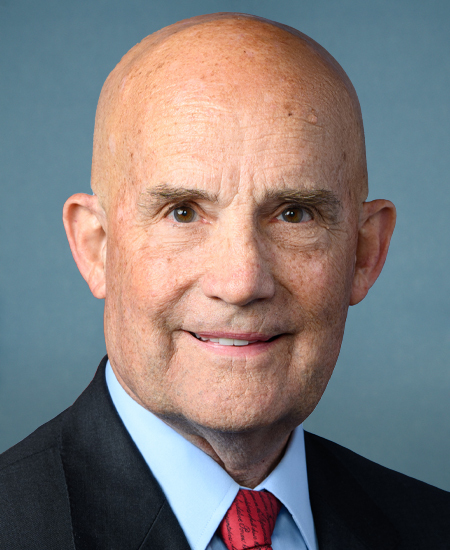
Rep. Keith Self
Sponsored bills
Maddy summaryHJRES 116 is a ceremonial resolution honoring 13 U.S. service members who died in the August 26, 2021, Abbey Gate bombing at Kabul's airport. It designates a National Day of Remembrance for those who perished during the Afghanistan withdrawal, expresses condolences to their families, and commemorates their service. The resolution does not create new policies or funding but formally recognizes their sacrifice and the role they played in saving lives during the evacuation. It directly affects the Gold Star families of the named service members and the broader public through this national acknowledgment.
Maddy summaryThis bill amends Title IX to clarify that "female," "male," and "sex" refer to biological characteristics (egg-producing or sperm-producing reproductive systems). It explicitly states that schools receiving federal funding cannot be forced to eliminate sex-segregated spaces (like bathrooms or locker rooms) or sex-segregated athletic/academic programs. The bill directly affects all schools and colleges that accept federal education funding, ensuring they may maintain such programs without losing that funding. Key mechanisms include adding specific definitions to Title IX and prohibiting the Secretary of Education from making funding contingent on ending sex-segregated facilities or programs.
Maddy summaryThis bill creates a federal database identifying state or local governments that conflict with immigration enforcement laws. It prohibits federal funding for any jurisdiction listed in this database, which includes entities that block cooperation with immigration detainers, restrict arrests of certain immigrants, or prevent officials from interviewing incarcerated individuals about immigration status. The database must be updated quarterly and made public within 90 days of the bill's enactment. This directly affects local governments that have policies limiting collaboration with federal immigration authorities.
Maddy summaryHR 4964, the Child Interstate Abortion Notification Act, requires physicians performing abortions on minors traveling across state lines to provide 24 hours of actual or constructive notice to the minor's parent before the procedure. It directly affects minors (under 18) seeking abortions in a state different from their residence, their parents, and healthcare providers. Key provisions mandate parental notification unless exceptions apply - such as medical emergencies, court waivers, verified abuse disclosures, or the minor being accompanied by a documented parent. The law aims to ensure compliance with parental involvement requirements in the minor’s home state, with penalties for noncompliance including fines or imprisonment for physicians.
Maddy summaryThe SNAP Study Act of 2025 requires the U.S. Department of Agriculture (USDA) to submit annual reports to Congress analyzing food security and diet quality related to the Supplemental Nutrition Assistance Program (SNAP). Each report must compare SNAP participants and non-participants, summarize recent SNAP policy changes intended to improve food security, assess those changes' impacts, and provide recommendations. The bill directly affects USDA (as the reporting entity) and Congress (as the recipient of the reports), with the first report due one year after the law's effective date. This legislation mandates data collection and analysis to inform future SNAP policy decisions, without altering current program benefits or eligibility.
Maddy summaryHR 4923, the Stop Foreign Propaganda Act, imposes sanctions on U.S. and foreign entities that knowingly provide media services (like content, distribution, or technology) to "covered foreign media entities." These entities include media organizations owned by sanctioned governments (e.g., Iran) or designated as tools of foreign propaganda. The law blocks assets, prohibits U.S. contracts with violators, and may deny visas to foreign individuals, with the President able to waive sanctions for national interest. It also requires annual Treasury and State reports tracking violations and assessing how sanctioned governments use media to spread propaganda or evade sanctions.
Maddy summaryHRES 631 is a symbolic House resolution (not a law) declaring that the U.S. national debt - citing $36.2 trillion in public debt as of January 2025 - is a threat to national security. It references debt-to-GDP ratios, interest expenses, and warnings from former defense officials like James Mattis and Dan Coats to support this stance. The resolution calls for restoring budget process reforms and addressing fiscal challenges but contains no binding policy changes or new spending rules. It affects no specific groups, as it is a formal congressional declaration without legislative effect.
Maddy summaryThe Ending Trading and Holdings in Congressional Stocks (ETHICS) Act requires members of Congress, their spouses, and dependent children to divest or place most personal investments in qualified blind trusts. It bans the purchase of covered investments (including stocks, commodities, and derivatives) after enactment, with current members having 90 days to sell existing holdings and new members having 90 days after taking office to divest. The bill includes specific exceptions for diversified mutual funds, Treasury securities, and certain family business investments while establishing enforcement mechanisms including civil penalties of up to 10% of the value of noncompliant holdings. The law applies to members serving terms beginning after January 31, 2023, and mandates public online disclosure of financial information through updated government databases.
Maddy summaryThis bill amends a section of the Research and Development, Competition, and Innovation Act to direct federal agencies to prioritize specific principles in international standards development. It requires the Director (likely of NIST) to advance openness, transparency, and consensus, promote existing voluntary private-sector standards, strengthen U.S. public-private partnerships, and coordinate agency efforts for emerging technologies. The bill directly affects federal agencies involved in standards development and private sector standards developers. It mandates concrete policy changes in how the U.S. engages with international standards bodies, emphasizing existing voluntary processes over new government mandates.