Maddy summaryHRES 776 is a non-binding resolution expressing the U.S. House of Representatives' concern about escalating threats against Coptic Christians in Egypt, including forced conversions, violence, and systemic legal discrimination. It urges the Egyptian government to ensure Coptic Christians are treated equally under the law, end impunity for attacks by prosecuting perpetrators, and hold officials accountable for inaction. The resolution also acknowledges the U.S.-Egypt partnership and Egypt's role in regional security. As a statement of concern - not a law - it does not impose new legal requirements but aims to highlight these issues for diplomatic engagement.
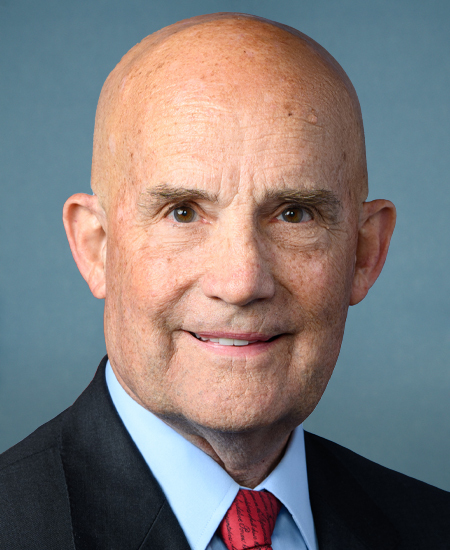
Rep. Keith Self
Sponsored bills
Maddy summaryThis bill withholds federal grant funding from states or local governments that implement specific policies. It prohibits funding for jurisdictions with laws that substantially limit cash bail for certain serious crimes (like violent offenses or public disorder) or allow felony convicts to be released without bail. It also blocks funding for cities classified as "urbanized areas" that reduced police budgets (unless due to a general budget shortfall). The policy directly affects local governments and states that adopt these specific approaches to criminal justice or law enforcement funding. The bill modifies two existing federal grant programs to enforce these eligibility rules.
Maddy summaryHR 5580, the Charlie Kirk Commemorative Coin Act, authorizes the U.S. Mint to produce 400,000 $1 silver coins in 2026 to honor Charlie Kirk, founder of Turning Point USA, who died in 2025. The coins must feature Kirk's image on the obverse and "well done, good and faithful servant" on the reverse, with standard minting specifications. They will be sold at face value plus production costs to collectors, with no net cost to the government. This bill has no policy impact beyond commemoration; it affects only the U.S. Mint and coin collectors.
Maddy summaryHR 5606, the Return to PEACE Act, codifies existing visa sanctions that deny entry to members of the Palestine Liberation Organization (PLO) and Palestinian Authority (PA) officials. These sanctions, previously in effect under the Middle East Peace Facilitation Act, remain active unless the Secretary of State waives them for specific individuals after certifying that the PLO and PA are not undermining UN resolutions, internationalizing the conflict, supporting terrorism, or funding terrorists. Waivers, limited to 180-day renewable periods, require congressional notification and must confirm the four specific conditions outlined in the bill. The sanctions will expire seven years after the bill’s enactment.
Maddy summaryThis bill prohibits U.S. courts from enforcing judgments based on Shari'a or any foreign law if they conflict with constitutional rights, particularly in family law cases like divorce, child custody, or inheritance. It requires courts to apply only U.S. law when foreign legal systems would violate fundamental rights such as due process, equal protection, or freedom from coercion. Contracts may still reference foreign law, but enforcement is blocked if it infringes constitutional protections. The law aims to ensure all court decisions comply with U.S. constitutional standards nationwide.
Maddy summaryThis federal bill requires abortion providers to inform patients about potential reversal of mifepristone-based chemical abortions (the two-drug process) at least 24 hours before the procedure. After the first drug is dispensed, providers must give written instructions stating that reversal may be possible if the second pill hasn't been taken. Facilities must post visible signs about reversal options, and the government must maintain a website with reversal resources. Violations allow affected patients or family members to sue for damages.
Maddy summaryThe Make America's Youth Healthy Again Act of 2025 establishes a new President’s Council on Sports, Fitness, and Nutrition to advise the President on youth health initiatives. The Council, appointed by the President with up to 30 members serving two-year terms, will recommend strategies to reinstate the Presidential Fitness Test, develop school-based physical education programs, expand community sports access, and address childhood obesity as a national security concern. Key provisions include advising on fitness goals for American youth, promoting partnerships with sports organizations, and emphasizing active lifestyles and nutrition. The Council will terminate two years after enactment unless extended by the President. This bill directly affects federal policy coordination for youth fitness programs but does not create new funding or mandate changes to existing laws.
Maddy summaryHR 5247 establishes a new Under Secretary for International Security Affairs at the State Department to coordinate international security policy, including arms control, nonproliferation, counterterrorism, transnational crime, and emerging threats. It creates several new bureaus under this position, such as for International Narcotics and Law Enforcement, Arms Control and Nonproliferation, and Emerging Threats, each led by an Assistant Secretary. The bill also sets up an Office to Monitor and Combat Trafficking, which will coordinate anti-trafficking efforts and report directly to the Under Secretary. Funding for these new positions is authorized for fiscal years 2026 and 2027.
Maddy summaryHR 5401, the Pay Our Troops Act of 2026, ensures military personnel, civilian Defense workers, and supporting contractors receive pay during government funding gaps in fiscal year 2026. It appropriates emergency funds for active-duty service members, reserves, and their supporting personnel (including Coast Guard staff under DHS) if regular appropriations aren't enacted by the end of the fiscal year. The bill provides necessary pay and allowances during any period when full-year funding is unavailable, covering both active service and support roles. Funding expires when regular appropriations are passed, a funding resolution is enacted, or January 1, 2027, whichever comes first. This is a procedural measure to prevent pay delays for military and support staff during fiscal year 2026 funding lapses.
Maddy summaryThis bill would withhold 50% of federal highway funding from states that issue driver's licenses to people without proof of U.S. citizenship or legal residency status, starting in 2027. To comply, states must ban such licenses and allow local/state officials to share immigration status information with U.S. Customs and Border Protection. The Transportation Secretary would maintain a public database tracking each state's compliance with these requirements. The law directly affects state governments and their access to federal transportation funds, not individual drivers.