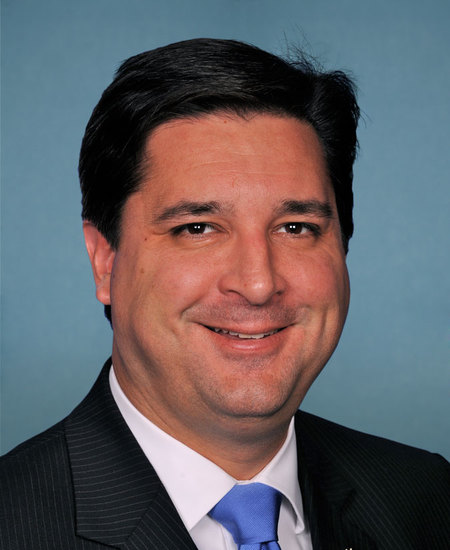
Photo of David Rouzer
R United States House · District 7 · North Carolina On the 2026 ballot

Rep. David Rouzer

Compare
Total votes
2,837
all sessions
Attendance
99%
23 missed
Near the chamber average
With party
96%
of cast votes
Higher than 98% of chamber peers
Bipartisan score
2%
crosses aisle rarely
Among the lowest in the chamber
Sponsored
912
bills & resolutions
Near the chamber average
Committees
10
assignments
912 bills and resolutions

Sponsored bills

Total
912
Primary
67
Co-sponsor
845
This page
912
matching current filters
Co-sponsor HR 3699
In committee · Alaska House · Co-sponsor
Energy Choice Act

Maddy summaryThis bill prevents state or local governments from banning or restricting energy connections (like installation, modification, or access) based on the type or source of energy, such as electricity, natural gas, or renewable fuels. It directly affects consumers choosing energy providers and energy companies seeking to offer services. The key provision prohibits local laws, regulations, or policies that limit energy services sold in interstate commerce, covering all energy types listed in the bill’s definitions. It does not create new programs but limits regulatory authority at the state or local level. The law aims to ensure open access to diverse energy sources without source-based restrictions.

In committee Feb 4, 2026 1 co-sponsor
Co-sponsor HR 1849
In committee · Alaska House · Co-sponsor
Disaster Mitigation and Tax Parity Act of 2025

Maddy summaryThis bill creates a tax exclusion for certain disaster mitigation payments received by property owners. It allows individuals to exclude from gross income funds paid by state programs (or approved entities) to make improvements that reduce damage from windstorms, earthquakes, or wildfires. The exclusion applies to payments made for specific property upgrades like storm shutters or fire-resistant roofing. The change takes effect for 2021+ tax years and includes a retroactive option for taxpayers to amend prior returns. It directly affects homeowners participating in qualifying state disaster resilience programs.

In committee Feb 4, 2026 1 co-sponsor
Co-sponsor HRES 1034
In committee · Alaska House · Co-sponsor
Relating to questions of privilege in the House of Representatives during the One Hundred Nineteenth Congress.

Maddy summaryHRES 1034 modifies House rules for "questions of privilege" resolutions during the 119th Congress. It requires that any privilege resolution offered by the Majority Leader or Minority Leader must have at least one-fifth of all House members as cosponsors when introduced. Additionally, Members must maintain this one-fifth cosponsorship threshold for at least one legislative day after a resolution's introduction before making an oral announcement about it. This procedural change affects how Members can formally raise conduct issues involving other Members, Delegates, or Resident Commissioners.

In committee Feb 3, 2026 1 co-sponsor
Co-sponsor HR 7300
In committee · Alaska House · Co-sponsor
Make Elections Great Again Act

Maddy summaryThe Make Elections Great Again Act (HR 7300) would require voters to present photo identification to cast ballots in person or by mail for federal elections, with limited exceptions for religious objections or military voters. It would establish new requirements for proving U.S. citizenship during voter registration, including documentary proof of citizenship and proof of state residency. The bill would change mail-in ballot procedures by requiring voters to request mail-in ballots (rather than universal mail-in voting), implementing barcode tracking for mail-in ballots, and setting strict deadlines for ballot receipt. These provisions would apply to all states for federal elections held in 2027 or later, affecting how voters register, vote in person, and submit mail-in ballots for federal office elections.

In committee Feb 2, 2026 1 co-sponsor
Primary HR 6539
In committee · Alaska House · Lead sponsor
STORM Act

Maddy summaryThe STORM Act establishes a federal system to rapidly deploy licensed health care professionals during emergencies using private technology platforms. It allows the President to certify private platforms that connect credentialed independent contractors (health care workers licensed in at least one state) and facilitates interstate licensure waivers for these workers when responding to federally declared emergencies. The bill requires annual reports to Congress on waiver usage and provides liability protections for participants who follow its procedures, except in cases of gross negligence. This directly affects health care platforms, independent contractors, and state emergency response systems by streamlining cross-state deployment during crises.

In committee Feb 2, 2026 0 co-sponsors
Primary HR 6410
In committee · Alaska House · Lead sponsor
Atlantic Coast Shipping Safety Act

Maddy summaryHR 6410, the Atlantic Coast Shipping Safety Act, requires the Coast Guard to establish minimum width standards for nearshore and offshore shipping lanes along the Atlantic Coast by December 31, 2026. The regulation must follow a specific proposed rule from January 2024, setting a minimum width for designated fairways while excluding certain areas like Traffic Separation Schemes. This rule applies to the geographic region covered in the January 2024 proposal and directly affects commercial shipping vessels operating in those Atlantic Coast waterways. The bill mandates a specific regulatory timeline but does not change existing navigation practices for the excluded waterway types.

In committee Feb 2, 2026 0 co-sponsors
Co-sponsor HR 7253
In committee · Alaska House · Co-sponsor
Ticket to Work Advertisement Act

Maddy summaryThis bill requires the Social Security Administration to regularly inform disabled beneficiaries about the Ticket to Work program. Specifically, the Commissioner must send program information to each disabled beneficiary within one year of the law's enactment, and then every six months thereafter. The program helps disabled individuals access employment services while retaining benefits. This change directly affects Social Security disability beneficiaries by mandating ongoing outreach about work support options, without altering the program's existing rules or benefits.

In committee Jan 27, 2026 1 co-sponsor
Co-sponsor HR 7230
In committee · Alaska House · Co-sponsor
Buying American Cotton Act of 2026

Maddy summaryThis bill creates a tax credit for businesses selling products made with U.S.-grown cotton. The credit equals 24% of the cotton's market value if processed only in the U.S. or in countries with U.S. trade deals, or 18% for other processing locations. To qualify, cotton must be digitally traced from U.S. farms to finished products and certified by the USDA as meeting origin requirements. It directly affects clothing and textile manufacturers selling qualifying products in the U.S. market.

In committee Jan 22, 2026 1 co-sponsor
Co-sponsor HR 7116
In committee · Alaska House · Co-sponsor
SEPSIS Act

Maddy summaryThe SEPSIS Act (HR 7116) establishes a dedicated sepsis program within the CDC to improve national sepsis response. It requires the CDC Director to lead education campaigns on hospital sepsis best practices, enhance pediatric sepsis data collection, and coordinate with Medicare/Medicaid to develop quality measures. Hospitals would be asked to report on sepsis protocol adoption, with a voluntary "honor roll" recognizing top performers in early detection and treatment. The bill authorizes $20 million annually (2026-2030) for these efforts and mandates annual congressional briefings on sepsis data and hospital progress. This directly affects hospitals, CDC operations, and federal health agencies working to reduce sepsis-related deaths and costs.

In committee Jan 15, 2026 1 co-sponsor
Co-sponsor HR 6662
In committee · Alaska House · Co-sponsor
Department of Defense and Department of Veterans Affairs Medical Credentialing Integration Act of 2025

Maddy summaryHR 6662, the Department of Defense and Department of Veterans Affairs Medical Credentialing Integration Act of 2025, requires the Defense and Veterans Affairs departments to create a single, unified system for medical provider credentialing and privileging. It directly affects military and VA medical staff (like doctors and nurses) by replacing separate, non-interoperable systems currently used by each department. Key provisions mandate a joint report on existing systems within 120 days, selection of one unified system by January 2027, and full implementation by January 2028, ensuring seamless sharing of provider credentials across both departments. This eliminates redundant credentialing processes and improves administrative efficiency for medical providers working across DoD and VA facilities.

In committee Jan 15, 2026 1 co-sponsor
Showing 61 to 70 of 912 bills
Previous 1 6 7 8 92 Next