

Maddy summaryHR 8706, the "Dismantle DEI Act of 2024," would prohibit federal agencies from maintaining diversity, equity, and inclusion (DEI) offices, programs, or training by requiring the closure of existing DEI offices within 90 days and banning federal funding for DEI-related activities. The bill defines "prohibited diversity, equity, and inclusion practices" as those that discriminate based on race, color, ethnicity, religion, biological sex, or national origin, or require training that asserts a particular group is inherently superior or inferior. It would rescind several executive orders related to racial equity and gender inclusion, and prohibit the use of federal funds for DEI-related activities across all federal agencies, contractors, and grant recipients. The bill contains limited exceptions for Equal Employment Opportunity offices and disability rights enforcement offices as historically organized and operated.
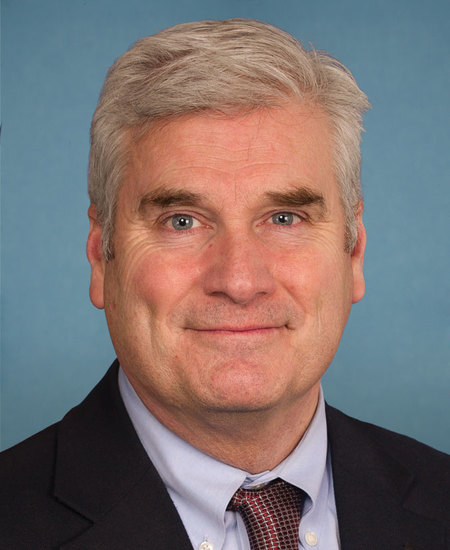
Rep. Tom Emmer
Sponsored bills
Maddy summary# Summary of Proposed Higher Education Act Amendments This document outlines significant proposed amendments to the Higher Education Act of 1965, primarily as part of the "College Cost Reduction Act." The key elements include: ## Accreditation Reform - Major overhaul of accreditation standards, requiring accrediting agencies to demonstrate independence from trade associations - New requirements for accrediting agencies to assess student achievement outcomes, including median value-added earnings relative to median total price charged - Introduction of an "Alternative Quality Assurance Experimental Site Initiative" to test non-accredited institutions - Protections for religious institutions, including a new process for appealing accreditation decisions related to religious mission - Removal of "litmus tests" that would require institutions to support specific political viewpoints ## Student Success Initiatives - Establishment of "Postsecondary Student Success Grants" to increase participation, retention, and completion rates for high-need students - Focus on evidence-based practices, with tiered requirements (tier 1, 2, and 3 reforms) - Mandatory inclusion of high-need student populations (low-income, first-generation, military-connected, etc.) - Requirements for institutions to report on completion rates, retention rates, and student demographics ## Regulatory Changes - Repeal of numerous existing regulations including: * Closed school discharges * Borrower defense to repayment * Pre-dispute arbitration * False certification requirements * Ability-to-benefit rules * Financial responsibility regulations - New restrictions on incentive compensation for recruiters - Changes to third-party servicer definitions and regulations ## Transfer and Credit Policies - New requirement that institutions cannot deny transfer credit based solely on the source of accreditation - Requirements for transparent transfer policies - Changes to reverse transfer policies ## Other Key Provisions - Modifications to the National Advisory Committee on Institutional Quality and Integrity (NACIQI) - New definitions for "total price" and "value-added earnings" - Changes to the process for institutions to change accrediting agencies - New requirements for institutions to report on student outcomes The overall focus of these proposed amendments is to reduce regulatory burden on institutions, promote transparency, improve student outcomes (particularly for high-need students), modernize accreditation processes, and protect religious institutions' rights in accreditation decisions.
Maddy summaryHRES 1574 is a non-binding House resolution calling for the immediate removal of Federal Deposit Insurance Corporation (FDIC) Chairman Martin J. Gruenberg. It cites concerns about his leadership, including alleged mistreatment of staff, a "toxic workplace," staffing shortages, and failures in bank supervision that contributed to financial institution failures. The resolution does not change law or remove Gruenberg (as the President appoints FDIC leaders), but formally demands his removal. It was introduced by 25 Republican representatives and referred to the Financial Services Committee.
Maddy summaryHR 4551 (Protecting Investors’ Personally Identifiable Information Act) prevents the Securities and Exchange Commission (SEC) from requiring securities exchanges or associations to share investors' personal details - such as names, addresses, or Social Security numbers - for routine reporting. The SEC may only request such information during investigations into securities law violations, and exchanges must provide it within 24 hours. The SEC must destroy this data within one day after the investigation concludes. This law directly protects investors' privacy by limiting when their personally identifiable information can be collected and retained.
Maddy summaryHR 9950, the "Miracle on Ice Congressional Gold Medal Act," authorizes three gold medals to be awarded to the members of the 1980 U.S. Olympic men's ice hockey team for their historic victory over the Soviet Union during the Winter Olympics. The medals, designed by the Treasury Secretary, will be presented by Congress to honor the team's achievement, which revitalized American morale during the Cold War. One medal will be displayed at the Lake Placid Olympic Center, one at the USA Hockey Hall of Fame in Eveleth, Minnesota, and one at the U.S. Olympic Museum in Colorado Springs. The bill also permits the sale of bronze duplicates to cover production costs. This is a ceremonial honor, not a policy change, directly recognizing the team members and their legacy.
Maddy summaryThis bill amends the Clean Air Act to modify ethanol waiver processes and fuel volatility standards. It adds a new provision allowing fuel to enter commerce if it meets Reid Vapor Pressure requirements through similarity to certified vehicles or existing waivers, and adjusts vapor pressure limits from 10% to 10-15% in several sections. Small refineries that retired credits for 2016-2018 compliance years may now have those credits returned or applied to future years if their petitions remained pending as of December 1, 2022. The changes directly affect fuel retailers, ethanol producers, and small refineries by altering compliance pathways for fuel standards and credit management under the renewable fuel program.
Maddy summaryHJRES 144 is a congressional disapproval resolution targeting a specific rule issued by the Bureau of Alcohol, Tobacco, Firearms, and Explosives (ATF) on April 19, 2024. The resolution seeks to block the ATF's rule that redefined the term "engaged in the business" for firearm dealers, which would have affected how federal licensing requirements apply to certain sellers. If enacted, this resolution would nullify the rule, preventing it from taking effect under procedures in Title 5 of the U.S. Code. The bill directly impacts firearm dealers operating under the current regulatory framework and the ATF's enforcement authority.
Maddy summaryThis bill designates the U.S. Postal Service facility at 31143 State Highway 65 in Pengilly, Minnesota, as the "First Lieutenant Richard Arne Koski Post Office." It updates all official references to the location to reflect this new name in laws, documents, and records. The bill has no policy changes or direct impact beyond the naming of this specific post office.
Maddy summary# Summary of Proposed Digital Assets and Financial Technology Legislation This comprehensive legislation establishes a new regulatory framework for digital assets and financial technology in the United States, creating a balanced approach that promotes innovation while protecting consumers and maintaining market integrity. Key components include: 1. **Digital Asset Regulatory Structure**: - New requirements for digital commodity exchanges, including transparency standards, customer asset protection, and operational safeguards - Qualified digital commodity custodians with specific regulatory requirements - Digital commodity brokers and dealers with registration and operational standards 2. **New Regulatory Bodies**: - FinHub (Strategic Hub for Innovation and Financial Technology) within the SEC to foster responsible innovation - LabCFTC within the CFTC to serve as an information platform for financial technology innovation - CFTC-SEC Joint Advisory Committee on Digital Assets to promote regulatory harmonization 3. **Mandatory Studies**: - Study on decentralized finance (DeFi) examining its nature, risks, benefits, and integration with traditional markets - Study on non-fungible digital assets (NFTs) analyzing their market structure, benefits, and risks - Study on financial market infrastructure improvements to facilitate tokenized securities and derivatives 4. **Modernization of Regulatory Approach**: - Updates to SEC's mission to explicitly include "innovation" alongside "efficiency" - Enhanced information sharing between agencies - Clearer definitions of ancillary activities that don't require full regulatory registration The legislation aims to create a regulatory environment that encourages responsible innovation in digital assets while maintaining market integrity, consumer protection, and financial stability. It establishes a comprehensive framework for regulating digital commodities as a distinct asset class with specific requirements for market participants.
Maddy summaryHR 9278 extends the deadline for small businesses to file beneficial ownership information with FinCEN. It amends U.S. Code Section 5336 to give small business concerns (as defined in the Small Business Act) until December 31, 2025, to submit required ownership details. This change applies directly to small businesses already subject to the reporting rules under the Corporate Transparency Act. The bill provides a one-year extension from the original deadline, allowing these businesses additional time to comply with the filing requirement.