

Maddy summaryHR 277 would require Congress to approve major federal regulations before they take effect. Major rules are defined as those with significant economic impact ($100 million+ annually), major cost increases for consumers or industries, or significant adverse effects on competition, employment, or innovation. Agencies must submit detailed information about these rules to Congress, including cost-benefit analyses, before they can take effect. Congress would have 70 session days to approve the rule with a joint resolution; if they don't act within that timeframe, the rule would not take effect. This would increase congressional oversight of federal regulations and require more detailed information about proposed rules before they become law.
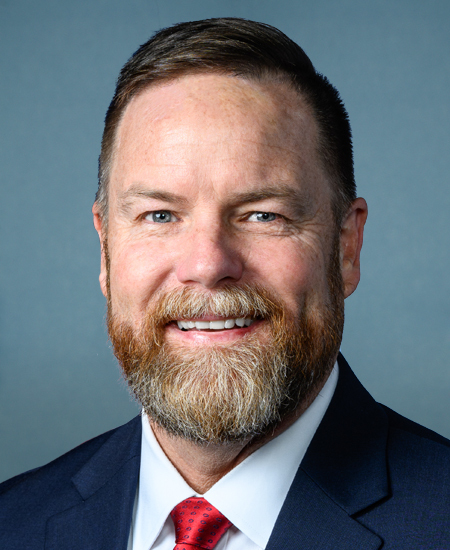
Rep. Aaron Bean
Sponsored bills
Maddy summaryThe FAIR Act (HR 4144) establishes a new income-driven repayment assistance plan that would limit borrowers' monthly payments to 10% of their adjusted gross income, with full loan forgiveness after 20 years of payments. It requires the Department of Education to provide borrowers with multiple notifications about repayment options, including the new income-driven plan, and creates new deferment options for borrowers facing economic hardship, medical issues, or military service. The bill modifies loan rehabilitation processes to allow borrowers to rehabilitate loans two times instead of one time and limits the Secretary's authority to issue regulations that could increase subsidy costs. This legislation directly affects borrowers of federal student loans made under Title IV of the Higher Education Act of 1965.
This bill includes phosphate and potash on the Department of the Interior's final list of critical minerals. (Under current law, Interior and other departments are required to conduct a variety of efforts to ensure a secure and reliable supply chain of critical minerals.) Interior must evaluate current policies relating to permitting and leasing of projects to develop critical minerals and issue recommendations to Congress to support domestic production of such commodities.
Maddy summaryHRES 485 is a non-binding resolution expressing the U.S. House of Representatives' support for designating June 9 as "Batten Disease Awareness Day." It does not create new laws or policies, but formally recognizes Batten disease - a rare, fatal neurological disorder affecting children - as a condition requiring public awareness. The resolution describes Batten disease as a genetic condition causing progressive vision loss, seizures, motor skill decline, and early death, with no known cure. It directly affects families and advocacy groups for this rare disease by promoting public recognition on a specific date. This is a symbolic gesture with no direct impact on healthcare, funding, or regulations.
Stop Funding Rioters Act This bill makes a person convicted of an offense relating to the assault of a law enforcement officer or a person convicted of a felony in connection with a riot that results in the destruction of a small business ineligible for any assistance or program administered by the Small Business Administration.
Maddy summaryThis bill designates the POW/MIA Memorial and Museum under construction in Jacksonville, Florida, as the "National POW/MIA Memorial and Museum." It requires the museum to submit a detailed report to Congress within 90 days, including its five-year budget, organizational structure, bylaws, and accreditation status. The designation may be withdrawn if the museum is not operational within five years of enactment or if the required report is submitted late. The bill formalizes an existing project honoring over 224,000 service members captured or unaccounted for since World War II, without creating new policies or affecting public programs.
Maddy summaryHR 3792 extends U.S. security funding for Israel through 2028 (Section 3) and expands energy cooperation to include advanced nuclear technologies and carbon capture (Section 5). It requires annual reports on regional security partnerships involving Israel (Section 6) and ensures countries in the Abraham Accords can access U.S. development programs (Section 8). The bill also mandates reports on diplomatic efforts against ICC investigations targeting the U.S. and Israel (Section 10) and encourages people-to-people programs to strengthen the Abraham Accords (Sections 7, 9). These provisions directly affect Israel’s diplomatic engagement, security partnerships, and economic cooperation in the Middle East.
Maddy summaryThe HALT Fentanyl Act expands the definition of fentanyl-related substances in the Controlled Substances Act to include many structurally similar compounds, making it easier to regulate new fentanyl analogs without individual listing. It defines these substances based on specific chemical modifications to fentanyl, with limited exceptions for substances already controlled or listed elsewhere. The bill also streamlines research procedures for schedule I substances by creating expedited registration processes and allowing multiple studies under one registration, while requiring the Attorney General to publish a list of substances meeting the new definition.
Maddy summaryThis bill, HR 3458 (Reinstate Our Troops Act), provides relief to military service members who were involuntarily separated solely for refusing COVID-19 vaccinations. It requires military leaders to reinstate eligible service members to their previous rank within 30 days of their request (made within one year of the law's passage), return any bonuses they repaid due to separation, and change their discharge status to "honorable" if they don't seek reinstatement. It also mandates expunging records of the vaccination refusal from their service files. The bill requires the Secretary of Defense to report on implementation to Congress within 60 days.
Maddy summaryThis bill designates the U.S. Postal Service facility at 100 Mathe Avenue in Interlachen, Florida, as the "Pamela Jane Rock Post Office Building." It updates all official references - such as laws, maps, and documents - to reflect this new name for the building. The bill has no policy or funding changes; it is purely a ceremonial naming designation. This affects the postal facility and any future official materials referencing its location.