Maddy summaryHJRES 28 proposes a constitutional amendment to permanently fix the number of justices on the U.S. Supreme Court at nine. This would require ratification by 38 state legislatures (three-fourths of states) within seven years to become part of the Constitution. The amendment directly affects the structure of the Supreme Court, which has had nine justices since 1869 but could otherwise be altered by future congressional action. It does not change current court operations or create new laws, but instead seeks to make the nine-justice composition a permanent constitutional requirement.
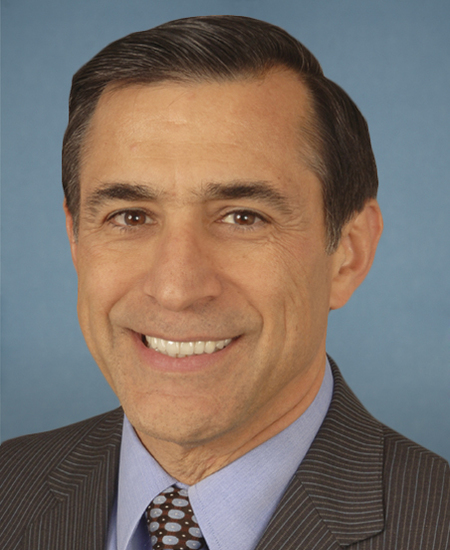
Rep. Darrell Issa
Sponsored bills
Maddy summaryThis bill amends the legal definition of "firearm silencer" and "firearm muffler" under federal law. It clarifies that these terms include any device designed to reduce firearm noise, as well as the outer tube or primary housing component that serves as the main structure for noise-reduction parts. The definition specifically covers devices intended to attach to a firearm (directly or via mounts) and excludes other firearms. This change affects how silencers are legally categorized under federal regulations, not who can own them. It does not create new restrictions but refines the scope of existing definitions.
Maddy summaryHR 584, the "No Medicaid for Illegal Immigrants Act of 2025," would amend the Social Security Act to prohibit states from providing Medicaid coverage to non-citizens who are not lawfully admitted for permanent residence or permanently residing in the U.S. under legal status. This bill directly affects undocumented immigrants who currently qualify for Medicaid in some states. The key provision inserts a new requirement that states cannot offer Medicaid benefits (except for specific emergency care) to these individuals under any state Medicaid plan or waiver. The change would prevent federal Medicaid funding from being used for this group, effectively eliminating their eligibility.
Maddy summaryThis bill amends the Internal Revenue Code to require a valid Social Security Number (SSN) for all qualifying children claimed on the Child Tax Credit. Specifically, it mandates that taxpayers must include the SSN of both the taxpayer (or both spouses on a joint return) and each qualifying child on their tax return to claim the credit. The requirement applies to all taxpayers except members of the Armed Forces (who may use a spouse's SSN), and excludes individuals without an SSN issued to a U.S. citizen or under specific Social Security Act provisions. The change takes effect for taxable years beginning after the bill's enactment date.
Maddy summaryThis bill amends the Antiquities Act to require Congress, not the president, to authorize the creation or expansion of national monuments. It directly affects presidents and federal agencies by ending the current practice of presidentially designating monuments under the Antiquities Act. The key provision replaces the existing authority with a requirement for explicit congressional approval for any new monument or extension. This would change the legal process for establishing protected public lands, shifting decision-making power from the executive branch to Congress.
Maddy summaryHR 404, the "Hearing Protection Act," reclassifies firearm silencers (devices that reduce gunfire noise) as firearms for federal tax and regulatory purposes. It imposes a 10% federal tax on silencers, requires the destruction of all existing federal silencer registration records within one year, and preempts state laws that tax or regulate silencers. The bill clarifies that silencers are treated as firearms under federal law, including for licensing and marking requirements, and defines "firearm silencer" to include specific components. Note: The bill’s title is misleading - it addresses firearm silencer regulation, not hearing protection for people.
Maddy summaryHR 450, the FORCE Act, prevents the U.S. government from removing Cuba from the State Sponsors of Terrorism list. It requires the President to make a specific determination under the 1996 LIBERTAD Act before Cuba can be removed. The bill directly affects Cuba's international designation status and U.S. foreign policy actions toward the country. It does not change existing law but blocks any removal until the specified determination is made. The provision applies to both the President and the Secretary of State.
Maddy summaryHR 350, the "Prosecutors Need to Prosecute Act," requires district attorneys in jurisdictions with 380,000 or more residents that receive federal Byrne grant funds to submit annual reports to the Attorney General. The reports must detail how many cases involving serious crimes - like murder, robbery, aggravated assault, and gun offenses - they referred for prosecution, declined, or resolved via plea deals, including data on repeat offenders and bail decisions. The Attorney General will establish uniform reporting standards and share the collected data with Congress and the public via a website. This bill directly affects large prosecutor offices receiving federal crime-fighting funds, aiming to increase transparency in prosecution practices for specific violent and property crimes.
Maddy summaryThis bill grants the Secretary of Homeland Security authority to temporarily suspend entry of certain individuals at U.S. borders to achieve "operational control" (defined as effective border management). It specifically applies to people seeking entry without proper documentation who would be denied entry under current law (e.g., lacking visas or asylum eligibility). The Secretary must block entry if they cannot detain or process these individuals as required by existing immigration law. States may also sue the government if they believe border security rules are violated.
Maddy summaryThis bill (HR 8641) renames a U.S. Postal Service facility at 401 Main Street in Brawley, California, as the "Walter Francis Ulloa Memorial Post Office Building." It directly affects the postal facility and all federal references to it, changing them to the new name. The bill contains no policy changes or funding provisions - it is solely a commemorative naming resolution honoring Walter Francis Ulloa. The designation became effective upon enactment on January 4, 2025.