

Medicare Drug Price Negotiation Act This bill makes a series of changes relating to the prices of prescription drugs under the Medicare prescription drug benefit and Medicare Advantage (MA) prescription drug plans (PDPs). Under current law, the Centers for Medicare & Medicaid Services (CMS) may neither negotiate the prices of covered drugs nor establish a formulary. The bill repeals these restrictions and instead specifically requires the CMS to (1) negotiate the prices of covered drugs; and (2) either establish a formulary for covered drugs, or require changes to PDP formularies that take into account CMS negotiations. If the CMS is unable to negotiate an appropriate price for a drug in accordance with certain criteria, the price must be the lowest of three specified options (e.g., the median price in other countries). The CMS must identify drugs that are subject to negotiation, with priority given to certain categories of drugs based on usage and cost. Additionally, drug manufacturers must issue rebates to the CMS for drugs dispensed to eligible low-income individuals. Subject to civil monetary penalties, a Medicare or MA PDP sponsor must report, both to drug manufacturers and to the CMS, specified information related to the determination and payment of such rebates.
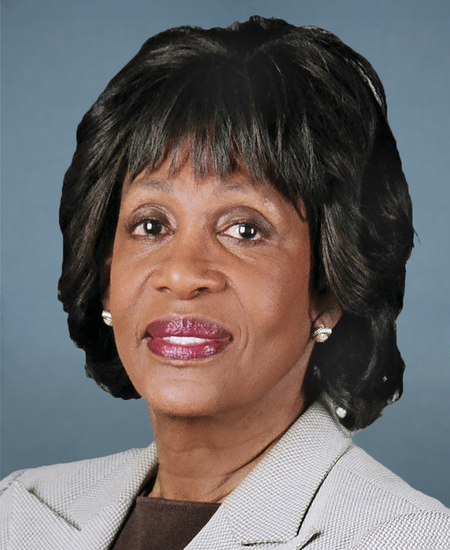
Rep. Maxine Waters
Sponsored bills
Minority Diabetes Initiative Act This bill authorizes grants for diabetes-related health care services in minority communities. The Department of Health and Human Services may make these grants to public and nonprofit health care providers.
Affordable Insulin for the COVID-19 Emergency Act This bill eliminates cost-sharing under the Medicare prescription drug benefit and Medicare Advantage for insulin and associated medical supplies during the public health emergency relating to COVID-19 (i.e., coronavirus disease 2019). The bill also allows beneficiaries to receive their insulin and supplies via mail order during the emergency period.
This joint resolution eliminates the deadline for the ratification of the Equal Rights Amendment, which prohibits discrimination based on sex. The amendment was proposed to the states in House Joint Resolution 208 of the 92nd Congress, as agreed to in the Senate on March 22, 1972. The amendment shall be part of the Constitution whenever ratified by the legislatures of three-fourths of the states.
Ethan's Law This bill establishes a framework to regulate the storage of firearms on residential premises at the federal, state, and tribal levels. At the federal level, the bill establishes statutory requirements for firearms on residential premises to be safely stored if a minor is likely to gain access without permission or if a resident is ineligible to possess a firearm. An individual who violates the requirements is subject to criminal penalties. A firearm stored in violation of the requirements is subject to seizure and forfeiture. At the state and tribal levels, the bill requires the Department of Justice to award grants to implement functionally identical requirements for the safe storage of firearms.
This resolution expels Representative Marjorie Taylor Greene from the House of Representatives.
Stephanie Tubbs Jones Uterine Fibroid Research and Education Act of 2021 This bill directs the Department of Health and Human Services (HHS) to expand research on, and take other actions to address, uterine fibroids. These are muscular tumors that grow in the wall of the uterus and may cause pain, heavy menstrual bleeding, and reproductive issues. In coordination with the National Institutes of Health and appropriate federal agencies, HHS must undertake research activities on uterine fibroids. In addition, HHS must establish a database of services furnished to individuals diagnosed with uterine fibroids under Medicaid or the Children's Health Insurance Program and must develop a report on federal and state expenditures for such services. Additionally, HHS must disseminate information on uterine fibroids to the public and to health care providers, including information on the elevated risk for minority women and available treatments.
Huntington's Disease Disability Insurance Access Act of 2021 This bill expedites payment of Social Security Disability Insurance (SSDI) benefits and eligibility for Medicare coverage for those with Huntington's disease. This is an inherited disorder that causes brain cells to die, including in areas of the brain that help to control voluntary movement. Specifically, the bill eliminates the 5-month waiting period for SSDI benefits and the subsequent 24-month waiting period for Medicare coverage for individuals with Huntington's disease. Under current law, individuals generally must wait five months after the onset of disability to begin receiving SSDI benefits and an additional 24 months to become eligible for Medicare.
Medicare Multi-Cancer Early Detection Screening Coverage Act of 2021 This bill provides for Medicare coverage and payment for multi-cancer early detection screening tests that are approved by the Food and Drug Administration and that are used to screen for cancer across many cancer types.
Equality Act This bill prohibits discrimination based on sex, sexual orientation, and gender identity in areas including public accommodations and facilities, education, federal funding, employment, housing, credit, and the jury system. Specifically, the bill defines and includes sex, sexual orientation, and gender identity among the prohibited categories of discrimination or segregation. The bill expands the definition of public accommodations to include places or establishments that provide (1) exhibitions, recreation, exercise, amusement, gatherings, or displays; (2) goods, services, or programs; and (3) transportation services. The bill allows the Department of Justice to intervene in equal protection actions in federal court on account of sexual orientation or gender identity. The bill prohibits an individual from being denied access to a shared facility, including a restroom, a locker room, and a dressing room, that is in accordance with the individual's gender identity.