Military Suicide Prevention in the 21st Century Act This bill requires the Department of Defense to carry out a two-year pilot program to program suicide prevention resources onto smart devices issued to members of the Armed Forces and to provide training on these resources.
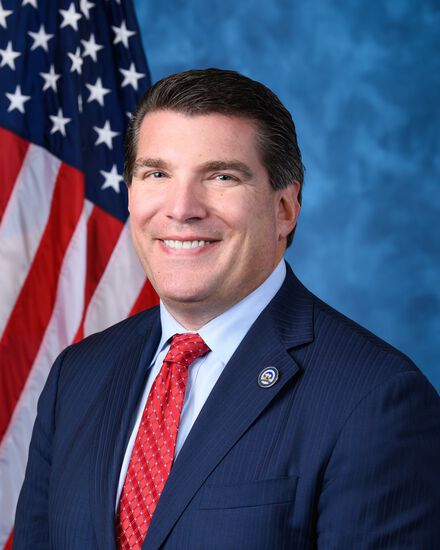
Rep. Jay Obernolte
Sponsored bills
This resolution supports the designation of National Clean Energy Week.
This bill reauthorizes through FY2026 certain activities under the Impact Aid Program. The program provides funding to local educational agencies that have lost property tax revenue due to the presence of tax-exempt federal property or to those that have experienced increased expenditures due to enrollment of federally connected children (e.g., children living on Indian lands or military bases).
Responding Aggressively to Prevent Insects and Disease Act or the RAPID Act This bill expands exemptions from environmental review requirements for projects of the Forest Service concerning wildfire resilience or insects and disease.
Guaranteeing Healthcare Access to Personnel Who Served Act This bill addresses the administration and provision of health care to veterans through the Department of Veterans Affairs (VA) and non-VA providers. First, the bill provides statutory authority for the eligibility thresholds for when a veteran must receive non-VA care under the Veterans Community Care Program (VCCP) for primary care, mental health care, noninstitutional extended care services, specialty care, or specialty services. Additionally, the bill establishes access to care standards for non-VA care under the VCCP, meaning a veteran's appointment must be within specified distances and time frames. Among other requirements, the VA must also implement an 18-month pilot program to allow certain veterans to use a website or mobile application to request, schedule, and confirm medical appointments with VCCP providers; ensure that VCCP third party administrators and credentials verification organizations comply with specified requirements to help ensure that certain health care providers are excluded from providing non-VA health care services; develop a strategic plan to ensure the effectiveness of the telehealth technologies and modalities delivered by the VA; and establish an online health care education portal for veterans. The bill requires the Government Accountability Office to report on (1) the VA program under which third parties provide transportation for veterans who are seeking VA services or benefits, (2) VA telehealth services, and (3) the VA's Foreign Medical Program. Finally, the Paperwork Reduction Act does not apply to the voluntary collection of information during research conducted by the Veterans Health Administration.
This resolution condemns (1) the executive actions that canceled the Keystone pipeline and imposed a moratorium on oil and gas leases on federal lands and waters, and (2) the waiver of sanctions on officials connected with the Nord Stream 2 pipeline.
This bill allows Class II gaming (i.e., bingo and related games) on the approximately 39.36 acres of federal land in Mono County, California, that is held in trust by the United States for the benefit of the Bridgeport Indian Colony.
Puppies Assisting Wounded Servicemembers for Veterans Therapy Act or the PAWS for Veterans Therapy Act This bill implements a program and a policy related to service dog therapy for veterans. Specifically, the bill requires the Department of Veterans Affairs (VA) to implement a five-year pilot program to provide canine training to eligible veterans diagnosed with post-traumatic stress disorder as an element of a complementary and integrative health program. Eligible veterans are those who are enrolled in the VA health care system and have been recommended for participation by a qualified mental health care provider or clinical team. The VA must seek to enter agreements containing specified elements with accredited nongovernmental entities that have demonstrated ability to provide canine training. Veterans who participate in the program are authorized to adopt the dog they assisted in training if their health provider determines it is in the best interest of the veteran. The VA must establish processes to document and track the progress of participating veterans with respect to health benefits and improvements. The Government Accountability Office must brief Congress and submit a report on the program. The bill also authorizes the VA to provide service dogs to veterans with mental illnesses, regardless of whether they have a mobility impairment.
Information Sharing And Advanced Communication Alerting Act or the ISAAC Alerting Act This bill requires the Technological Advisory Council of the Federal Communications Commission, in consultation with relevant stakeholders, to submit a report that identifies measures, barriers, and recommendations for implementing a 9–1–1 disability alerting system. The alerting system must allow an individual to register and create a profile associated with an individual who has a disability that includes information such as whether the individual is a wandering risk, nonverbal, or physically limited. The alerting system then transmits such information to public safety answering points to be conveyed to first responders.
Rare Earth Magnet Manufacturing Production Tax Credit Act of 2021 This bill allows a new tax credit for the domestic production of rare earth magnets manufactured in the ordinary course of a taxpayer's trade or business. The bill defines rare earth magnet as a permanent magnet comprised of (1) an alloy of neodymium, praseodymium, iron, boron, terbium, or dysprosium; or (2) an alloy of samarium, gadolinium, and cobalt.