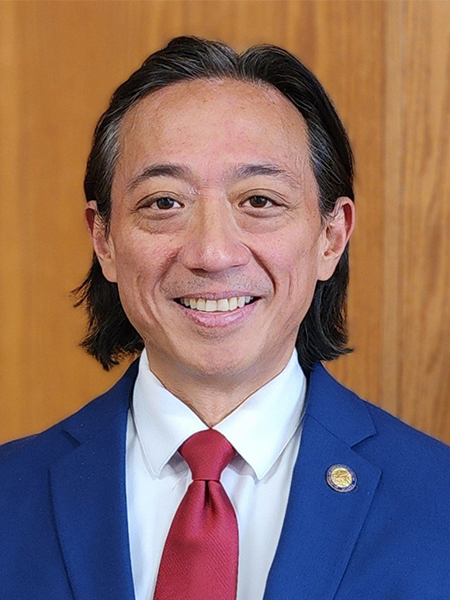
Photo of Scott Kawasaki
D Alaska Senate · District P

Sen. Scott Kawasaki

Compare
Total votes
244
all sessions
Attendance
99%
2 missed
Higher than 83% of chamber peers
With party
97%
of cast votes
Near the chamber average
Bipartisan score
2%
crosses aisle rarely
Near the chamber average
Sponsored
270
bills & resolutions
Higher than 95% of chamber peers
Committees
5
assignments
270 bills and resolutions

Sponsored bills

Total
270
Primary
38
Co-sponsor
232
This page
270
matching current filters
Co-sponsor HB 36
Signed into law · Alaska House · Co-sponsor
An Act relating to treatment foster homes; relating to the placement of foster children in hospitals and residential psychiatric treatment centers for psychiatric care; relating to the duties of the Department of Family and Community Services; relating to the care of children in state custody placed in psychiatric residential treatment facilities outside the state; amending Rule 12.1(b), Alaska Child in Need of Aid Rules of Procedure; and providing for an effective date.

Maddy summaryHB 36 amends Alaska law to allow minors aged 16 or older in foster care to consent to up to five outpatient mental health sessions without parental permission. After five sessions, mental health providers must obtain parental consent for medication or continued treatment. The bill also establishes documentation standards for homeless minors (16+ years) to self-certify eligibility for consent, requiring verification from specific officials or professionals. It directly affects youth in Alaska’s child welfare system receiving mental health services, particularly those in foster care or experiencing homelessness.

Signed into law Jul 3, 2026 1 co-sponsor
Co-sponsor HB 25
Vetoed · Alaska House · Co-sponsor
An Act relating to disposable food service ware and containers provided by customers; and providing for an effective date.

Maddy summaryHB 25 bans polystyrene foam (Styrofoam) containers for prepared food in restaurants and prohibits state agencies from purchasing such items. It requires restaurants to use biodegradable or compostable alternatives instead, with exemptions available if affordable alternatives are unavailable or if compliance would cause undue hardship. Exceptions include food prepared outside Alaska, reusable coolers, and disaster emergencies. The law takes effect January 1, 2026, and defines key terms like "disposable food service ware" and "biodegradable" to clarify coverage. This directly affects restaurants, food vendors, and state purchasing decisions.

Vetoed Jul 3, 2026 1 co-sponsor
Co-sponsor HB 79
Vetoed · Alaska House · Co-sponsor
An Act renaming the Institute of Social and Economic Research at the University of Alaska as the Vic Fischer Institute of Social and Economic Research; and naming the Vic Fischer Shoup Bay State Marine Park.

Maddy summaryHB 79 is a procedural bill that names a specific marine park unit within Alaska's state park system as "Vic Fischer Shoup Bay State Marine Park." It directly affects the official designation of this protected coastal area, which is part of Alaska's state park system. The bill amends Alaska Statutes to formally adopt this name for the marine park unit previously designated under section (a)(4) of AS 41.21.304. This change has no policy impact beyond the park's official naming.

Vetoed Jul 3, 2026 1 co-sponsor
Co-sponsor HB 39
Signed into law · Alaska House · Co-sponsor
An Act relating to public school students who are deaf or hard of hearing.

Maddy summaryHB 39 requires Alaska public school districts to provide parents of deaf or hard of hearing students with unbiased information about hearing technology, communication methods (like sign language or spoken language), and support services. It mandates that districts allow parents to choose the communication method for their child and deliver services using that method through trained professionals. The bill also requires the state to support programs for deaf students, including residential options, and sets procedures for school districts operating these programs while maintaining special education responsibilities.

Signed into law Jul 3, 2026 1 co-sponsor
Co-sponsor HB 13
Signed into law · Alaska House · Co-sponsor
An Act relating to optional municipal property tax exemptions for real property owned and occupied by volunteer certified or licensed providers of fire fighting, emergency medical, mobile intensive care paramedic services, or hazardous materials response services; relating to optional municipal property tax exemptions for certain long-term rental units, certain mobile home parks, real property rented to low-income families, real property owned and occupied as a permanent place of abode, and real property owned by first-time homebuyers; and relating to municipal tax refunds.

Maddy summaryHB 13 would allow Alaska municipalities to create optional property tax exemptions for specific housing types. It enables cities to exempt long-term rental units (90+ days), mobile home parks (for 10 years after construction), low-income rentals (rent ≤30% of local median income), owner-occupied homes, and first-time homebuyers' residences. Municipalities would decide whether to implement these exemptions via local ordinance, with no requirement to do so. The bill directly affects property owners in these categories and local governments managing tax policy.

Signed into law Jul 3, 2026 1 co-sponsor
Co-sponsor HB 96
Vetoed · Alaska House · Co-sponsor
An Act establishing the Home Care Employment Standards Advisory Board; relating to payment for personal care services; and providing for an effective date.

Maddy summaryHB 96 establishes a Home Care Employment Standards Advisory Board within Alaska's Department of Health. The board, composed of 10 members representing home care providers, direct care workers, home care recipients, rate reviewers, seniors, and disability advocates, will advise on payment rates for home care services and investigate workforce conditions like wages and benefits. It requires the board to meet at least three times yearly, include public testimony, and focus on ensuring payment rates meet federal requirements and support a stable workforce. The bill directly affects home care workers, providers, and recipients of home care services in Alaska by creating a structured process to address payment adequacy and working conditions.

Vetoed Jul 3, 2026 1 co-sponsor
Co-sponsor HB 133
Vetoed · Alaska House · Co-sponsor
An Act establishing deadlines for the payment of contracts under the State Procurement Code; establishing deadlines for the payment of grants, contracts, and reimbursement agreements to nonprofit organizations, municipalities, and Alaska Native organizations; relating to reports from state agencies to the legislature detailing late payments made during 2026; relating to the state financial transactions Internet website; and providing for an effective date.

Maddy summaryHB 133 requires Alaska state agencies to pay contractors within 30 days of receiving a compliant payment request for contracts under the State Procurement Code. For grants and reimbursement agreements to nonprofits, municipalities, and Alaska Native organizations, it sets a 30-day payment deadline (21 days if federal funds are used) after a compliant request is submitted. If payments are delayed, agencies must pay interest starting on the 31st day for contracts or the 21st/30th day for grants. Agencies must also provide written notice within eight working days if withholding payment, detailing the reason and required corrections to resolve the issue.

Vetoed Jul 3, 2026 1 co-sponsor
Co-sponsor SB 239
Signed into law · Alaska Senate · Co-sponsor
An Act relating to commercial motor vehicle licensing examinations; relating to the registration and titling of legally imported motor vehicles; relating to proof of financial responsibility for suspension for nonpayment of judgments; and providing for an effective date.

Maddy summarySB 239 allows the Alaska Department of Motor Vehicles to register and title motor vehicles that are at least 25 years old and were legally imported into the U.S. without requiring them to meet current federal safety standards. This directly affects owners of older imported vehicles who previously faced registration barriers due to safety standard non-compliance. The bill prevents the department from refusing, suspending, or revoking titles based on a vehicle's failure to meet modern safety requirements. It takes effect immediately upon enactment.

Signed into law Jul 1, 2026 1 co-sponsor
Co-sponsor SB 174
Vetoed · Alaska Senate · Co-sponsor
An Act establishing the Alaska Invasive Species Council in the Department of Fish and Game; relating to management of invasive species; and providing for an effective date.

Maddy summarySB 174 establishes the Alaska Invasive Species Council within the Department of Fish and Game to coordinate state efforts in managing invasive species. The Council, composed of appointed representatives from state agencies (like Fish and Game and Environmental Conservation), tribes, universities, and conservation groups, will facilitate cooperation between government entities and organizations. Key duties include recommending policies on species importation and classification, guiding how state funds are allocated for invasive species responses, and providing technical assistance for regional management. This bill directly affects state agencies, tribal governments, and conservation organizations involved in preventing or managing invasive species across Alaska.

Vetoed Jul 1, 2026 1 co-sponsor
Co-sponsor HB 363
Signed into law · Alaska House · Co-sponsor
An Act relating to the sale of alcohol; relating to the sale or dispensing of alcoholic beverages by patriotic organizations; relating to club licenses; and providing for an effective date.

Maddy summaryHB 363 amends Alaska's alcohol laws to allow patriotic organizations (like the American Legion, VFW, and American Veterans) to sell or dispense all types of alcoholic beverages at events, not just beer or wine. It also clarifies that military personnel on active duty may purchase alcohol from these organizations under specific reciprocity agreements. The bill requires all profits from such sales to go directly to the organization, not individuals, and updates definitions to explicitly include those patriotic groups. This directly affects nonprofit patriotic organizations, military personnel, and local clubs seeking alcohol permits. The bill is currently under review by the Military & Veterans Affairs committee.

Signed into law Jun 20, 2026 1 co-sponsor
Showing 11 to 20 of 270 bills