This resolution expresses support for the designation of the National Day of Awareness for Missing and Murdered Native Women and Girls.
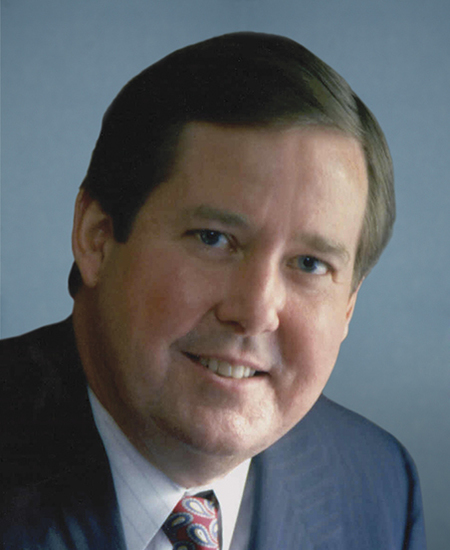
Rep. Ken Calvert
Sponsored bills
Military and Veteran Caregiver Student Loan Relief Act of 2021 This bill makes designated primary family caregivers of veterans eligible for student loan forgiveness under the Public Service Loan Forgiveness (PSLF) program. Under the PSLF program, the Department of Education must cancel the balance of interest and principal due on a borrower's Federal Direct Loans after the borrower makes 120 monthly loan payments while employed in a public service job. This bill broadens the definition of public service job to include service as a primary family caregiver of an eligible veteran participating in the Program of Comprehensive Assistance for Family Caregivers.
This resolution commemorates the centennial of the establishment of the state of Jordan, expresses admiration and gratitude for the friendship of the Jordanian people, and looks forward to continued cooperation with Jordan on shared national priorities.
Civilian Cyber Security Reserve Act This bill authorizes the Department of Homeland Security and the Department of Defense to each create a temporary Civilian Cyber Security Reserve within their agencies to address U.S. cybersecurity needs with respect to national security. Reserve members must be former federal employees or former military personnel, have cybersecurity expertise, and obtain any necessary security clearances, in addition to any other criteria specified by each agency. Membership in the reserves is contingent on a mutual agreement between the agency and the individual. Reserves may consist of different components, with one component obligated to respond to a call to activation and the other not obligated to do so; each agency may establish penalties for those individuals who fail to respond when required. The Government Accountability Office and each agency must evaluate and report on the reserves, including whether they should be made permanent.
This resolution condemns all manifestations of expressions of racism and anti-Asian and Pacific Islander or ethnic intolerance. The resolution calls on federal law enforcement officials, working with state and local officials, to expeditiously and vigorously investigate all reports of hate crimes and threats against Asian Americans and Pacific Islanders in the United States; work to improve the reporting of such hate crimes; and hold the perpetrators of those crimes, incidents, or threats accountable and bring the perpetrators to justice.
Resist Executive Amnesty on Defense Installations Act or the READI Act This bill prohibits the use of a military installation to house an alien who is unlawfully present in the United States or undergoing removal proceedings.
Return Excessive Migrants and Asylees to International Neighbors in Mexico Act of 2021 or the REMAIN in Mexico Act of 2021 This bill requires the Department of Homeland Security (DHS) to implement the Migrant Protection Protocols as outlined in the January 25, 2019, memo titled Policy Guidance for Implementation of the Migrant Protection Protocols . (The protocols generally required aliens who are not clearly admissible, including those seeking asylum, arriving by land along the U.S.-Mexico border to be returned to Mexico while their immigration proceedings are pending, rather than remain in the United States. On January 21, 2021, DHS stopped applying the protocols to newly-arrived individuals.)
No Taxpayer Funding for Abortion and Abortion Insurance Full Disclosure Act of 2021 This bill modifies provisions relating to federal funding for, and health insurance coverage of, abortions. Specifically, the bill prohibits the use of federal funds for abortions or for health coverage that includes abortions. Such restrictions extend to the use of funds in the budget of the District of Columbia. Additionally, abortions may not be provided in a federal health care facility or by a federal employee. Historically, language has been included in annual appropriations bills for the Department of Health and Human Services (HHS) that prohibits the use of federal funds for abortions—such language is commonly referred to as the Hyde Amendment. Similar language is also frequently included in appropriations bills for other federal agencies and the District of Columbia. The bill makes these restrictions permanent and extends the restrictions to all federal funds (rather than specific agencies). The bill's restrictions regarding the use of federal funds do not apply in cases of rape, incest, or where a physical disorder, injury, or illness endangers a woman's life unless an abortion is performed. The Hyde Amendment provides the same exceptions. The bill also prohibits qualified health plans from including coverage for abortions. Currently, qualified health plans may cover abortion, but the portion of the premium attributable to abortion coverage is not eligible for subsidies.
Empower our Girls Act This bill allows certain grants authorized under the Violence Against Women Act to be used to support victims of female genital mutilation. Such grants already support victims of domestic violence, sexual assault, dating violence, and stalking. The bill also requires the Federal Bureau of Investigation (FBI) to classify female genital mutilation as a Part II crime (i.e., a less serious offense) in the Uniform Crime Reports. (The FBI compiles and periodically publishes crime statistics through the Uniform Crime Reporting Program. Currently, the FBI does not compile and publish information about female genital mutilation.)
This bill extends the authority of certain federal agencies to provide support for western water infrastructure and extends consultation requirements concerning projects in California. Specifically, the bill extends through 2028 the authority of the Bureau of Reclamation to provide support for projects in certain western states related to federal or state-led water storage, water desalination, and water recycling and reuse. It also extends provisions specific to California, including drought relief and the operations of the Central Valley Project (a hydropower and water management project in California that is operated by Reclamation). Further, the bill extends through 2033 consultation requirements concerning biological assessments and the coordinated operations of the Central Valley Project and the State Water Project in California.