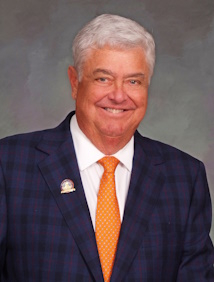
Photo of Mike Gierau
D Wyoming Senate · District 17 On the 2026 ballot

Sen. Mike Gierau

Compare
Total votes
2,966
all sessions
Attendance
99%
31 missed
Near the chamber average
With party
100%
of cast votes
Higher than 95% of chamber peers
Bipartisan score
11%
some cross-party votes
Near the chamber average
Sponsored
190
bills & resolutions
Lower than 83% of chamber peers
Committees
7
assignments
190 bills and resolutions

Sponsored bills

Total
190
Primary
34
Co-sponsor
156
This page
190
matching current filters
Co-sponsor SJ 9
Signed into law · Wyoming House · Co-sponsor
Keeping public lands protected and decisions local.

Maddy summaryWyoming's SJ 9 is a joint resolution urging Congress to protect the state's access to federal public lands while ensuring local communities have a say in land management decisions. It opposes broad or indiscriminate sales of public lands and demands federal agencies respect Wyoming's existing land-use plans, county-level input, and multiple-use frameworks that support recreation, agriculture, hunting, fishing, and resource development. The resolution also calls for funding to streamline efficient land exchanges under current laws when they benefit local communities and public access, without advocating for specific policy changes.

Signed into law Mar 9, 2026 1 co-sponsor
Co-sponsor SF 123
Signed into law · Wyoming Senate · Co-sponsor
Wyoming energy dominance fund.

Maddy summaryWyoming's SF 123 creates the Wyoming Energy Dominance Fund, administered by the Wyoming Energy Authority, to support the state's traditional energy industries. The fund receives a portion of severance tax revenues (50% for fiscal years 2027-2028, then 50% for 2029 onward) that would otherwise go to the permanent mineral trust fund or school accounts. It provides grants and loans for projects like coal innovation, natural gas, uranium processing, and pipeline infrastructure - requiring a 1:1 match from non-state funds - but explicitly excludes wind and solar energy projects. The fund aims to bolster Wyoming's energy sector, which supports over 60,000 jobs and generates significant state revenue.

Signed into law Mar 8, 2026 1 co-sponsor
Co-sponsor SF 95
Signed into law · Wyoming Senate · Co-sponsor
Driver's and motor vehicle services-third party providers.

Maddy summarySF 95 authorizes Wyoming's Department of Motor Vehicles to partner with third-party organizations (like businesses or community centers) to provide specific driver's license and motor vehicle services, such as written and driving tests. The bill creates a "Motor Vehicle Division Partner Program" requiring the department to establish rules for third-party provider qualifications, training, background checks, and monitoring to ensure service quality and security. It specifies that these third parties are not considered government entities and must follow all federal and state laws. The program aims to expand service access points while maintaining regulatory oversight through defined standards and fee structures. (Effective July 1, 2026.)

Signed into law Mar 6, 2026 1 co-sponsor
Co-sponsor SF 110
Failed · Wyoming Senate · Co-sponsor
Residential property tax revisions.

Maddy summaryWyoming's SF 110 establishes a lower property tax assessment rate for primary residences owned by residents who live there year-round. It sets an 8.3% assessment rate for owner-occupied primary homes (down from 9.5%) while maintaining a 9.5% rate for other residential properties. To qualify for the lower rate, homeowners must submit an annual claim to their county assessor by May 4th, demonstrating they occupy the property as their primary residence for at least six months. The bill repeals an existing exemption for primary residences and takes effect for the 2027 tax year.

Failed Mar 5, 2026 1 co-sponsor
Co-sponsor SF 39
Failed · Wyoming Senate · Co-sponsor
Long-term homeowner tax exemption-amendments.

Maddy summaryThis bill repeals the expiration date (sunset) for Wyoming's property tax exemption that benefits long-term homeowners, making the exemption permanent. It directly affects homeowners who have owned their primary residence in Wyoming for a specified period, typically 10 or more years under existing law. The key provision removes the scheduled end date for this tax break, ensuring eligible homeowners continue to receive the exemption without needing future legislative action. The change takes effect on July 1, 2026, and applies statewide to qualifying properties.

Failed Mar 5, 2026 1 co-sponsor
Co-sponsor SF 124
died · Wyoming Senate · Co-sponsor
Economic development-rodeo museum.

Maddy summaryThis bill appropriates $15 million from Wyoming's tourism reserve fund to support the development of a rodeo and cowboy museum and hall of fame in Wyoming. The funds will be distributed in three installments of $5 million each on July 1, 2026, 2027, and 2028, contingent on the Wyoming Tourism Board certifying that relocation efforts will boost tourism, jobs, and state revenue. Applicants must provide matching funds (at least $1 for every $1 granted) and relocate to Wyoming by June 30, 2028, or repay the grant. The Wyoming Office of Tourism must report annually on fund usage until 2036.

died Mar 4, 2026 1 co-sponsor
Co-sponsor SF 116
Failed · Wyoming Senate · Co-sponsor
Surface water drainage utilities.

Maddy summaryThis bill requires Wyoming cities and towns to hold elections for existing surface water drainage fee systems that began collecting payments before July 1, 2026, without prior voter approval. Municipalities must hold these elections by July 1, 2027, and if voters reject the fees, they must stop collecting them within 60 days. It clarifies that new or existing drainage systems must follow specific rate-setting rules for water use and runoff management after an election. The law takes effect July 1, 2026, directly affecting local governments managing surface water drainage.

Failed Feb 24, 2026 1 co-sponsor
Co-sponsor HB 164
Introduced · Wyoming House · Co-sponsor
Wyoming generational investment account.

Maddy summaryHB 164 creates the Wyoming Generational Investment Account, a permanent trust fund designed to save state money for future generations. Starting July 1, 2026, the state will transfer $100 million annually from the legislative stabilization reserve into this account, with funds invested per specific rules (85% private equity, 15% private credit). Investment earnings from these transfers cannot be withdrawn for 20 years; after that, half the earnings go to the general fund and half to the stabilization reserve. The bill directly affects state budgeting by redirecting annual transfers and setting long-term investment rules for these funds.

Introduced Feb 14, 2026 1 co-sponsor
Co-sponsor HB 138
Introduced · Wyoming House · Co-sponsor
Reproductive Freedom Act.

Maddy summaryHB 138, the "Reproductive Freedom Act," proposes to protect abortion access in Wyoming by prohibiting the state from interfering with a person's right to have an abortion before fetal viability (when the fetus can survive outside the womb) or to protect the person's life or health. It defines key terms like "abortion" and "viability," sets penalties for unauthorized abortions (misdemeanor with up to one year in jail or $5,000 fine), and ensures state regulations must be medically necessary and impose the least restrictions possible. The bill also allows healthcare providers and facilities to refuse participation in abortions without discrimination and prohibits state penalties for aiding abortion seekers. This proposed bill, introduced in February 2026 but not yet considered for debate, would replace current abortion laws if enacted.

Introduced Feb 14, 2026 1 co-sponsor
Co-sponsor SF 115
Introduced · Wyoming Senate · Co-sponsor
Gillette community college district funding.

Maddy summarySF 115 transitions Northern Wyoming Community College to the Gillette Community College District. It ensures the Northern Wyoming district continues receiving full funding for both districts during the transition period - through either institutional accreditation for the new Gillette district or July 1, 2026, whichever comes first. The bill modifies existing law to maintain current funding allocations until this transition is complete. This directly affects the two community college districts and their funding under Wyoming’s community college commission model. The bill takes effect on July 1, 2026.

Introduced Feb 14, 2026 1 co-sponsor
Showing 1 to 10 of 190 bills
1 2 3 19 Next