

Dignity for Aborted Children Act This bill sets out requirements for the disposition of human fetal tissue from an abortion. Specifically, it requires abortion providers to obtain a patient's informed consent for one of two specified methods of disposition. First, patients may choose to retain possession of the tissue. A patient may choose to transfer the tissue to an entity that provides interment or cremation services. Second, the patient may elect to release the tissue to the provider. Providers must ensure any tissue released to them is interred or cremated within seven days of the procedure in a manner consistent with state law regarding the disposal of human remains. Abortion providers must report annually about these requirements and other specified information. The bill provides civil or criminal penalties for violations of disposal, informed consent, and reporting requirements.
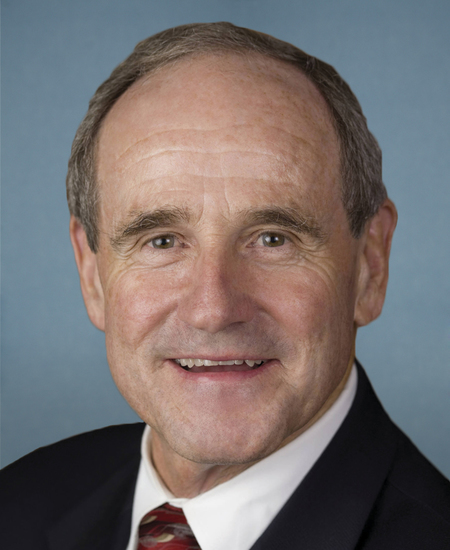
Sen. James E. Risch
Sponsored bills
Protection of Women and Girls in Sports Act of 2021 This bill makes it a violation of federal law for a recipient of federal funds who operates, sponsors, or facilitates athletic programs or activities to permit a person whose sex is male to participate in an athletic program or activity that is designated for women or girls. The bill specifies that sex shall be recognized based solely on a person's reproductive biology and genetics at birth.
Working Families Flexibility Act of 2021 This bill revises requirements for the receipt of compensatory time off for private sector employees. Specifically, the bill authorizes private employers to provide compensatory time off to their employees at a rate of one and one-half hours for each hour of employment for which overtime compensation otherwise is required; employees may accrue a maximum of 160 hours of compensatory time. Employers are prohibited from interfering with an employee's right to or not request compensatory time off in lieu of payment of overtime compensation or from requiring an employee to use such compensatory time, and must give their employees 30-days notice before discontinuing a compensatory time policy. Employers are liable to employees for damages from violations of these requirements.
Assuring that Robust, Thorough, and Informed Congressional Leadership is Exercised Over National Emergencies Act or the ARTICLE ONE Act This bill terminates a declaration of national emergency made by the President after 30 days unless Congress votes to extend the declaration. (Currently, Congress can cancel an emergency declaration only by passing a resolution that can withstand a presidential veto.) The bill establishes procedures for congressional review of declarations of national emergencies. The President shall (1) transmit specified information to Congress with any proclamation declaring or renewing a national emergency, including a description of the circumstances necessitating the declaration or renewal of a national emergency declaration and its estimated duration; and (2) report periodically on the status of the emergency.
American Values Act This bill expands and makes permanent certain restrictions that prohibit the use of U.S. foreign assistance to pay for the performance or promotion of abortion services overseas. Current law generally prohibits the use of foreign assistance for abortions through language included in appropriations bills. This bill specifically prohibits the use of any funds under the Foreign Assistance Act for (1) abortions or involuntary sterilization as methods of family planning, or (2) biomedical research that relates to these practices as methods of family planning. In addition, the bill makes permanent prohibitions on the use of such funds to (1) lobby for or against abortion, or (2) fund any organization or program that supports or participates in coercive abortion or involuntary sterilization. The bill also makes permanent a prohibition on the use of funds made available to the Peace Corps to pay for abortions.
This joint resolution proposes a constitutional amendment prohibiting total outlays for a fiscal year from exceeding total receipts for that fiscal year unless Congress authorizes the excess by a two-thirds vote of each chamber. The prohibition excludes outlays for repayment of debt principal and receipts derived from borrowing. The amendment prohibits total outlays for any fiscal year from exceeding 18% of the gross domestic product of the United States, unless two-thirds of each chamber of Congress provides for a specific increase above this amount. The amendment requires a two-thirds vote of each chamber of Congress to impose a new tax, increase the statutory rate of any tax, or increase the aggregate amount of revenue. It requires a three-fifths vote of each chamber to increase the limit on the debt of the United States. The President must submit an annual budget in which total outlays do not exceed total receipts and 18% of the gross domestic product of the United States. The amendment prohibits a court from ordering a revenue increase to enforce the requirements. Congress may waive specified requirements when a declaration of war is in effect or the United States is engaged in a military conflict that causes an imminent and serious military threat to national security.
Small Business Access to Recovery Capital Act This bill temporarily modifies the 7(a) Loan Guaranty Program of the Small Business Administration (SBA) by waiving borrower and lender fees, increasing the government guarantee to 95%, and increasing the maximum loan value to $10 million. The SBA must issue temporary COVID-19 guidance that reflects these changes.
Personalized Care Act of 2021 This bill revises provisions relating to health savings accounts (HSAs), including to redefine eligible individual for HSA purposes to allow increased participation in HSAs, increase the limit on contributions to HSAs, permit the payment of health insurance premiums from HSAs, include within the definition of qualified medical expenses periodic fees paid for medical services and amounts paid by a member of a health care sharing ministry, treat periodic provider fees as deductible medical expenses, and lower the 20% penalty for nonqualified distributions from HSAs to 10%.
Keystone XL Pipeline Construction and Jobs Preservation Act This bill authorizes the TransCanada Keystone Pipeline to construct, connect, operate, and maintain the pipeline facilities in Phillips County, Montana, for the import of oil from Canada to the United States.
Strengthening and Enhancing Cybersecurity Usage to Reach Every Small Business Act or the SECURE Small Business Act This bill requires the Small Business Administration (SBA) to help small businesses purchase cybersecurity products and services. Specifically, the SBA must establish a website that provides a marketplace for facilitating agreements under which small businesses may cooperatively purchase cybersecurity products and services. Such website shall be free to use for small businesses and cybersecurity vendors. The SBA must also take steps to educate small businesses about the types of cybersecurity products and services that are specific to each industry sector and provide outreach to encourage use of the cooperative marketplace. The Government Accountability Office must study and report on potential improvements to existing federal initiatives that train small businesses on how to avoid cybersecurity threats.