

In committee Sep 24, 2026
1 co-sponsor
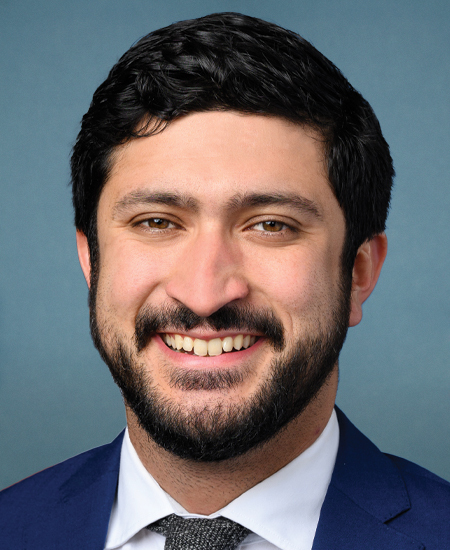
Rep. Greg Casar
Total votes
1,879
all sessions
Attendance
94%
118 missed
Lower than 96% of chamber peers
With party
94%
of cast votes
Near the chamber average
Bipartisan score
3%
crosses aisle rarely
Near the chamber average
Sponsored
733
bills & resolutions
Near the chamber average
Committees
7
assignments
733 bills and resolutions
Sponsored bills
Total
733
Primary
17
Co-sponsor
716
This page
733
matching current filters
In committee Sep 24, 2026
1 co-sponsor
In committee Sep 24, 2026
0 co-sponsors
Directing the President, pursuant to section 5(c) of the War Powers Resolution, to remove United States Armed Forces from hostilities with Iran.
Maddy summaryThis concurrent resolution directs the President to withdraw United States Armed Forces from any hostilities against Iran. It specifically invokes the War Powers Resolution, mandating this removal unless Congress formally declares war or provides specific authorization for military force against Iran. The bill clarifies that it does not prevent the U.S. from acting in self-defense, maintaining a defensive troop presence in the region, or continuing intelligence activities related to threats from Iran.
Failed Sep 24, 2026
1 co-sponsor
Expressing support for the designation of the week beginning on September 14, 2026, as "National Hispanic-Serving Institutions Week".
Maddy summaryThis House resolution expresses support for designating the week beginning September 14, 2026, as National Hispanic-Serving Institutions Week. It recognizes these colleges and universities, which enroll at least 25 percent Hispanic students, for their role in providing higher education access to low-income and underserved populations. The bill highlights that these institutions serve a significant portion of the nation's undergraduate students and contribute to economic mobility. It calls on the public and interested groups to observe the week with ceremonies and activities during Hispanic Heritage Month.
In committee Sep 17, 2026
1 co-sponsor
In committee Sep 16, 2026
1 co-sponsor
Proposing an amendment to the Constitution of the United States to prohibit the use of slavery and involuntary servitude as a punishment for a crime.
Maddy summaryH.J. Res. 216 proposes a constitutional amendment to eliminate the exception in the Thirteenth Amendment that currently permits slavery and involuntary servitude as punishment for a crime. The resolution would amend the Constitution to explicitly state that neither slavery nor involuntary servitude may be imposed on anyone as a penalty for criminal conduct. This change would directly affect incarcerated individuals by prohibiting forced labor practices within the criminal justice system, while clarifying that voluntary work programs and community service alternatives remain permissible.
Criminal JusticeSupports Criminal JusticeProposes constitutional amendment to ban involuntary servitude as punishment, directly advancing criminal justice reform and protecting inmate rights.
Labor & EmploymentSupports Labor & EmploymentThe bill prohibits involuntary servitude and forced labor for prisoners, directly strengthening protections against exploitative labor practices.
In committee Sep 15, 2026
1 co-sponsor
Protecting Workers' Wages from Medical Debt Act
Maddy summaryThe Protecting Workers' Wages from Medical Debt Act prohibits employers from withholding employee wages to pay for medical debts owed to health care facilities or providers. This federal ban overrides any conflicting state laws or court orders, ensuring that no government entity can enforce wage garnishment for these specific expenses. The bill amends the Fair Labor Standards Act to define medical debt and establish this protection, with the new rules taking effect six months after enactment.
HealthcareSupports HealthcareBill prohibits wage garnishment for medical debt, protecting workers from financial harm due to healthcare costs.
Labor & EmploymentSupports Labor & EmploymentThe bill explicitly protects workers' wages by prohibiting employers from withholding pay for medical debts, directly advancing worker financial security.
In committee Sep 14, 2026
1 co-sponsor
Higher Education Oversight for Nonprofits Ensuring Standards and Transparency Act
Maddy summaryThis bill establishes new procedural safeguards for the Internal Revenue Service when conducting tax inquiries or examinations of universities, requiring high-level Treasury approval based on reasonable belief that a university may not qualify for tax-exempt status. It mandates that the IRS provide written notice to the institution before beginning an inquiry and at least 15 days before starting a formal examination, offering the university the opportunity to hold a conference to discuss concerns. The legislation imposes strict time limits, requiring inquiries to be completed within 90 days and examinations within two years, while also restricting the ability to re-examine a university for five years if no significant tax issues are found. Additionally, it requires the Secretary of the Treasury to submit confidential reports to congressional committees detailing any new university tax investigations.
In committee Sep 10, 2026
1 co-sponsor
Access to School Supplies Act of 2026
Maddy summaryThe Access to School Supplies Act of 2026 establishes a five-year pilot program that provides competitive grants to up to ten local school districts serving high-poverty schools. These funds are intended to help districts purchase books, supplies, and other materials for students and instructional staff at no cost. The legislation authorizes $100 million annually from fiscal years 2027 through 2031 and requires recipients to submit annual reports detailing how the money was spent and which schools benefited. A small portion of the total funding is reserved for outlying areas and Bureau of Indian Education schools, while the program sunsets on September 30, 2031.
Budget & TaxesSupports Budget & TaxesThe bill authorizes $100 million annually in federal grants to fund school supplies for high-poverty districts, directly increasing government spending on public education.
EducationSupports EducationBill provides $100M annually to fund school supplies for high-poverty districts, directly advancing educational access and resource availability.
In committee Sep 3, 2026
1 co-sponsor
Ask Maddy
·
AI policy assistant
Ask Maddy about Greg Casar
Scope: wyoming
Hi! I can help you understand Greg Casar's legislative record. What would you like to know?
Try one of these
i
Maddy answers using official bill text and legislative records. Always verify before sharing.
Sources cited inline