Issue · Criminal Justice

Criminal Justice

Every criminal justice bill, vote, and legislator stance in Wyoming, automatically classified by Maddy, our AI policy reader.

Total bills
20
119th Congress
Top supporter
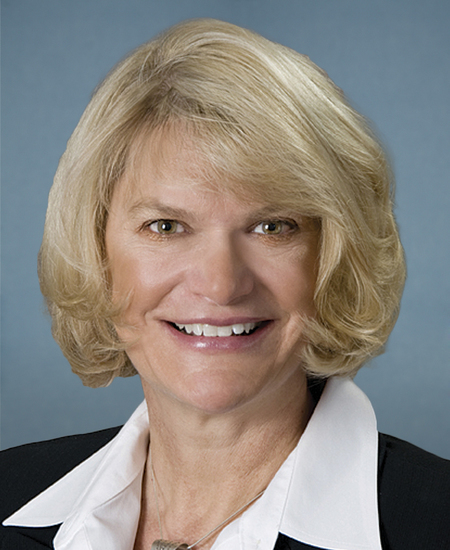
Cynthia M. Lummis
80% support rate
Top opponent
Harriet M. Hageman
37% support rate
Ranked legislators
3
2 support · 1 oppose
Key legislators

Who's moving criminal justice in Wyoming

Legislators moving criminal justice in Wyoming
Legislator Party Stance Support rate Votes
Cynthia M. Lummis
Cynthia M. Lummis Senate
R
Strong +
80% 167
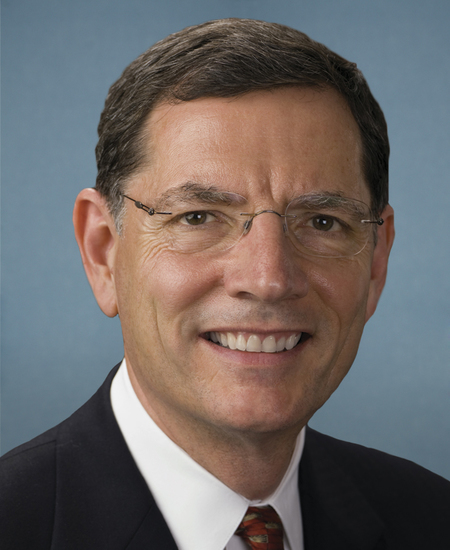
John Barrasso
John Barrasso Senate
R
Support
77% 171
Harriet M. Hageman
Harriet M. Hageman House · District At-Large
R
Oppose
37% 154
Showing 1–10 of 20 bills

All criminal justice bills

in committee · United States · House Jul 2, 2026

HR 9576: National Fraud Enforcement Division Act of 2026

This bill creates a new National Fraud Enforcement Division within the Department of Justice to lead efforts against fraud targeting the federal government, federally funded programs, and American citizens. The division will be headed by an Assistant Attorney General appointed by the President and Senate, who will oversee complex investigations, guide local prosecutors, and coordinate with other federal agencies to stop organized fraud schemes. Additionally, the leader of this new unit will set national enforcement priorities and suggest legal or regulatory changes to fix systemic weaknesses that allow fraud to occur.
passed · United States · Senate Jul 15, 2026

SRES 772: A resolution expressing the sense of the Senate that under no circumstances should Samuel Bankman-Fried receive executive clemency, including a pardon or commutation, and affirming the Senate's commitment to the rule of law and integrity of the United States financial system.

This Senate resolution expresses the official stance that former FTX co-founder Samuel Bankman-Fried should never receive a presidential pardon, commutation, or any other form of executive clemency. The measure directly addresses Bankman-Fried, who is currently serving a 25-year prison sentence for fraud and money laundering related to the collapse of the cryptocurrency exchange. By formally rejecting the idea of clemency, the bill aims to ensure that the penalties imposed by the courts remain in effect and to signal that large-scale financial crimes carry permanent accountability. Additionally, the resolution affirms the integrity of the federal justice process that convicted Bankman-Fried and reaffirms the Senate's commitment to protecting the integrity of the U.S. financial system.
Sub-Topics Corrections
in committee · United States · Senate Jun 2, 2026

SJRES 194: A joint resolution disapproving the action of the District of Columbia Council in approving the Body-Worn Camera Transparency for Use of Force Temporary Amendment Act of 2026.

This joint resolution expresses the U.S. Senate's disapproval of a local law passed by the District of Columbia Council regarding body-worn cameras. The specific provision being rejected is the temporary amendment that requires police officers to record and release footage of their use of force to the public. By formally disapproving this action, Congress is exercising its constitutional authority to review local legislation that affects federal interests. The measure does not change the law itself but rather records the federal government's official stance against the D.C. Council's decision.
Sub-Topics Policing
in committee · United States · Senate May 20, 2026

S 4594: Subpoena Abuse Prevention Act

The Subpoena Abuse Prevention Act restricts how federal government agencies can use administrative subpoenas to obtain phone and app records from service providers. It requires agencies to identify a specific individual by name or account details before requesting data and explicitly bans using these subpoenas to investigate or retaliate against constitutionally protected activities like free speech or religious exercise. The law also mandates that agencies certify the subpoena's legitimate purpose and allows service providers to notify customers about the request unless a court orders otherwise. Finally, the bill requires federal agencies to publicly report annually on the number of subpoenas issued and the total accounts affected.
Sub-Topics Courts Data Privacy Tags Civil Liberties
in committee · United States · House Apr 15, 2026

HR 8295: Protecting Families from Fertility Fraud Act of 2026

HR 8295, the Protecting Families from Fertility Fraud Act of 2026, creates a new federal crime for knowingly misrepresenting the nature or source of DNA used in assisted reproductive technology or assisted insemination. This directly affects fertility clinics, practitioners, and patients undergoing such procedures. Individuals found guilty could face up to 10 years in prison, a fine, or both. The bill defines federal jurisdiction for these offenses, primarily involving interstate commerce, and extends the statute of limitations to 10 years after identification through DNA testing. It also adds this new crime to the list of "racketeering activities" under federal law.
Sub-Topics Corrections
in committee · United States · House Mar 19, 2026

HR 7997: Research and Oversight of AI in Courts Act of 2026

This bill establishes a task force to study how artificial intelligence speech-to-text and automatic speech recognition technologies are used in federal and state courts across the United States. The 15-member group, composed of government officials, legal experts, and technology specialists, will examine issues like accuracy, privacy, civil liberties, and costs associated with these AI tools in judicial proceedings. Within 18 months of enactment, the task force must submit a final report to Congress detailing its findings on whether AI affects court record quality, impacts individuals with speech impediments, creates cybersecurity risks, and recommends any necessary policy changes. The task force will also provide quarterly status updates to congressional committees and will dissolve once its final report is submitted.
in committee · United States · Senate Mar 5, 2026

S 4013: National Constitutional Carry Act

This bill, titled the National Constitutional Carry Act, would prohibit states and local governments from imposing criminal or civil penalties on U.S. citizens for carrying firearms in public places. It directly affects state and local laws by declaring any statute, ordinance, or regulation that restricts public firearm carry for eligible citizens unenforceable. The legislation defines "public" to include most open spaces while allowing private property owners to post clear signs prohibiting firearms, and it explicitly includes the District of Columbia, Puerto Rico, and U.S. possessions under its jurisdiction. By amending federal law, the bill would override state restrictions on public carry for individuals who are legally allowed to own firearms under both state and federal rules.
Sub-Topics Firearms
in committee · United States · House Sep 8, 2026

HR 7834: Safe Cloud Storage Act

This bill, known as the Safe Cloud Storage Act, would provide legal protection for private companies that store child sexual abuse material on behalf of law enforcement agencies. It directly affects technology firms and cloud storage providers that contract with police departments and prosecutors to keep digital evidence of child exploitation. The legislation limits liability for these approved vendors by shielding them from civil lawsuits and criminal charges when performing their contractual duties, except in cases of intentional misconduct, negligence, or acting with reckless disregard. To qualify for this protection, vendors must meet strict cybersecurity requirements including end-to-end encryption, regular independent audits, keeping data within the United States, and maintaining detailed records of who accesses the sensitive material. The bill also establishes procedures for notifying the Department of Justice about contracts and ensures evidence is preserved if a law enforcement agency fails to pay or breaches the agreement.
in committee · United States · Senate Apr 15, 2026

S 545: Combating Illicit Xylazine Act

The Combating Illicit Xylazine Act places xylazine - a veterinary sedative increasingly found in illicit drug mixtures - into Schedule III of the Controlled Substances Act, subjecting it to federal regulation as a controlled substance. It specifically allows veterinary use without requiring registration of the ultimate user (e.g., pet owners or veterinarians) if xylazine is dispensed by a registered veterinarian or pharmacy with a vet prescription and used for animals owned by the user, under their care, or in authorized animal programs. The bill provides a one-year delay for labeling and packaging requirements and a 60-day delay for registration and recordkeeping for veterinary use to ease implementation. Additionally, it adds xylazine to the Arcos tracking system for controlled substances and mandates two congressional reports on illicit use prevalence within 18 months and 4 years of enactment.
passed · United States · Senate Feb 4, 2025

SRES 55: A resolution recognizing January 2025 as "National Mentoring Month".

SRES 55 is a Senate resolution designating January 2025 as "National Mentoring Month." It formally recognizes the value of mentoring relationships in supporting youth development, highlighting benefits like improved academic outcomes, mental health, career exploration, and reduced juvenile delinquency. The resolution encourages expanding mentoring programs in communities, schools, and workplaces to address the "mentoring gap" where one-third of U.S. youth lack consistent mentorship. As a symbolic measure, it aims to raise public awareness and promote cross-sector collaboration without creating new laws or funding.
Sub-Topics Juvenile Justice
Showing 1 to 10 of 20 bills
1 2 Next