Issue · Budget & Taxes

Budget & Taxes

Every budget & taxes bill, vote, and legislator stance in Wyoming, automatically classified by Maddy, our AI policy reader.

Total bills
71
2026 Regular Session
Top supporter
Ogden Driskill
85% support rate
Top opponent
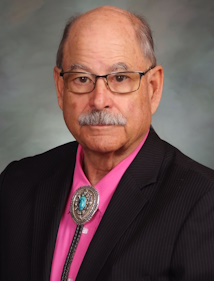
Bob Ide
25% support rate
Ranked legislators
10
5 support · 5 oppose
Key legislators

Who's moving budget & taxes in Wyoming

Legislators moving budget & taxes in Wyoming
Legislator Party Stance Support rate Votes
Ogden Driskill
Ogden Driskill Senate · District 1
R
Strong +
85% 104
Barry Crago
Barry Crago Senate · District 22
R
Strong +
80% 107
Evie Brennan
Evie Brennan Senate · District 31
R
Strong +
80% 106
Mike Gierau
Mike Gierau Senate · District 17
D
Support
80% 109
Wendy Schuler
Wendy Schuler Senate · District 15
R
Support
79% 107
Bob Ide
Bob Ide Senate · District 29
R
Oppose
25% 111
Troy McKeown
Troy McKeown Senate · District 24
R
Oppose
33% 110
Tim French
Tim French Senate · District 18
R
Oppose
33% 111
Scott Smith
Scott Smith House · District 5
R
Oppose
35% 232
Nina Webber
Nina Webber House · District 24
R
Oppose
37% 216
Showing 41–50 of 71 bills

All budget & taxes bills

failed · Wyoming · House Feb 10, 2026

SF 76: Distribution of taxes on large electrical loads.

This bill (SF 76) requires separate reporting of sales tax for electricity consumed by "very large electrical loads" (defined as 100+ megawatts for a single customer) and directs the resulting tax revenue into a new "local government distribution account." The funds in this account will be distributed to cities, towns, and counties as determined by the legislature. It applies only to taxes approved by voters on or after July 1, 2026, and requires vendors to report these large-scale electricity sales separately on monthly tax returns. The bill does not change tax rates but alters how revenue from these specific sales is distributed.
failed · Wyoming · House Feb 11, 2026

SF 86: Wyoming property tax relief authority.

SF 86 creates the Wyoming Property Tax Relief Authority to provide financial assistance for property taxes to qualifying homeowners. The authority would administer a loan program offering funds to Wyoming residents who own their primary residence and face increased property tax burdens. It authorizes the issuance of bonds to fund the program, with repayment secured by dedicated revenues. The bill also requires that loan application details remain confidential and not subject to public disclosure under the Public Records Act.
failed · Wyoming · House Feb 10, 2026

SF 64: Investment in Wyoming housing.

Wyoming's SF 64 creates the Wyoming Housing Revolving Loan Program to address affordable housing shortages. It provides loans to local governments, housing authorities, and nonprofits for new construction, rehabilitation, or land acquisition of affordable and workforce housing (80% of funds), plus zero-interest loans for planning and predevelopment (20% of funds). The program is funded by a $30 million transfer from the Strategic Investments Account (if not repealed), with repaid loans replenishing the fund. All loans require state attorney general certification and annual reporting to the legislature on fund usage and project outcomes.
signed · Wyoming · House Mar 8, 2026

HB 78: Forest health grant program.

Wyoming's HB 78 creates a state-administered Forest Health Grant Program to fund projects improving forest conditions on public and private lands. The program covers up to 75% of eligible project costs (50% on federal land), requiring matching funds from other sources, with projects focused on water quality, wildfire risk reduction, forest product production, or wildlife habitat. Grants require attorney general approval and annual reporting to the Agriculture Committee, with a $3 million appropriation from the general fund starting July 2026. The program expires on July 1, 2030, after which unobligated funds will be returned to non-state donors or reverted to the general fund. It directly affects landowners and forest managers seeking funding for public-benefit forest health initiatives.
failed · Wyoming · House Mar 5, 2026

SF 110: Residential property tax revisions.

Wyoming's SF 110 establishes a lower property tax assessment rate for primary residences owned by residents who live there year-round. It sets an 8.3% assessment rate for owner-occupied primary homes (down from 9.5%) while maintaining a 9.5% rate for other residential properties. To qualify for the lower rate, homeowners must submit an annual claim to their county assessor by May 4th, demonstrating they occupy the property as their primary residence for at least six months. The bill repeals an existing exemption for primary residences and takes effect for the 2027 tax year.
Sub-Topics Property Tax
failed · Wyoming · House Feb 9, 2026

HB 57: Hathaway private post secondary institution scholarships.

HB 57 creates the "Hathaway private post secondary institution scholarship" to help Wyoming students attend private colleges or universities. It provides up to $500 per semester for tuition and fees at state-accredited private institutions offering certificates or degrees, with eligibility requiring a 3.5 high school GPA, standardized test scores at the 79th percentile, and meeting specific academic requirements. The program limits funding to 200 students total, covering up to eight full-time semesters per student, and requires the state education department to administer applications and verify eligibility through school transcripts. This scholarship directly affects qualifying Wyoming students seeking private post-secondary education, separate from public university funding.
signed · Wyoming · House Feb 27, 2026

SF 47: Increase of Hathaway scholarship awards.

This bill increases funding for Wyoming's Hathaway scholarship program. It raises per-semester award amounts for three scholarship tiers: opportunity ($840 → $1,180), performance ($1,260 → $1,770), and honor ($1,680 → $2,360) scholarships for students meeting specific GPA and test score criteria. The bill also increases the maximum annual need-based scholarship award from $1,575 to $2,120. These changes apply to eligible Wyoming students pursuing degrees or certificates at approved institutions, effective July 1, 2026.
failed · Wyoming · House Feb 9, 2026

HB 20: State parks-nonmotorized recreational trail fees.

Wyoming's HB 20 establishes a permit system for nonmotorized recreational trail use (like bicycles) in state parks and historic sites. It allows the Department of State Parks to require permits with annual fees up to $10 for residents and $20 for nonresidents, or daily fees up to $5. Fees collected fund trail maintenance, signage, safety programs, and related infrastructure within state parks. Minors under 18 are exempt from the permit requirement. The bill creates a dedicated account for these funds, ensuring they supplement existing park funding for trail-related purposes.
Sub-Topics Fees & Licensing
signed · Wyoming · House Feb 27, 2026

HB 34: Firefighters-retirement plans.

HB 34 expands retirement benefits to specific firefighters in Wyoming by redefining "firefighter member" to include full-time employees of the Wyoming National Guard fire department (crash/rescue units) and full-time wildland firefighters employed by state agencies like the Wyoming State Forestry Division. The bill appropriates $181,000 for retirement contributions from 2026-2028 and requires affected workers to elect by April 30, 2026, whether to join the new retirement plan or stay in the standard system. Coverage begins July 1, 2026, with service credit rules clarified to prevent double-counting across retirement plans. This policy change directly affects approximately 50-100 full-time firefighters across these roles.
Sub-Topics Retirement Benefits
failed · Wyoming · House Feb 11, 2026

HB 59: Bond election language process.

HB 59 modifies Wyoming's bond election rules to require local governments to clearly state key details in bond questions, including the purpose, maximum principal amount, repayment term, and interest rate. Voters can now sue a local government if the bond question fails to meet these requirements, delaying bond issuance until a court resolves the dispute. The bill directly affects cities and towns seeking voter approval for bond issues and ensures transparency in how bond proposals are presented. It does not change election timing rules but adds a legal remedy for misleading bond language.
Sub-Topics Debt & Bonds
Showing 41 to 50 of 71 bills
Previous 1 4 5 6 8 Next